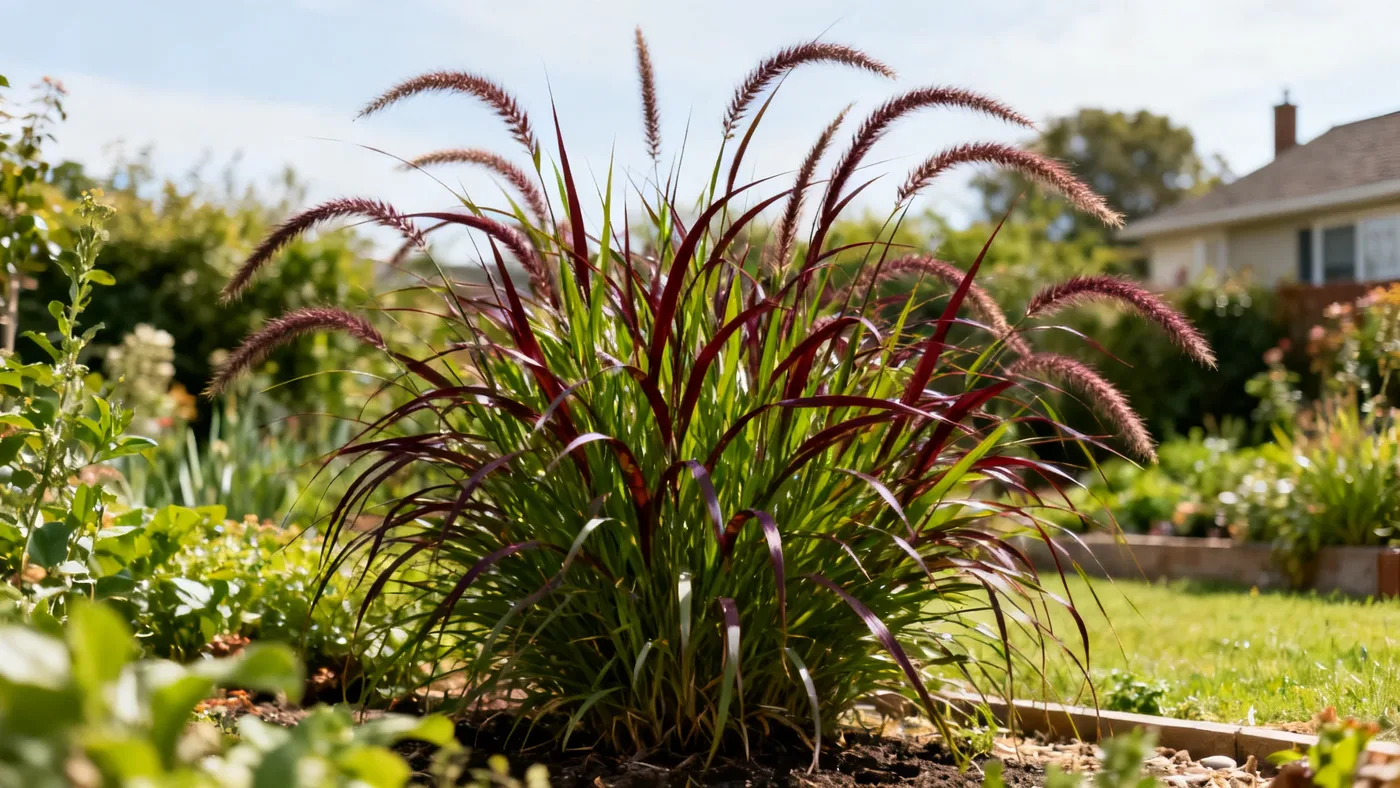
Karley Rose Fountain Grass vs Purple Fountain Grass: Key Differences
Choosing between fountain grass varieties can feel overwhelming, especially when two options sport similar burgundy tones and feathery plumes. Karley Rose Fountain Grass (Pennisetum orientale 'Karley Rose') and Purple Fountain Grass (Pennisetum setaceum 'Rubrum') are frequently confused because they share a similar color palette and ornamental appeal. However, they are fundamentally different plants with distinct hardiness, invasiveness, and growing requirements. This comparison cuts through the confusion and helps you pick the right fountain grass for your garden.
Comparison Table
| Attribute | Karley Rose Fountain Grass | Purple Fountain Grass |
|---|---|---|
| Botanical Name | Pennisetum orientale 'Karley Rose' | Pennisetum setaceum 'Rubrum' |
| Hardiness Zones | 6-9 | 10-11 (annual elsewhere) |
| Plant Type | Herbaceous perennial | Tender annual (in most climates) |
| Mature Height | 24-36 inches | Varies by climate; larger in warm zones |
| Mature Width | 24-30 inches | Varies; often wider in a single season |
| Plume Color | Smoky rose-pink to purplish-pink | Deep purple to burgundy |
| Foliage Color | Burgundy-tinged green; deepens to burgundy-bronze in fall | Deep burgundy throughout season |
| Bloom Time | June to frost; often reblooming | June to frost |
| Seed Viability | Sterile or very low viability | Fertile; spreads by seed |
| Invasiveness Risk | None | Moderate to high in warm climates |
| Overwintering | Perennial; roots survive winter | Requires replanting or indoor storage |
Hardiness and Climate: The Make-or-Break Difference
Karley Rose Fountain Grass thrives in USDA zones 6-9, making it cold-hardy enough for most northern and central gardens. Some sources list zone 5 with winter mulch protection, though zone 5 should be considered marginal. When frost arrives, the foliage browns, and the clump dies back to the ground in colder zones. The roots, however, often survive the winter to regrow in spring.
Purple Fountain Grass is tender. In most of the United States, it cannot overwinter outdoors and must either be replanted each year or dug up and brought indoors for winter. This fundamentally changes the economics of your planting: Karley Rose is a multi-year perennial investment, while Purple Fountain Grass is typically a seasonal annual choice or requires labor-intensive storage.
Growth, Size, and Spacing
Both grasses create fountain-shaped clumps, but they expand at different rates.
Karley Rose reaches 24-36 inches in mature height, with flower plumes potentially pushing toward the upper end of that range. Width is typically 24-30 inches at maturity. Growth is moderate, roughly 6-12 inches per year as the clump expands over 2-3 seasons to full size.
Purple Fountain Grass tends to grow larger and faster in warm climates. In its first season as an annual, it can reach impressive size because it pours all its energy into a single burst of growth rather than spreading development over years.
Space Karley Rose plants 24-30 inches apart in borders or mass plantings to allow each clump room to mature without crowding neighbors. This spacing applies well in mixed perennial beds and contemporary landscape designs.
Appearance: Where Color and Persistence Differ
Karley Rose Fountain Grass features fine-textured, arching blades that emerge burgundy-tinged green, creating an elegant, fountain-like mound. The smoky rose-pink to purplish-pink plumes bloom from early summer through fall, often reblooming across the season. As frost approaches in autumn, the foliage deepens to burgundy and bronze tones, extending the color show into late fall. In mild zones (9 and warmer), the dried plumes and tan foliage can persist into winter, providing visual texture for months after bloom ends.
Purple Fountain Grass displays deep burgundy foliage throughout the growing season, often holding a richer, darker purple tone than Karley Rose, especially at the season's start. The color intensity, however, depends heavily on full sun exposure and summer heat. The plumes are typically darker or showier initially but fade as the season progresses.
The most critical difference: Karley Rose produces sterile or very low-viability seed, so it rarely self-sows. Purple Fountain Grass is seed-fertile and spreads aggressively by seed in warm climates, making it invasive in some regions. Before planting Purple Fountain Grass, check your local invasive plant lists.
Pros and Cons
Karley Rose Fountain Grass
Pros:
- Cold-hardy in zones 6-9, so it stays in the ground year-round in most regions
- Long-lived perennial clump, typically 5-10 years or more before needing division or rejuvenation
- Sterile or low-seed cultivar, so no invasive self-seeding concerns
- Moderate to good drought tolerance once established, reducing long-term watering needs
- Reliable, predictable growth and bloom year after year
- Attractive fall color transition from green to burgundy-bronze
- Winter texture interest in mild zones
Cons:
- Slower to fill a planting space (takes 2-3 seasons to reach full maturity)
- May not achieve the same deep burgundy foliage intensity as Purple Fountain Grass
- Requires spring cutback to 3-6 inches above ground before new growth emerges
- Root hardiness varies below zone 6, so overwintering cannot be guaranteed in marginal climates
- May not perform as spectacularly in very hot climates compared to Purple Fountain Grass
Purple Fountain Grass
Pros:
- Rich burgundy foliage color, often deeper and more dramatic than Karley Rose
- Very fast growth in a single season, useful for instant landscape impact
- Thrives in hot climates where it performs at its absolute best
- Larger plume display in optimal conditions
- Suited for tropical and warm-zone designs
Cons:
- Tender annual in most of the United States, requiring replanting or winter storage each year
- Seed-invasive in warm climates (must check local invasive plant lists before planting)
- Cannot be left in the ground in cold climates without protection
- Higher long-term cost due to annual replanting, labor, or storage
- Less predictable hardiness, so repeated investment is required every year
- Not suited for perennial border designs in most regions
Best For: Which Grass Suits Your Situation
Choose Karley Rose Fountain Grass if you:
- Garden in USDA zones 6-9 (or zone 5 with winter mulch protection)
- Want a permanent, low-maintenance perennial that persists year to year
- Prefer not to replant annually
- Are concerned about invasiveness or self-seeding in your region
- Value winter interest and dried plume persistence in your landscape
- Want reliable, predictable performance in a mixed perennial border
- Are comparing hardy vs tender fountain grass and need dependable hardiness
Choose Purple Fountain Grass if you:
- Live in zone 10 or warmer and can leave it outdoors year-round
- Garden in a very hot climate where it performs at its absolute best
- Are willing to replant annually or bring plants indoors for winter
- Want maximum seasonal color intensity and dramatic impact
- Are creating a temporary or seasonal display rather than a permanent planting
- Are certain about local invasiveness regulations in your region
- Are designing a tropical or warm-climate container garden
The Verdict
For most home gardeners and landscapers in the United States, Karley Rose Fountain Grass is the smarter choice. It offers year-round hardiness across a wide range of climates, long-term value, predictable performance, and no invasiveness worries. You plant it once and enjoy it for years, making it genuinely low-maintenance.
Purple Fountain Grass shines only if you live in a warm enough climate to grow it as a true perennial (zone 10 or warmer) or if you are explicitly designing annual container displays or seasonal accent plantings. For everyone else, the tender status and annual replanting cost make it less practical than Karley Rose.
The fundamental truth: Karley Rose is the reliable perennial workhorse. Purple Fountain Grass is the tender showpiece. Choose based on your climate, commitment level, and long-term goals, not just color preference.
Quick Reference Checklist
| Decision Factor | Karley Rose | Purple Fountain Grass |
|---|---|---|
| Will it survive your winter? | Yes (zones 6-9) | No (requires replanting or storage) |
| Does it spread by seed? | No (sterile cultivar) | Yes (can be invasive) |
| How long to full size? | 2-3 years | 1 season (if treated as annual) |
| Best for perennial borders? | Yes | No (requires annual replacement) |
| Lowest maintenance option? | Yes | No |
| Most dramatic burgundy foliage? | Good | Excellent |
Ready to Grow Karley Rose?
For detailed care instructions on growing Karley Rose successfully, see our complete Karley Rose Fountain Grass growing guide. When you are ready to add one to your garden, learn about container sizes and what to expect from nursery stock.