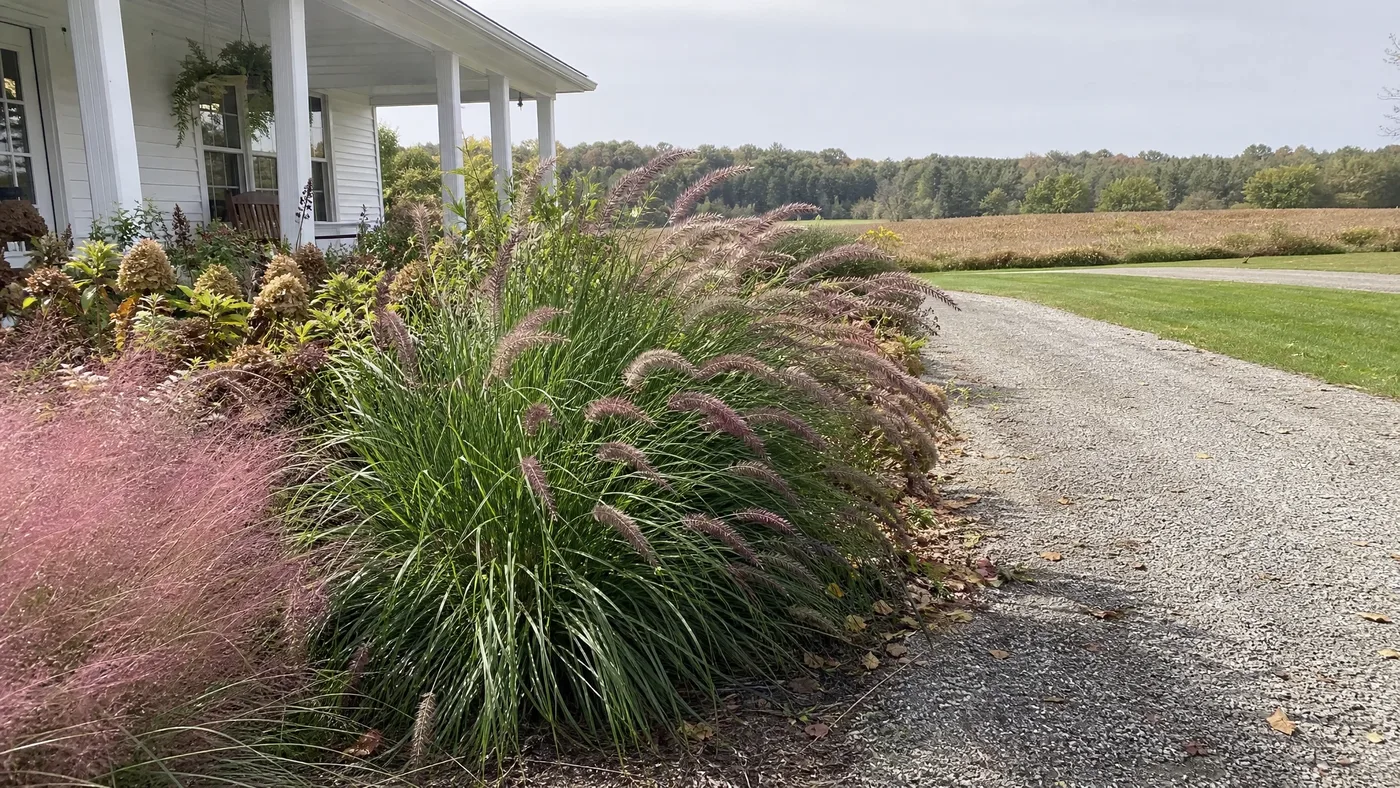
Karley Rose Fountain Grass vs Pink Muhly Grass Compared
Picture two flats of grass coming off the same truck. One tag reads "tidy clump" and the other reads "spreading haze," and you have to decide where each goes before the driver pulls away. That is the Karley Rose versus pink muhly choice in one scene.
The surprise is that the tags oversell the difference in habit. Both are clumping grasses. What really separates them is when they bloom, how cold a winter they take and how their plumes behave in the bed. Get that wrong and you end up with a September grass in a June spot.
Read on for the job in order: measuring the bed, matching zones, receiving plants, planting, logging bloom dates, managing the muhly haze and the shared cutback.
Measure the Bed and Check Your Zone First
Before you choose either grass, find out what the bed can hold. Both plants look small in a nursery pot and fill out by their second year, so the measurements come first.
Write down these four numbers:
- The length of the bed along the edge where the grass will sit, in feet.
- The hours of direct sun it gets. Karley Rose wants full sun, so a bed that sits in shade most of the day is the wrong bed for it.
- Your USDA zone, and the lowest winter temperature you have seen in the last few years.
- How well the soil drains after a hard rain. Karley Rose takes acid, alkaline or neutral soil as long as drainage is good.
Then check the sizes. Karley Rose is listed at up to about 2 feet, while it has been measured at 42 inches in its second year. Pink muhly grass runs 2–3 feet. The species Karley Rose belongs to is listed at 3–5 feet wide, so leave room for a clump that outgrows the pot you buy.
Do this step with a tape measure and string, not by eye. Our size guide for Karley Rose covers the numbers in more detail.
Sorting Karley Rose Fountain Grass From Muhly by Zone
With your zone in hand, the choice is often made for you. Pink muhly grass is hardy in zones 5a through 9b. Karley Rose is a bit narrower. The species is hardy in zones 6a to 9b, and NC State's cut-flower trial found the cultivar very tough and cold hardy in Zone 6.
Not every source agrees. Karley Rose is also listed at zones 5 to 8, which is a reminder that the cold edge is where a rating turns into a gamble.
The rule is simple. If your winter lows sit in zone 5, muhly is the safer buy. In zones 6 through 8, both grasses are fair game and you can choose on looks. In zone 9, both are inside their listed range, and the call comes down to bloom timing and how much room you have. Our hardiness zone guide goes deeper on the Karley Rose side.
One caution on the cold edge: a plant that survives is not the same as a plant that looks good. At the limit of its range, Karley Rose may come back late and bloom thinner than it would two zones south.
Receiving the Plants and Reading Their Tags
Arrival day is when mix-ups happen, because both grasses are green clumps for most of the year. Check each pot before you unpack the rest.
- Read the botanical name. Karley Rose is Pennisetum orientale 'Karley Rose'. Pink muhly is Muhlenbergia capillaris. These are different genera, so a tag that only says "pink grass" is not enough.
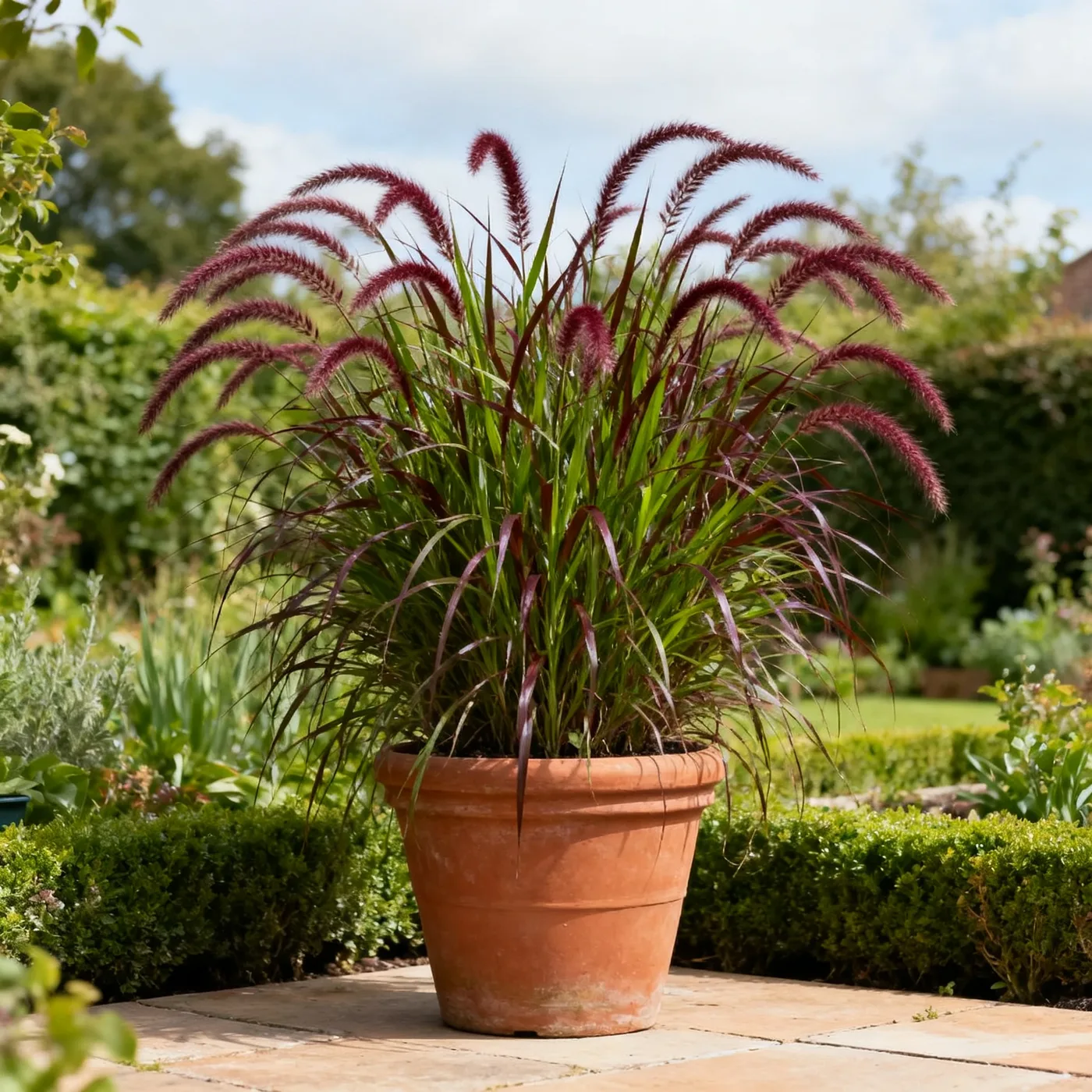
- Check for plumes. If the plants arrive in bloom, Karley Rose carries narrow, silvery rose-pink panicles about 4–5 inches long, like soft bottle-brushes. Muhly does not bloom until September.
- Look at the roots. Slide one plant partway out of its pot. You want firm roots filling the container without a solid, circling mat. Pull apart any matted roots by hand at planting.
- Check the soil. It should be damp, not soaked and not dry to the bottom.
Set the pots in a staging spot with decent light and keep each grass grouped and labeled. Water as needed and plant within a few days. A grass left in a pot too long dries out fast.
A tag on the pot is the only reliable record once the plants are in the ground, so keep it. Push it into the soil beside each clump or photograph it.
Setting Karley Rose Fountain Grass Into a Clumping Row
Karley Rose is the easier of the two to place on paper. It grows as a compact clump with deep green foliage and stays where you put it. That is why a fixed footprint matters. Every plant in the row gets its own circle, and the circle does not change.
Lay out the row first. Run a string along the bed and mark each planting spot with a stake. Measure spacing from the center of one plant to the center of the next. Because the species can reach 3–5 feet wide, tight spacing only works for a short time, so check our spacing guide for borders and mass plantings before you commit.
Digging and Setting
Dig each hole about as deep as the root ball and wider than it. Set the crown at the soil surface, backfill, firm the soil by hand and water thoroughly. Drainage matters more than richness, so skip heavy amendments and fix a wet spot by choosing another spot.
Why the Footprint Stays Fixed
A clump has no runners. It gets wider at the crown, and that is all. You can plant a straight row, step back and know it will still look like a row in three years. For the full planting sequence, see how to plant Karley Rose Fountain Grass.
Logging Bloom Dates for Karley Rose Fountain Grass
People argue about which grass blooms longer, and the only honest answer comes from your own bed. Keep a log for one season. A notebook or a phone note is enough.
The timing is far apart. Karley Rose carries rose-purple plumes from early summer until frost, and blooms have been recorded from June onward. Pink muhly blooms in fall, September through November, and its color persists for 6 to 8 weeks, or until frost.
Use this layout and write down a date for each stage:
| Stage | What to record | What to expect |
|---|---|---|
| First color | Date the first plumes show color | Karley Rose from June, muhly from September |
| Full color | Date the clump looks at its best | Varies with weather, so trust your notes |
| Fading | Date the color starts to dull | Muhly about 6–8 weeks after it colors up |
| Last color | Date of frost or last visible plume | Frost ends both |
At the end of the season, count the days between first and last color for each grass. That number, not a plant tag, tells you which one earns its spot. Our Karley Rose bloom guide gives more on what to watch for.
Holding Muhly's Spread Back From Neighboring Clumps
Here is where the tag from the dock needs correcting. Muhly is a bunchgrass. The Illinois Extension notes that these grasses are easy to maintain and don't spread from rhizomes. So there is no running root to edge out, and a spade along the border does little.
What does spread is the haze. Muhly's plumes are airy and loose, and in fall they drift over whatever is next to them. That is the effect people buy it for. It also means a neighbor can disappear behind it.
The routine is mostly about placement:
- Plant muhly where its haze can lean into open space or a backdrop, not onto a plant you want to see.
- Keep a gap between the muhly and the nearest Karley Rose clump, because their blooming periods overlap from September until frost.
- Check the clump's edge each spring and each fall. If it is crowding a neighbor, lift and divide it, not edge it.
Karley Rose behaves the opposite way. Its plumes stand more upright in the clump and stay in their own space. Put it in front, with muhly behind.
One of the most common questions we get is whether muhly will take over a bed. In our rows, it stays in its clump.
The Cutback Routine Both Grasses Share
Both grasses get the same treatment once a year, in early spring. Karley Rose has its dead foliage and old flowered stems removed before growth begins, and the Illinois Extension calls a chop of the previous year's growth in early spring the annual haircut for bunchgrasses like muhly.
Do both in a single pass, with the timing and the height differences in mind:
- Pick a dry day in early spring, before green shoots show at the base.
- Gather the foliage into a loose bundle and cut it a few inches above the crown. This makes the debris easy to haul.
- Cut Karley Rose first. It is the shorter plant, around 2 feet and up to 42 inches in its second year.
- Cut muhly next. It is 2–3 feet tall, so the bundle is larger and may carry the tan seed plumes left from fall.
- Rake out the old material so the new growth gets light.
Leave both standing through winter. The tan plumes of muhly after frost are part of its appeal. For Karley Rose in particular, our cutback guide covers timing and height.
Closing Out the Job With Karley Rose Fountain Grass
When the season is over, your log and your tape measure answer the question. Karley Rose gave you a compact clump that colors from June onward and holds its footprint. Muhly gave you a fall haze, hardier by a zone at the cold edge, that needs only room to drift. Neither asks for much beyond one cutback in early spring.
For a tight, orderly bed, order Karley Rose. For a loose, drifting one, order pink muhly, especially if your winters are colder. Next steps are in our planting guide.
Karley Rose Fountain Grass
Nursery-grown Karley Rose Fountain Grass in sizes from Quart, shipped to your door.
From $29.99
Shop Now →Karley Rose does its best work in the ground we give it, which is full sun and well-drained soil on our farms, and that same spot is what keeps its clump tidy in your bed. Our team of growers raises top-quality grasses and other plants, all on land we tend ourselves. If this guide has helped you choose between Karley Rose and pink muhly, pick out a plant for your own garden whenever you like.