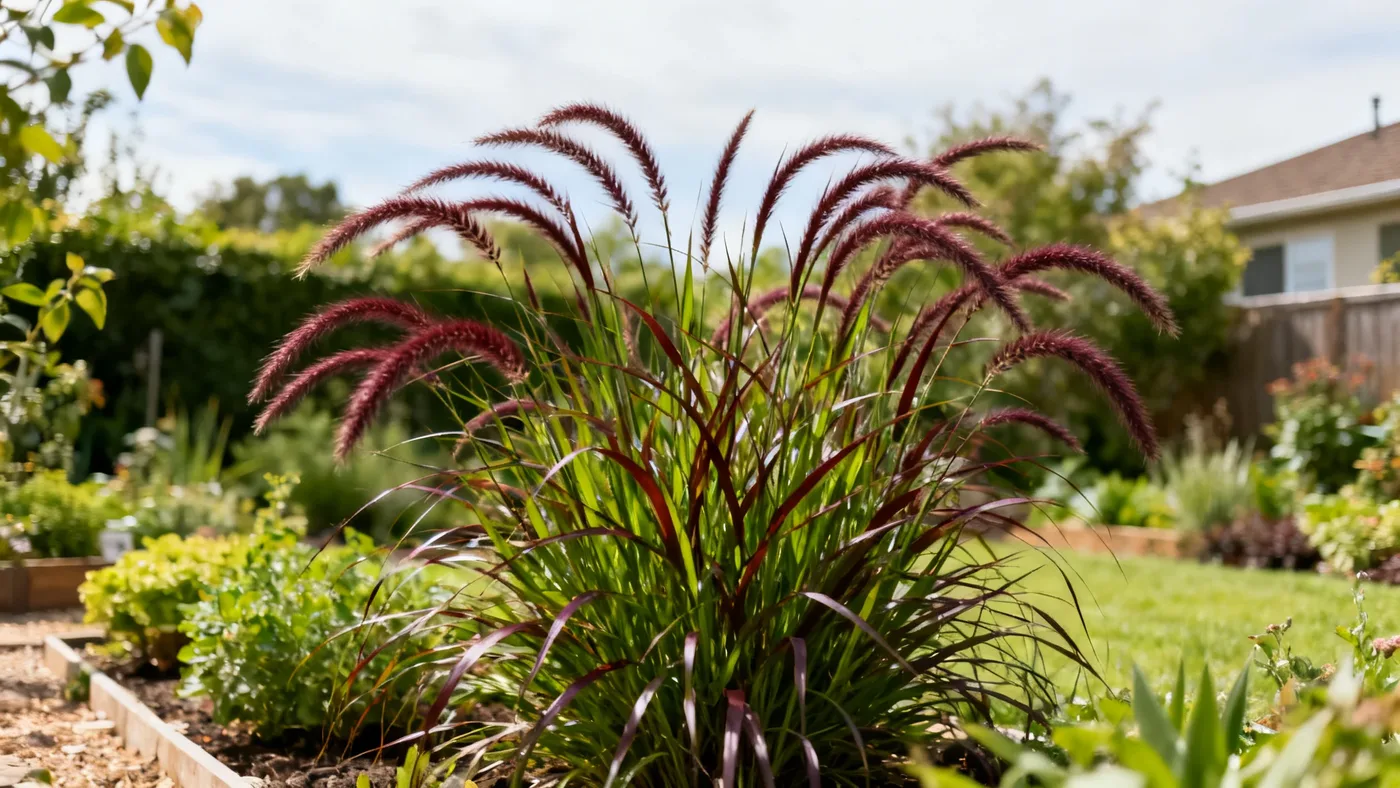
How Big Does Karley Rose Fountain Grass Really Get?
Karley Rose Fountain Grass is a moderate-sized ornamental grass that fits well into mixed perennial borders and mid-height accent plantings. Understanding its mature dimensions, growth pace, and seasonal changes helps you place it correctly and set realistic expectations. This FAQ covers the questions we hear most about sizing this grass.
Basic Size Questions
What is the mature height of Karley Rose Fountain Grass?
Karley Rose reaches 24 to 36 inches tall at maturity, with the measurement including both the foliage mound and the flower plumes. The plumes can push the total height toward the upper end of that range, especially in favorable growing conditions. This makes it a solid mid-height plant for layering in borders.
How wide does Karley Rose get?
The mature spread is typically 24 to 30 inches across. This width matches well with the height, creating a fountain-shaped clump that looks balanced and full. Plan your spacing accordingly so mature plants don't crowd neighboring perennials.
Does the plume height count toward the overall height?
Yes, the 24 to 36 inch measurement includes the flowering plumes. The foliage mound itself is somewhat shorter, but when the smoky rose-pink plumes emerge in early summer and beyond, they add significant vertical presence to your garden. As the plumes fade to beige and tan in fall, the total visual height remains prominent.
Can Karley Rose get taller than 36 inches?
In ideal conditions with excellent soil and consistent moisture, plumes may stretch slightly beyond 36 inches, but this is not the norm. Most gardeners see heights in the 24 to 36 inch range. If your plant appears taller or unusually leggy, it may be signaling insufficient light or overcrowding.
Growth Timeline
How long does it take Karley Rose Fountain Grass to reach full size?
Karley Rose reaches its full mature clump size in 2 to 3 years. Growth is moderate, with the plant adding roughly 6 to 12 inches per year until it reaches maturity. The first year from a nursery-grown division typically shows solid establishment and some flowering, but the bulk of the clump-building happens in years two and three.
Will my Karley Rose flower in the first year?
Yes. Nursery-grown divisions bloom in their first year, usually starting in early summer and continuing through fall. This early flowering is one reason many gardeners choose established divisions over seed (though this cultivar is largely sterile from seed anyway).
What does the plant look like in its first year versus year two?
In year one, you will have a modest clump with plumes by midsummer, but the foliage and width may look a bit thin. By year two, the clump fills out noticeably, and by year three it approaches full maturity. Year-to-year growth slows as the plant reaches its genetic size limit, typically stabilizing within that 24 to 30 inch width range.
How long does Karley Rose stay active growing each year?
Growth is most vigorous in spring and early summer. Once temperatures peak in midsummer, growth slows, though blooming continues through fall. In late fall and winter, the foliage deepens to burgundy and bronze tones but stops extending. New growth resumes in spring after cutback.
Spacing and Placement
How far apart should I space Karley Rose Fountain Grass?
Space plants 24 to 30 inches apart, center to center. This matches the mature width and allows each clump to reach full size without crowding its neighbors. If you prefer a denser look immediately, you can space slightly closer, but don't go below 20 inches or you risk competition for water and nutrients.
Can I tuck Karley Rose into a smaller space?
It depends on the space. A 20-inch gap is tight but survivable for a year or two. However, the grass will eventually need that full 24 to 30 inch spread to reach peak size and flowering. If your space is significantly smaller, consider a dwarf ornamental grass like Festuca glauca or one of the smaller fountain grass cultivars.
What size border or bed do I need for multiple Karley Rose plants?
A 3-foot-wide perennial border with 24-inch spacing will fit two plants comfortably at staggered positions. For a 4-foot-wide bed, you can fit two plants side by side at full spacing. Group odd numbers (3 or 5) for a natural look and calculate spacing based on 24 to 30 inches per clump.
Is Karley Rose too big for a small garden?
Not necessarily. At 24 to 36 inches, it is mid-sized, not a giant grass. Many small gardens successfully feature one or two plants as focal points or repeated accents. The key is planning your bed size and spacing in advance so the mature clump doesn't dominate the entire space.
Climate and Regional Effects on Size
Does Karley Rose grow differently in different hardiness zones?
Karley Rose is reliably hardy in zones 6 to 9. In zones 6 and 7, it may die back more completely in winter and regrow from the roots each spring, which can mean slightly smaller clumps in cold-winter years. In zones 8 and 9, some foliage may persist through winter, and the plant may reach the upper end of the size range more consistently.
Will heat stress make Karley Rose smaller?
Heat itself does not stunt Karley Rose; the plant tolerates hot summers well. However, severe drought stress combined with heat can slow growth. Consistent moderate watering until established helps the plant reach full size more predictably.
Does shade affect how large the plant gets?
Yes. Karley Rose is a full-sun plant and tolerates only very light afternoon shade in hot climates. In shade or insufficient light, the clump stays smaller, produces fewer plumes, and may look thin or leggy. Plant in full sun for the densest, most robust growth toward that 24 to 36 inch range.
Can I grow Karley Rose in a hot or dry climate region?
Yes. Once established, Karley Rose has moderate to good drought tolerance. In drier regions, provide regular water the first season to encourage root establishment, then moderate watering thereafter. The plant will reach full size with this care, though consistent moisture produces the most vigorous growth.
Container Growing
How large does Karley Rose get in a container?
In containers, Karley Rose typically reaches 20 to 28 inches tall and stays slightly more compact than in-ground, roughly 20 to 24 inches wide. Root restriction naturally limits size somewhat, but the plant will still be substantial and flowering. Use a large container (a #3 nursery pot or 15-gallon minimum) with excellent drainage.
What size pot should I use for Karley Rose?
A #3 nursery container (roughly 15 gallons) is the minimum for good root development. A 20-gallon container is even better if space allows. The larger the container, the closer to in-ground size you will achieve. Make sure it has multiple drainage holes and use a well-drained potting soil.
Does a container-grown plant grow more slowly than an in-ground plant?
Yes, slightly. Container plants grow a bit more slowly than in-ground plants because roots are confined and water and nutrient uptake can be tighter. Expect the plant to reach mature size in 3 to 4 years in a container versus 2 to 3 years in the ground.
Comparison to Other Grasses
How does Karley Rose compare in size to other fountain grasses?
Karley Rose is mid-sized among fountain grasses. Other Pennisetum orientale cultivars like Tall Tails and Fairy Tails have similar mature heights. The related species Pennisetum alopecuroides (Chinese fountain grass) is generally hardier but may be slightly more compact in most cultivars.
Is Karley Rose smaller or larger than Purple Fountain Grass?
Karley Rose and Purple Fountain Grass (Pennisetum setaceum Rubrum) are very similar in size, both reaching 24 to 36 inches. However, Purple Fountain Grass is tender and often grown as an annual, whereas Karley Rose is a true perennial in zones 6 to 9. Both offer striking plumes and burgundy-tinged foliage.
Can I mix Karley Rose with smaller companion grasses?
Absolutely. Pair Karley Rose with dwarf grasses like blue fescue (8 to 12 inches) or creeping sedges (6 to 10 inches) for height layering. The taller Karley Rose plumes will rise above shorter companions, creating depth and visual interest in mixed borders.
Controlling or Adjusting Size
Can I prune Karley Rose to keep it smaller?
During the growing season, avoid pruning to avoid damage to developing plumes. The standard pruning is a late-winter cutback to 3 to 6 inches above ground before new spring growth emerges. This cutback does not reduce mature size; it simply removes old foliage and makes room for fresh growth.
Does dividing Karley Rose make the clumps smaller?
Yes, initially. When you divide an established clump, each new division is smaller until it regrows. Divisions typically take 2 to 3 years to reach full mature size again. This is the primary propagation method since the cultivar is largely sterile from seed.
Will Karley Rose flop or split open as it grows larger?
Flopping and splitting can occur if the plant is grown in overly rich soil or insufficient light. Full sun and moderate soil fertility help maintain an upright, compact clump. Support cages are rarely needed if the plant is sited correctly, but some gardeners use a peony ring for insurance in windy locations.
How do I know if my Karley Rose is undersized for its age?
If your plant is in year three and still noticeably under 20 inches wide, check sun exposure (should be full sun), soil drainage (should be well-drained), and water consistency (regular watering the first season, then moderate). Poor light, waterlogging, or severe drought can stunt growth. Fertilizer should be light; over-fertilizing reduces flowering and can cause flopping without increasing size significantly.
Winter Size and Persistence
Does Karley Rose get smaller in winter?
In zones 6 and 7, Karley Rose typically dies back to the ground after hard frost, so the visible plant size drops to zero until spring cutback and regrowth. In zones 8 and 9, some tan foliage may persist through mild winters, providing winter interest and structure. Either way, you cut back to 3 to 6 inches in late winter before new growth emerges.
Can I leave dried plumes on the plant over winter?
Yes. The tan, dried plumes provide textural interest through late fall and into winter in milder zones. Many gardeners leave them standing until late winter, then cut back before new growth in spring. They don't harm the plant and offer food and shelter to overwintering beneficial insects.
Quick Reference Sizing Guide
| Dimension / Timeline | Measurement |
|---|---|
| Mature Height (including plumes) | 24 to 36 inches |
| Mature Width | 24 to 30 inches |
| Annual Growth Rate | 6 to 12 inches per year |
| Years to Full Maturity | 2 to 3 years |
| First-Year Flowering | Yes, from nursery divisions |
| Recommended Spacing | 24 to 30 inches apart |
| Hardiness Zones | 6 to 9 |
| Container Size Minimum | #3 pot or 15-gallon |
| Spring Cutback Height | 3 to 6 inches above ground |
| Bloom Season | Early summer through fall |
For complete growing guidance on planting, care, and maintenance, see our full growing guide.