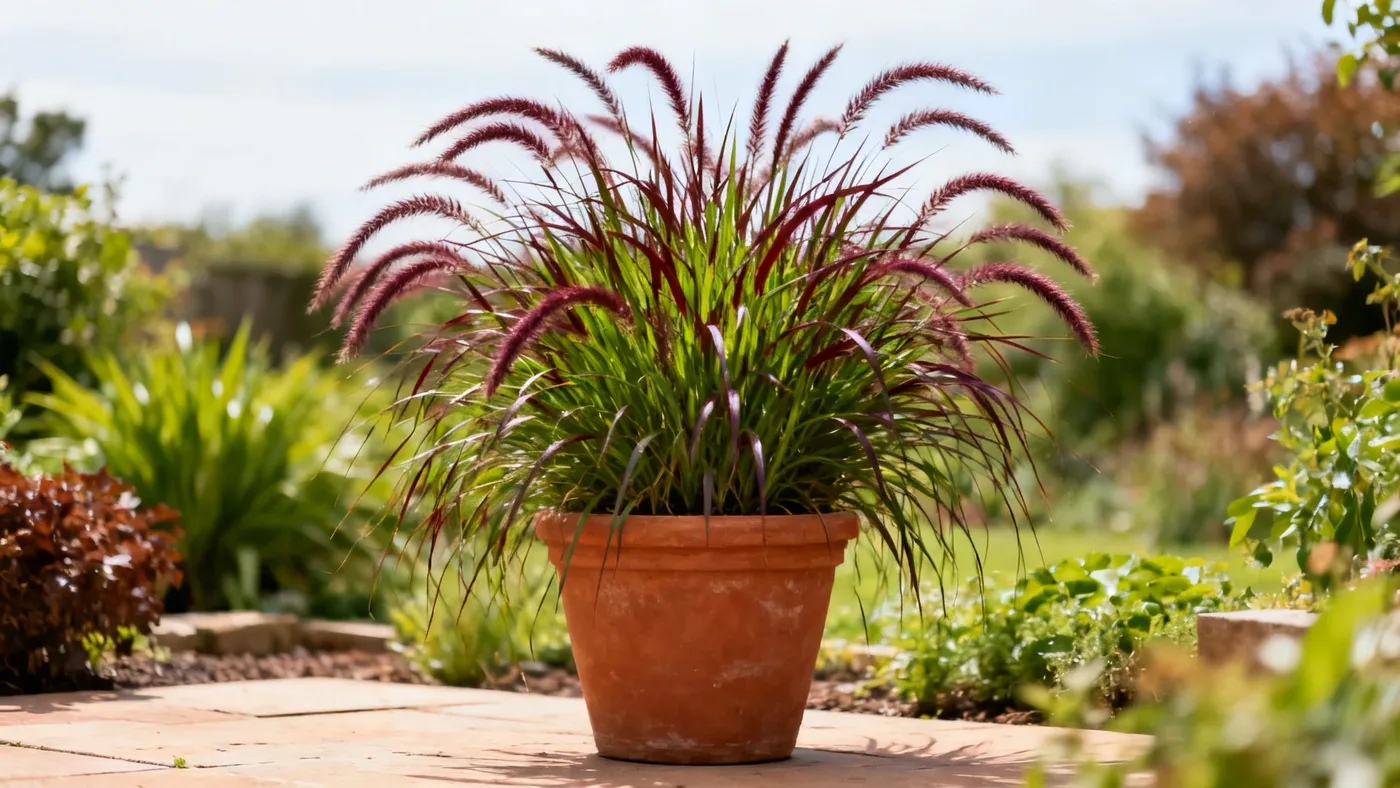
Growing Karley Rose Fountain Grass in Pots and Containers
Karley Rose Fountain Grass (Pennisetum orientale 'Karley Rose') is an excellent choice for gardeners who want the height and color of a premium ornamental grass without dedicating precious garden space. Growing fountain grass in pots lets you position the plant exactly where you want it, move it to follow the sun, and bring it into protected areas during harsh winters in colder zones. In zones 6 through 9, this cultivar thrives in containers with the same reliable performance you would expect from an in-ground planting.
Container growing does require more attention to water and drainage than in-ground cultivation, but the payoff is substantial. A well-grown Karley Rose in a pot delivers the same elegant rose-pink plumes and burgundy-tinged foliage that make this plant a standout accent. This guide walks you through setup, planting, and seasonal care to help you succeed.
What You Will Need
Before you plant, gather these materials:
- Large pot or container, 15 gallons or larger for mature plants (see sizing guidance below)
- Potting soil or soil mix designed for containers, well-draining formulation
- Grit, perlite, or coarse sand (optional, to improve drainage)
- Saucers or pot feet to elevate the pot and allow drainage
- Balanced slow-release fertilizer (10-10-10 or similar)
- Mulch such as shredded bark or compost for top-dressing
- Watering can or soaker hose
- Pruning shears or hedge knife for late-winter cutback
Container Selection and Sizing
The most common mistake is underestimating how much room Karley Rose needs. This cultivar matures to 24 to 30 inches wide and 24 to 36 inches tall (including plumes). At maturity, a single plant filling a large container creates a striking focal point. Choose a container that is at least 15 gallons for a nursery-grown division or well-established plant; a 20 to 25-gallon pot gives more room for the root system to expand and makes the soil retain moisture longer between waterings.
The pot must have drainage holes in the bottom, whether it is terra cotta, plastic, ceramic, or fabric. Karley Rose is sensitive to waterlogged soil, and drainage is non-negotiable. If you love the look of a pot without holes, use it as a decorative outer container and plant into a drainage-enabled pot nested inside.
Material choice affects how often you water. Terra cotta and fabric pots dry faster than plastic, requiring more frequent watering in hot weather. Plastic and glazed ceramic retain moisture longer. In zones 6 and 7, choose a pot that will not crack if left outdoors through winter; plastic, resin, and treated fiber-cement weather cold better than standard terra cotta.
Step-by-Step Planting Instructions
Step 1: Prepare Your Soil Mix
Karley Rose tolerates average soils but strongly prefers well-drained growing media. For containers, this means using a commercial potting soil (not garden soil). If your potting soil feels dense or compacted, mix in 10 to 20 percent perlite, coarse sand, or grit by volume to increase air space and drainage. A simple recipe is two parts potting soil to one part perlite or sand. The goal is soil that drains freely but still holds enough moisture to keep the plant hydrated between waterings.
Step 2: Fill the Container
Add soil to the pot until it is about one-third full. Gently tamp it down to eliminate large air pockets, but do not pack it hard. You want a firm base, not compacted soil that restricts root growth.
Step 3: Position the Plant
Remove the Karley Rose from its nursery pot and loosen the roots gently with your fingers. Set the plant into the center of the container so that the top of the root ball is level with or slightly below the rim of the pot. The crown (where the shoots emerge from the roots) should not be buried; plant it at the same depth it was growing in the nursery pot. Backfill around the plant with your prepared soil mix, pressing gently to close air gaps without crushing the roots.
Step 4: Water and Settle
Water thoroughly after planting until water drains from the bottom holes. This settles the soil and eliminates most air pockets. Let the pot drain completely before moving it. If the soil level drops noticeably after the initial watering, add more soil and water again lightly.
Step 5: Top-Dress with Mulch
Apply 1 to 2 inches of shredded bark or compost around the plant, keeping it 2 inches away from the shoots to prevent rot and pest issues. Mulch helps retain soil moisture and moderates temperature fluctuations inside the pot, which is especially valuable in hot climates.
Step 6: Position for Sunlight
Place the pot in full sun. Karley Rose needs at least 6 to 8 hours of direct sunlight daily to flower reliably and maintain its upright form. It tolerates very light afternoon shade in extremely hot climates, but afternoon shade in cooler zones reduces flowering. Choose a location where the pot will receive unobstructed sun for most of the day.
Watering and Feeding
Water regularly during the first growing season to help the roots establish. Check the soil every 2 to 3 days by inserting your finger 1 to 2 inches into the soil; if it feels dry, water deeply until it drains from the bottom. Once the plant is established (typically by mid-summer of the first season), you can reduce watering frequency. Karley Rose is moderate to somewhat drought tolerant once established, meaning it can handle occasional dry periods but performs best with consistent moisture during the growing season.
In containers, soil dries faster than in the ground, so even established plants need water more often than in-ground specimens. During hot stretches in summer, daily watering may be necessary, especially in terra cotta pots. In fall and early winter, as the plant slows growth, water less frequently but do not let the soil dry completely.
Fertilize in spring as new growth emerges with a balanced slow-release fertilizer (roughly 10-10-10). Follow the label instructions for the pot size. Avoid over-fertilizing; excess nitrogen promotes foliage at the expense of flowers and can cause the clump to flop or split. One application in spring is usually sufficient for container-grown Karley Rose.
Seasonal Care and Pruning
Karley Rose blooms from early summer through fall, typically June to frost in warm climates. The plumes emerge rose-pink and gradually fade to beige or tan. Many gardeners enjoy leaving the dried plumes on the plant through winter for visual interest, and they can persist into early spring if conditions allow.
In late winter or early spring, once frost danger has passed and you see new shoots emerging from the base, cut back the entire plant to 3 to 6 inches above the soil surface. You can use hedge shears or a knife to do this quickly. This pruning removes dead or damaged tissue, shapes the plant, and encourages vigorous fresh growth. Do not prune during the growing season; Karley Rose does not need pinching or deadheading.
During the growing season, monitor for occasional spider mites (more common in dry conditions) or mealybugs. These pests are rare on ornamental grasses but can appear under stress. If spotted, spray affected leaves with water to dislodge mites or treat with horticultural oil per label instructions. Karley Rose is generally disease-free, but in humid conditions with poor air circulation, leaf spot fungi can develop. Ensure the pot has good drainage and air flow to prevent fungal issues.
Overwintering in Cold Zones
In zones 6 and 7, Karley Rose is marginally hardy outdoors in containers. Because pots lose heat faster than the ground, roots are more exposed to cold damage. Mulch heavily around the plant (8 to 12 inches of compost or straw) to insulate the crown and roots. Alternatively, move the pot to a sheltered location against a south-facing wall or into an unheated garage or shed for the winter. If you store the pot indoors, keep it in a cool space (40 to 50 degrees Fahrenheit) and water sparingly. Resume regular watering in spring as growth resumes.
In zones 8 and 9, container plants can remain outdoors year-round with minimal protection. A light mulch protects the crown from occasional hard freezes.
Tips and Common Mistakes
Pot too small: Karley Rose grows steadily over 2 to 3 seasons to reach full size. A pot smaller than 15 gallons restricts root growth, limits mature clump size, and increases watering frequency. Start with a 20-gallon pot if you plan to keep the plant for several years.
Poor drainage: Soggy soil is the fastest way to kill Karley Rose in a container. If water does not drain within a few minutes of watering, repot into fresher, better-draining soil or add drainage holes if the pot design allows.
Overwatering in fall and winter: As growth slows, reduce watering frequency. The soil should dry somewhat between waterings. Overwatering in cool months is a common cause of root rot.
Insufficient sunlight: A pot in part shade or afternoon shade often produces fewer plumes and a less dense, more floppy clump. Move the container if flowers decline year over year.
Forgetting to top-dress: Mulch conserves moisture and keeps soil temperature stable. It also looks intentional and finished.
Expected Results
A nursery-grown division planted in spring typically blooms by early summer of the first year. Over 2 to 3 seasons, the clump expands toward its full mature width of 24 to 30 inches, filling the container and creating a dramatic accent. The foliage remains a fine-textured, arching green with burgundy tints, becoming more bronze or burgundy in fall. Bloom displays last from June through frost, with peak flowering in mid-to-late summer. Once established, the plant becomes more drought tolerant and requires less frequent watering, though consistent moisture produces the best results.
For more detailed information on bloom characteristics, see Karley Rose Fountain Grass: Blooms, Color, Timing, and Duration. For comprehensive year-round care guidance, refer to the Complete Growing Guide.
Quick Reference: Container Growing Checklist
| Task | Timing | Notes |
|---|---|---|
| Choose container | Before planting | 15+ gallon, drainage holes required |
| Prepare soil | Before planting | Well-draining potting mix, add 10-20% perlite if needed |
| Plant | Spring after last frost | Crown level with soil surface, water thoroughly |
| Water | Regular, reduce in fall | Check soil 1-2 inches deep; drain completely after watering |
| Fertilize | Early spring | Balanced slow-release, once per year |
| Prune | Late winter/early spring | Cut back to 3-6 inches above soil, before new growth |
| Mulch | Spring and as needed | 1-2 inches, keep 2 inches away from shoots |
| Overwinter (zones 6-7) | Fall/winter | Mulch heavily or move pot to shelter |
| Monitor for pests | During growing season | Spider mites, mealybugs rare; ensure good air flow |
| Expect full size | 2-3 years | 24-30 inches wide, 24-36 inches tall including plumes |