Is Karley Rose Fountain Grass Toxic to Dogs and Cats?
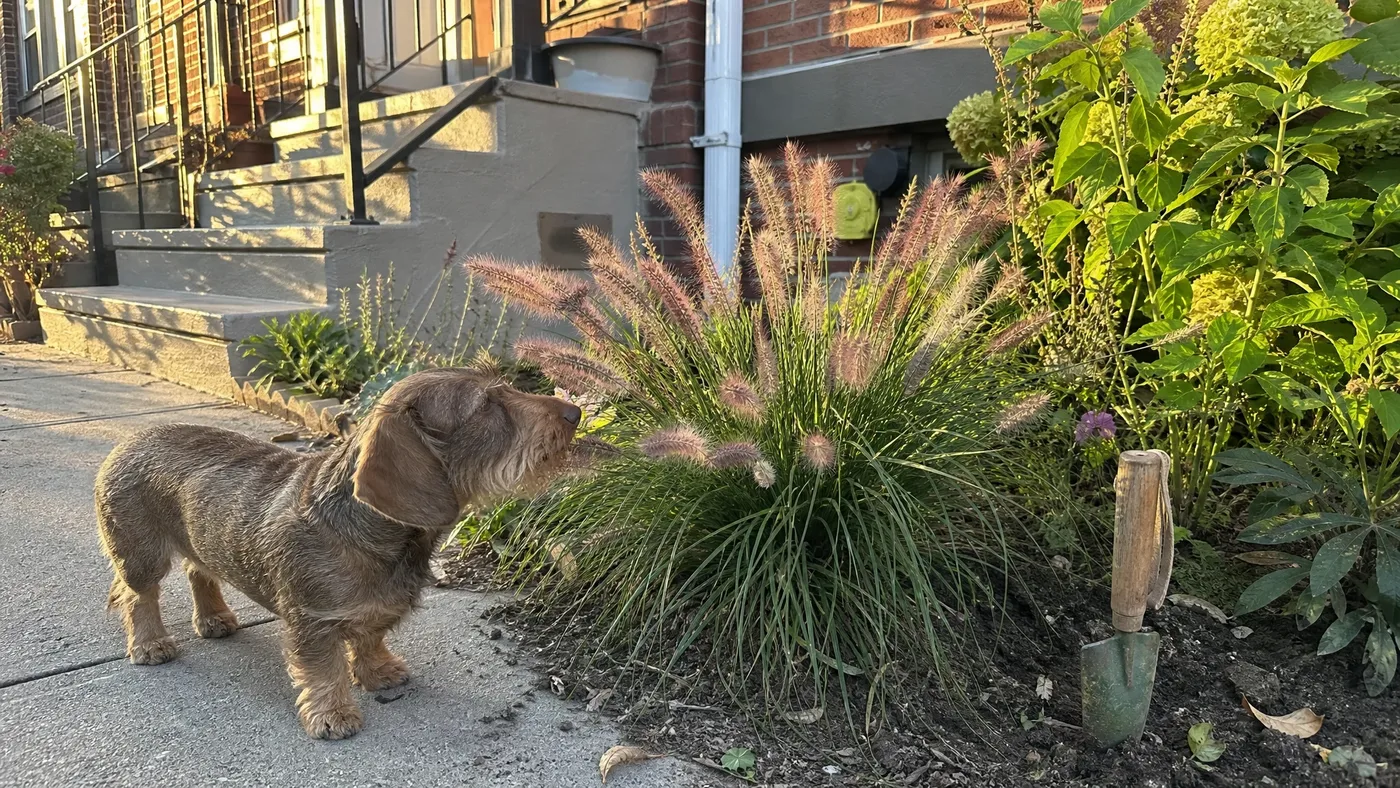
A shopper kneels at a garden-center shelf with a pot of rose-purple plumes in one hand and a phone in the other, typing the question before the pot goes in the cart. The dog is waiting at home, and so is the cat. One of the most common questions we get is whether Karley Rose is safe around them.
The answer is reassuring, but the details decide how you plant it. Blades get chewed, plumes brush against fur, and a pet that eats any plant can end up with a sour stomach. This guide covers everything you need to know about living with Karley Rose and pets, from what the pet-safe lists say to where to plant it and when a call to the vet makes sense.
Pet-Safe Lists Naming Karley Rose Fountain Grass
Start with what the lists say. A national gardening publication names Karley Rose fountain grass by cultivar on its list of dog-safe plants. That is a stronger answer than a general "fountain grass is fine" note, because cultivars of the same species can differ in size, color and hardiness, and a list that names yours saves you from guessing.
The ASPCA backs this up from the species side. Its fall plant guidance says fountain grass (Pennisetum setaceum) is considered non-toxic to pets. That is a different species from Karley Rose, which is Pennisetum orientale, so treat the ASPCA note as support for the cultivar-specific list, not as proof on its own.
Read the fine print too. All plant material a pet eats may cause mild gastrointestinal problems, even when the plant is labeled non-toxic. Non-toxic means the plant is not a poison. It does not mean your dog can eat a bellyful of it with no consequences.
Check the tag before you buy. It should read Pennisetum orientale 'Karley Rose', because other fountain grasses, including the purple kind, are different plants with different habits, as our Karley Rose and purple fountain grass comparison explains. If the tag matches, trust the lists, buy the pot, and spend your effort on chewing and plume cleanup, which the next sections cover.
Decide Whether Dogs Can Chew the Blades
Dogs chew grass, and a clump of arching blades at nose height is an invitation. Karley Rose forms a clump about 2–3 feet tall and wide, so the blades sit right where a medium dog's nose passes. Blade chewing is a behavior question here far more than a poison question.
Watch your dog for the first week after planting. Most dogs sniff the new plant, take a blade or two and lose interest. The species is deer and rabbit resistant, so browsing animals generally pass it by, but a bored dog is a different animal from a deer.
Puppies and diggers are the exception. A young plant has a small root system, and a dog that yanks at the blades can pull the whole clump loose, which hurts the plant more than the dog. For the first season, ring the clump with a few stakes and a loop of garden twine, or set a low wire hoop over it until the roots take hold.
Make the call by behavior. If your dog nips and moves on, leave the grass unprotected and do not scold. If your dog shreds plants, guard the clump through its first season and reassess once it is thick. A dog that eats every plant it meets needs supervised yard time around all your plants, not just this one.
Seed-Head Awns and Where to Plant Them
Awns are the bristles that grow from the seed heads of many grasses. On foxtail-type grasses they are stiff and barbed, and they work forward into ears, eyes, nostrils and the skin between toes, where they cause real trouble. This is the mechanical hazard that makes some ornamental grasses a poor match for dogs that run through beds.
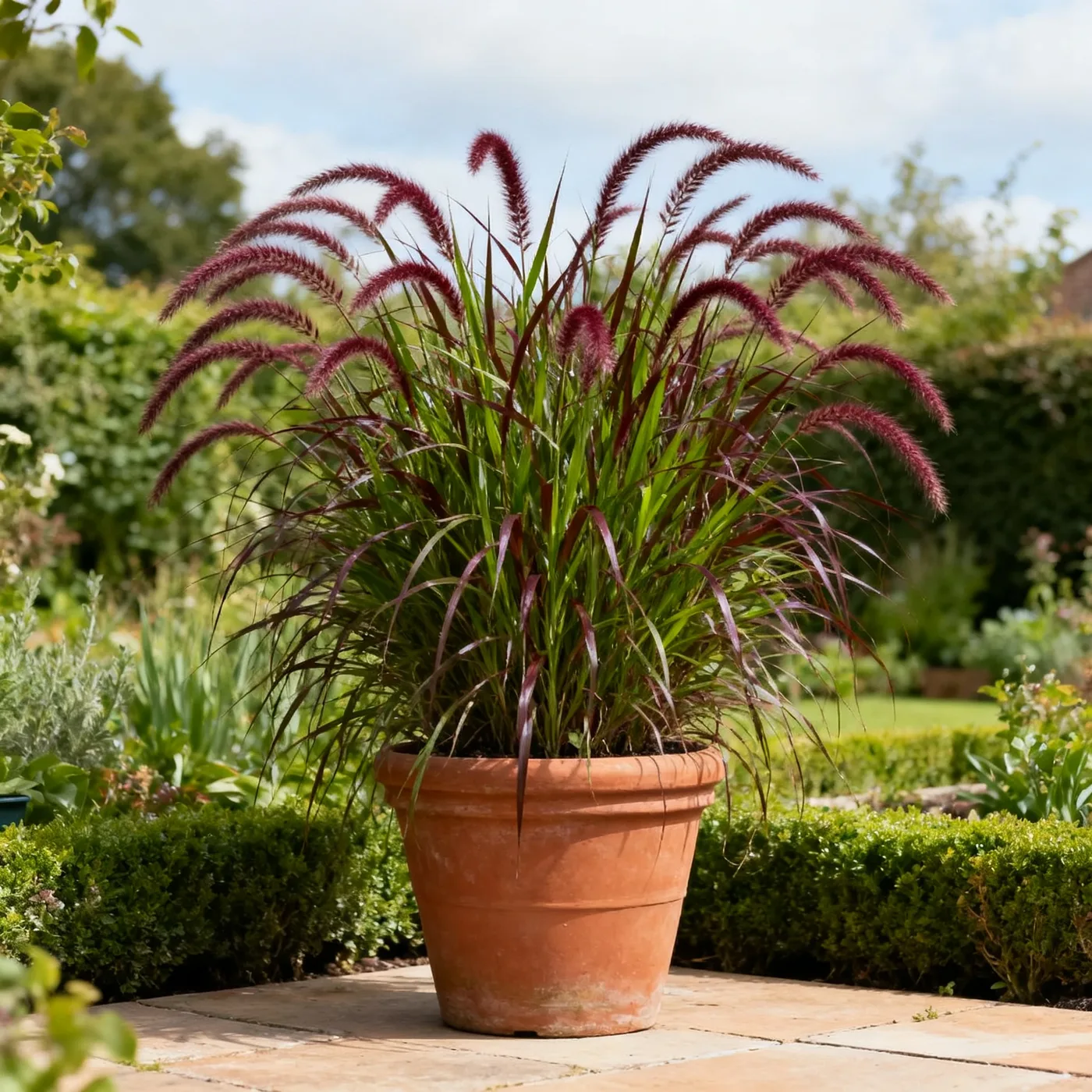
Karley Rose does not carry that kind of awn. The flower spikes are hairy, narrow, silvery rose-pink panicles about 4–5.5 inches long, like soft bottle-brushes. The bristles are soft hairs, and that softness is the gap between a plume you can stroke and a seed head that burrows.
Soft does not mean maintenance-free. The plumes open in early summer and keep coming until frost, and late in the season they fluff apart and shed. Stray fluff can mat in a long coat or cling to a cat's fur. Brush your pet after walks through the bed in fall, and you have handled the one real chore this plant has.
For placement, you do not need to push Karley Rose away from paths. Plant it along a walkway, set far enough back that the arching blades do not flop across the surface. Keep it out of the line your dog sprints along, since a dog at full speed flattens any plant. Cut the old plumes and blades back as described in our cutting-back guide so the shed fluff does not linger into spring.
Choose a Spot for Karley Rose Fountain Grass Near Cats
Cats care less about the plant than about the route. They follow the same lines every day, along fences, under shrubs and up to a warm patch. Map those lines before you dig, because a plant parked directly on a cat route gets trampled, slept on or used as a litter box.
Karley Rose wants full sun, and sun is exactly where cats nap. Our sun requirements guide covers what the plant needs. Expect cats to take an interest in the warm ground around the clump, and leave a patch of bare, loose sunny soil or a flat stone beside it. Cats often pick the open spot over the plant's crown.
Cats nibble grass too, and swaying blades invite a swat. A mature clump takes that in stride, but a single young plant can get shredded, so give new plants a season to fill out before you judge how a cat treats them. Planting two or three together makes a clump that shrugs off the attention.
Pick the spot this way. Put the clump at the edge of a bed, one step off the cat's usual route, with the sunny nap space on the far side. Skip fence-top landing spots, narrow gaps cats squeeze through and the lip of a window well. If a cat still insists on the clump, a pot of cat grass nearby usually redirects the chewing.
Handling a Pet That Eats Karley Rose Fountain Grass
Sooner or later a pet will take a bite. What we tell customers is to treat the first nibble as a routine event, not an emergency. A calm, repeatable routine keeps you from overreacting and helps you spot the rare case that needs more than watching.
- Move your pet away from the plant calmly, and take any loose blades or plume bits out of its mouth if it lets you.
- Note the time and roughly how much was eaten, because your vet may ask later.
- Put out fresh water and feed normal meals unless your vet says otherwise.
- Think back on what you applied to the bed. If you used a fertilizer or spray recently, read the label for pet instructions. Karley Rose rarely needs feeding, as our fertilizing guide explains.
- Watch your pet through the rest of the day for vomiting, drooling or loose stool.
A bit of grass in a vomit or stool is common after grass eating, and mild stomach problems can follow any plant material. Mild and brief is what you expect. A pet that eats a blade, acts normal and eats its dinner needs nothing more from you.
Decide your rule ahead of time. One nibble with no symptoms means no action. Repeated chewing means you redirect the habit with a chew toy, a pot of pet grass or a stake-and-twine guard around the clump. Do not rip the plant out over one bite.
When Stomach Upset Means a Call to the Vet
Mild upset after grass is common, even from plants labeled non-toxic. The skill is knowing when mild stops being mild. Draw that line now, before it happens, not at 2 a.m. with a pet on the rug and your phone in your hand.
Use this table as a rule of thumb. It is not a diagnosis, and your own vet knows your pet's history better than any chart does.
| What you see | What to do |
|---|---|
| One brief vomit or soft stool, pet acts normal | Offer water, note the time and keep watching |
| Repeated vomiting or diarrhea | Call your vet |
| Refuses food, hides or seems tired | Call your vet |
| Gagging, pawing at the mouth, head shaking or squinting after plume contact | Call your vet, since something may be lodged |
| Unsure what was eaten, or the plants were treated | Call, with the product label in hand |
When you call, give the plant's full name, Pennisetum orientale 'Karley Rose'. Say how much your pet ate and when, which symptoms showed up and how long ago, and your pet's age and weight. Mention any fertilizer, herbicide or pest product used on the bed.
Also list the other plants growing nearby. A mixed bed may hold something other than the grass, and your vet needs the whole picture. When in doubt, call early, because a quick question costs far less than waiting out a pet that is getting worse.
Planting Karley Rose Fountain Grass Where Pets Roam
Plant it. The lists name Karley Rose as dog-safe, the plumes are soft bottle-brushes, and a clump that reaches 2–3 feet tall and wide fits beside a path or patio. Give it full sun and good drainage, and space plants as our spacing guide describes so the blades do not lean into walkways. Guard young plants through their first season if your dog digs.
Keep a brush by the door in fall, cut the plumes back at season's end, and call your vet if stomach upset goes past mild. The plant itself is safe and the awns are the only real chore.
Karley Rose Fountain Grass
Nursery-grown Karley Rose Fountain Grass in sizes from Quart, shipped to your door.
From $29.99
Shop Now →Karley Rose is raised on our farms in bright, open ground where water drains away quickly, which is just the spot we would pick for it beside a path your dog and cat use. We are a small grower-run business and send out only the grasses we would put in our own beds. If a pet-friendly planting is on your list, have a look at the plants we have ready.