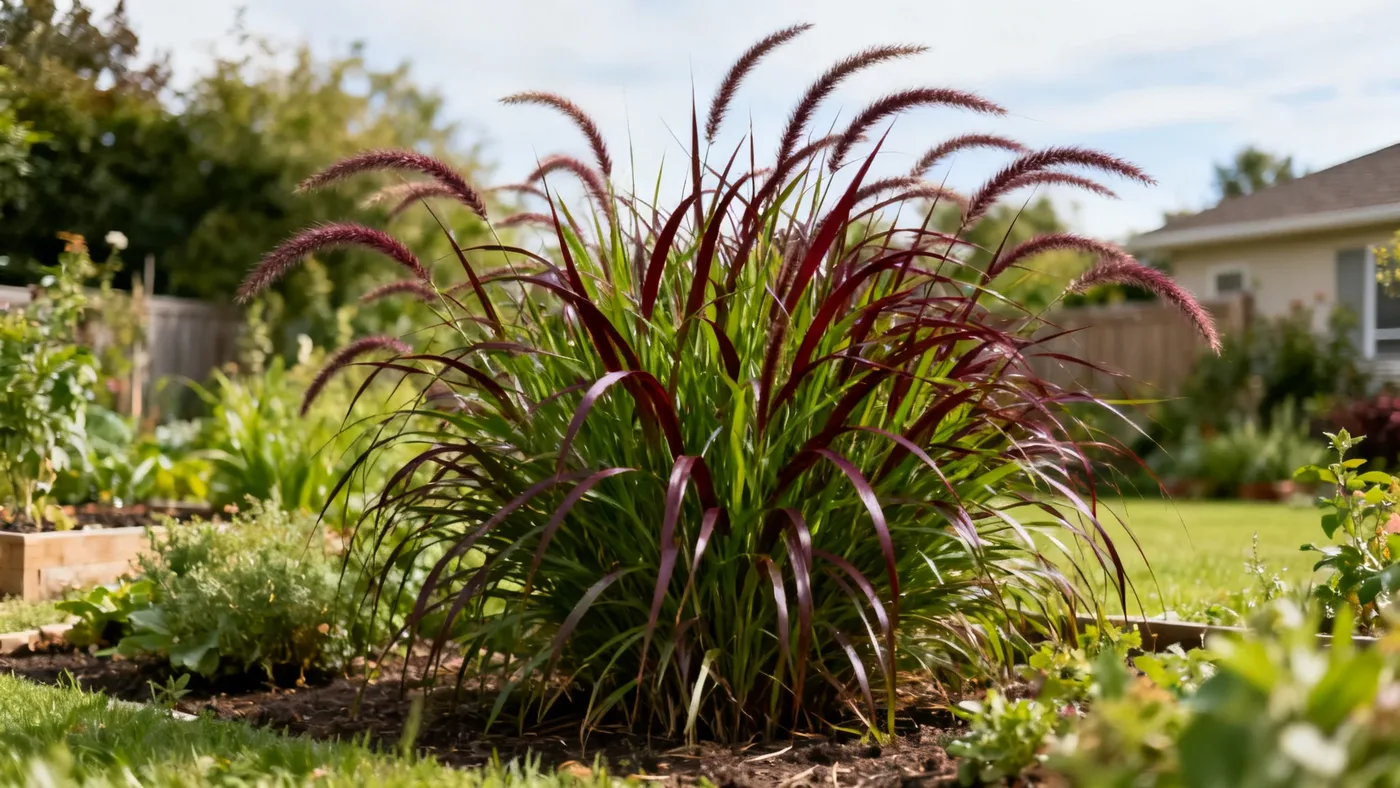
Sun Requirements for Karley Rose Fountain Grass Explained
Why Sun Is the Foundation for Karley Rose Success
Karley Rose Fountain Grass sun requirements are straightforward: the plant needs full sun to thrive. Full sun means at least 6 hours of direct, unobstructed sunlight daily, though 8 or more hours is ideal. This is not flexible guidance. Inadequate light directly causes weak growth, sparse blooming, and the frustrating problem of flopping or splitting clumps as the plant stretches toward available light.
The plant can tolerate very light afternoon shade in hot climates, but this is a narrow exception, not an invitation to part-shade gardening. In zones 6 through 7, do not rely on this shade allowance. Prioritize full sun exposure throughout the day.
What You Need to Assess Your Site
Before planting Karley Rose Fountain Grass, you need only simple observation tools and basic information:
- Clear sight of your intended planting location at three different times of day (morning, midday, afternoon)
- A notebook or phone to record sun exposure patterns over at least one week
- Knowledge of shadows cast by structures, trees, or fences on your property
- Your USDA hardiness zone (Karley Rose thrives in zones 6 to 9)
- An awareness of how your garden's sun pattern changes between seasons
Expensive equipment is unnecessary. Careful observation beats any tool.
Step-by-Step Sun Assessment and Plant Positioning
Step 1: Track Direct Sun Over Multiple Days
Visit your intended planting location at three consistent times: 8 a.m., noon to 1 p.m., and 4 p.m. Record which areas receive direct sun and which fall into shadow. Do this for at least five days to account for cloud cover and weather variation. Direct sun means the rays hit the ground with no obstruction from trees, buildings, or structures. Dappled light from deciduous trees does not count as full sun.
Count your available hours. If the site receives 6 to 8 hours of direct sunlight, it meets the minimum requirement for Karley Rose Fountain Grass. Eight or more hours will deliver superior flowering and foliage color intensity.
Step 2: Identify Afternoon Shade and Heat Patterns
In zones 8 and 9 where summer temperatures regularly exceed 90 degrees, afternoon shade between 3 p.m. and 5 p.m. is a legitimate tolerance. This light afternoon shade can prevent foliage stress during extreme heat while still allowing sufficient overall sun exposure.
In cooler zones 6 and 7, do not count on this afternoon shade allowance. Maximize sun from morning through late afternoon. If you are choosing between a site with morning sun only or afternoon sun only, morning sun combined with midday exposure is preferable because it typically delivers more photosynthetically active light.
Step 3: Account for the Plant's Mature Width and Height
Karley Rose reaches 24 to 36 inches tall (foliage mound plus flower plumes) and spreads 24 to 30 inches wide. Do not plant it directly adjacent to structures, hedges, or other plants that will shade the mature clump. Many gardeners make this mistake: they position the plant near a south-facing wall or hedge, expecting that southern exposure alone guarantees light. As neighboring plants or structures mature, they cast expanding shadows that gradually rob the fountain grass of midday and afternoon sun.
Space Karley Rose at least 24 to 30 inches away from other plants and structure edges. This spacing ensures full light access as everything ages.
Step 4: Project Winter Sun Angles and Summer Shade Creep
Winter sun angles are much lower than summer angles. A spot receiving full summer sun may be partially shaded in December or January. For Karley Rose this is acceptable because the plant is cut back in late winter or early spring before new growth emerges. However, the important months are spring through fall, your main growing season. Ensure no structure, tree, or hedge blocks light for most of that window.
Trees near your planting site will grow. Picture where their canopies will reach in three to five years. If that projected canopy will shade your Karley Rose location significantly, choose a different site now rather than relocate an established clump later.
Step 5: Plant in Spring and Monitor Performance
Plant Karley Rose Fountain Grass in spring, after the last frost, to allow root establishment before summer heat. Position the clump in the center of its designated space so it receives equal light from all angles.
Monitor growth and flowering throughout the first season. Healthy plants show upright, dense foliage, begin blooming in early summer (typically June), and produce smoky rose-pink to purplish-pink plumes. If the clump leans noticeably toward light or blooming is minimal, assess whether shade has increased or your sun calculation was off. Spring of the second year is still a reasonable time to relocate if necessary.
Common Sun-Related Mistakes and How to Prevent Them
Mistake 1: Planting in Part-Sun and Hoping It Works
Part-sun locations (3 to 5 hours of direct sun daily) are too shady for Karley Rose. The plant may survive, but it will not thrive. Growth will be slow, foliage thin and pale, and blooming sparse or delayed. The distinctive burgundy-tinged green blades and prolific flowering this cultivar is prized for will not develop. Do not compromise on sun to fit the plant into a particular corner of your garden. Move it or choose a different location entirely.
Mistake 2: Accepting Dappled Shade as a Workaround
Dappled afternoon shade from deciduous tree canopies is still shade. The light shifts throughout the day, but cumulative hours of direct sun remain insufficient for peak performance. Avoid planting directly under or immediately adjacent to trees, even those that are deciduous and leafless in winter.
Mistake 3: Choosing Afternoon Sun as a Substitute for Morning Sun
Morning and afternoon sun are not interchangeable. Morning sun, especially early summer morning sun, is often filtered and weaker. A site that gets strong afternoon sun but morning shade will still underperform. Prioritize a location with good morning sun plus strong midday exposure.
Mistake 4: Ignoring Progressive Shade From Maturing Plants
You may plant Karley Rose in full sun, but the neighboring hedge or young tree will grow. In five years it may cast shade over territory it did not shadow at planting time. This creeping shade is why spacing matters. Plant Karley Rose far enough away that neighboring plants cannot shade it even at their mature size. If this is impossible on your property, do not plant there.
Mistake 5: Overlooking Microclimate Effects
A planting site on the south or west side of a building receives intense afternoon heat. In zones 8 and 9, you can leverage this strategically. The building wall radiates heat, and the light afternoon shade exception applies. In zones 6 and 7, west-facing sites with intense afternoon sun are still acceptable (better than shade), but they are not required. Focus on full sun hours first, not heat.
Expected Performance With Proper Sun Exposure
When Karley Rose Fountain Grass receives adequate full sun, performance typically includes:
- Dense, upright fountain-shaped foliage mound reaching 24 to 36 inches tall and 24 to 30 inches wide by mid-summer of the second growing season
- Blooming beginning in early summer (typically June) and continuing through fall with reblooming after the initial flower flush fades
- Flower plumes displaying smoky rose-pink to purplish-pink color, transitioning to beige and tan as they age
- Foliage deepening to burgundy and bronze tones in fall
- Compact, upright growth with no splitting or flopping regardless of soil type
If Karley Rose does not achieve these traits, inadequate sun is the most likely cause. Growth may be noticeably slower, foliage thinner and paler, blooming delayed or sparse, and the clump may lean or flop as it stretches toward available light.
Troubleshooting Light Conditions After Planting
If your Karley Rose Fountain Grass is already planted and underperforming:
Reassess actual sun hours. Use the method from Step 1 again. Track sunlight over at least a week. You may discover your estimate was off or shade has increased since planting.
Remove or prune shade-casting obstacles. If a nearby tree or hedge has grown denser than expected, consider selective pruning or removal of lower branches to restore afternoon light.
Do not overcompensate with fertilizer. Excess nitrogen worsens flopping and weak growth, especially in shade. Fertilizer does not fix a light problem.
Plan for relocation if necessary. Spring is the ideal time to dig and move an established Karley Rose clump if sun conditions are genuinely insufficient. The plant tolerates division and transplanting well in spring before active growth begins.
Positioning Karley Rose by Hardiness Zone
Sun needs remain consistent across zones 6 through 9, but the shade tolerance shifts slightly:
- Zones 6 and 7: Prioritize full sun all day. Light afternoon shade is possible but not necessary. Focus on 6 to 8+ hours of direct sun.
- Zones 8 and 9: Full sun is still ideal. Light afternoon shade (3 p.m. to 5 p.m.) becomes a genuine benefit during extreme heat, but do not use this as permission to plant in part-shade.
Quick Reference: Sun Positioning Checklist and Performance Guide
| Requirement | Target Range | Consequence if Not Met |
|---|---|---|
| Direct sunlight daily | Minimum 6 hours; 8+ hours ideal | Sparse flowers, thin pale foliage, weak growth |
| Summer sun (zones 6-7) | Full sun morning through late afternoon | Poor color development, flopping risk increases |
| Afternoon shade (zones 8-9) | Optional light shade 3 p.m. to 5 p.m. only | None if full morning/midday sun is secured |
| Spacing from structures | At least 24-30 inches away | Shade creep as structures cast expanding shadows |
| Spacing from trees | 24-30 inches; account for mature canopy | Progressive shading over 3-5 years; flopping |
| Winter light (zones 6-7) | Dormant plant; winter shade acceptable | No impact during dormancy |
| Mature height planning | 24-36 inches for plume and foliage | Incorrect sightline expectations |
| Mature width planning | 24-30 inches spread | Insufficient light access as clump matures |
For detailed care guidance after positioning your Karley Rose Fountain Grass for proper light, see the complete growing guide. That resource covers watering, soil preparation, pruning, and seasonal maintenance to keep your fountain grass thriving year after year.