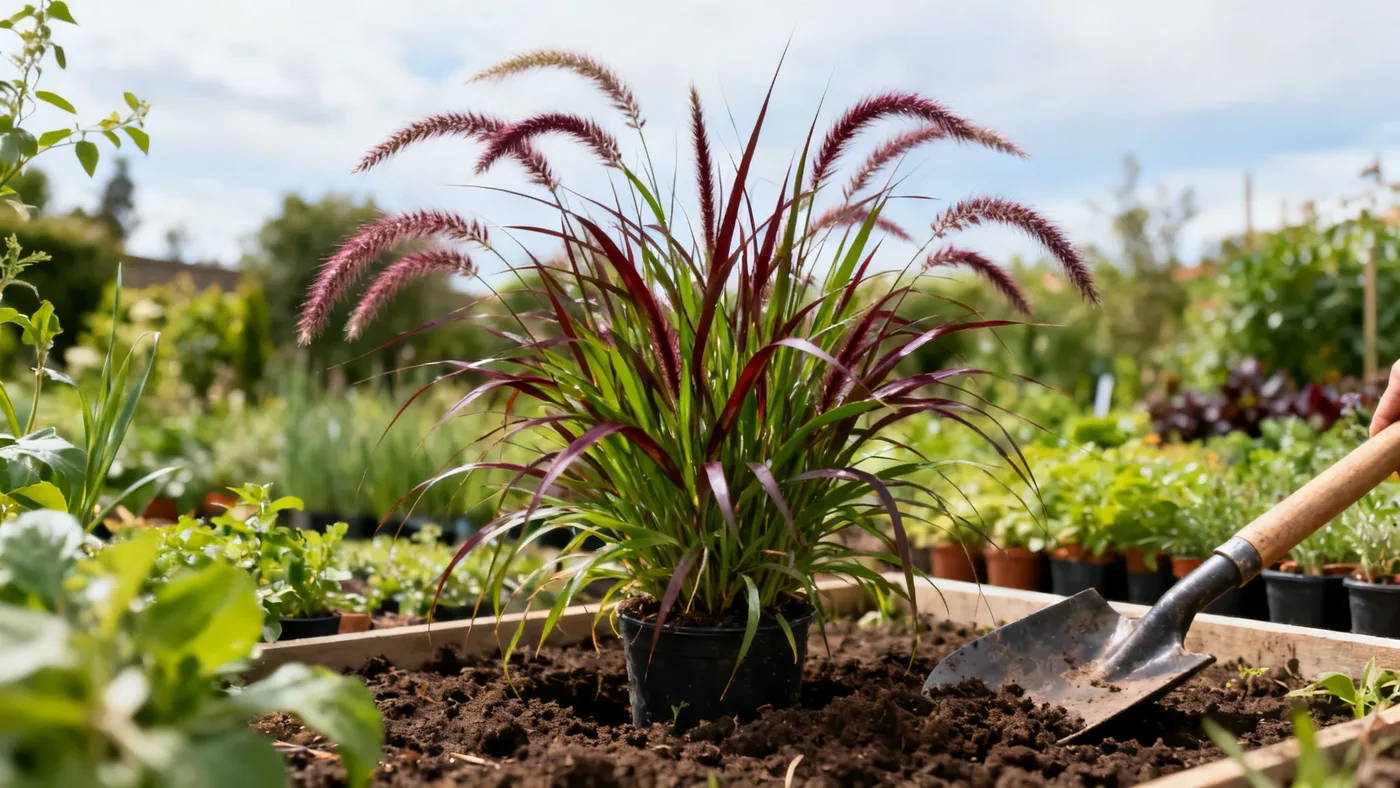
How to Plant Karley Rose Fountain Grass for Best Results
Planting Karley Rose Fountain Grass correctly sets the foundation for years of smoky rose plumes and burgundy-tinted foliage. The process is straightforward: this ornamental grass adapts to average soils and doesn't demand coddling, but timing, spacing, and drainage matter. Follow these steps to get your clumps established and growing strong.
When to Plant Fountain Grass
Spring is the only reliable planting window for Karley Rose Fountain Grass. Plant after your last frost date, once soil has warmed and you can work it without it compacting into mud. This timing gives the grass 6 to 8 months of warm weather to establish roots before winter dormancy. Planting in fall or early winter in zones 6 and 7 is risky, as the clump won't have time to anchor itself before frost, and winter heave can push it out of the ground or kill it outright.
If you live in zones 5 or 6 at the cool end of the range, spring planting is even more critical. The warmer your zone (8 to 9), the wider your planting window within spring, but aim for early to mid-spring to avoid the stress of heat arriving before root systems are established.
Materials and Tools You'll Need
- Karley Rose Fountain Grass nursery division or potted clump (typically quart or #1 container)
- Shovel or garden spade
- Garden fork or cultivator
- Coarse sand or perlite (if soil is heavy clay)
- Compost or well-rotted leaf mold (optional, for poor soils)
- Balanced slow-release fertilizer (10-10-10 or similar)
- Mulch (straw, wood chips, or shredded leaves, 1 to 2 inches)
- Garden hose or watering can
- Ruler or measuring tape (to check spacing and depth)
Soil Preparation
Karley Rose Fountain Grass thrives in well-drained soil. Poor drainage is the number one killer of this grass, so don't skip this step. Test your soil's drainage a day or two before planting by digging a hole about 12 inches deep, filling it with water, and checking how quickly it drains. Water should percolate within a few hours. If water sits for more than 24 hours, amend your planting bed.
If your soil drains quickly and is average to sandy, you need minimal amendment. Loosen the top 8 to 10 inches with a garden fork, breaking up compacted layers. If your soil is heavy clay, work in coarse sand or perlite at a 1 to 1 ratio (one part amendment to one part native soil) over the planting area. This prevents the clump from sitting in a water-filled hole after rain.
Soil pH should be neutral, around 6.0 to 7.5. If you've had a soil test done, you'll know your pH; if not, Karley Rose adapts to most conditions and you can plant without testing. Very acidic or very alkaline soils (below 5.5 or above 8.0) may warrant a soil amendment, but contact your local cooperative extension for specific advice on your region.
Compost or leaf mold can be worked into poor soils to improve structure, but avoid fresh manure or high-nitrogen fertilizers at planting time. These encourage soft, tender growth that flops later in the season.
Step-by-Step Planting Guide
Step 1: Choose the Right Spot
Karley Rose Fountain Grass demands full sun. Give it at least 6 to 8 hours of direct sun daily for the best flowering and sturdy growth. In very hot climates (zone 9, desert conditions), very light afternoon shade is tolerated, but the plant will flower more sparingly in shade. Avoid planting under trees or on the north side of buildings.
Step 2: Space Your Clumps Correctly
Space plants 24 to 30 inches apart, center to center. Karley Rose reaches 24 to 30 inches wide at maturity, and crowding stunts growth and invites fungal issues. If you're mass planting, measure out your spacing before digging to ensure even coverage. Too-tight spacing is a common mistake; resist the urge to cluster plants for immediate fullness.
Step 3: Dig the Planting Hole
Dig a hole as deep as the root ball and about twice as wide. If your nursery clump is in a 1-gallon pot, the hole should be roughly 8 inches deep and 12 inches across. Loosen the soil at the bottom of the hole with your fork so roots can penetrate easily. Create a slight mound of loose soil in the center of the hole; this helps prevent the clump from settling too deep.
Step 4: Remove and Position the Plant
Water the potted clump thoroughly an hour or two before planting. Gently tip the pot and slide the grass out, supporting the base with your hand. If the roots are tightly wound around the root ball, gently tease them apart with your fingers. This encourages outward growth rather than girdling. Do not break or slash the root ball aggressively, but loosening the outer layer is helpful.
Set the clump in the hole so the top of the root ball is level with the ground surface. Planting too deep suffocates the crown and invites rot; planting too shallow exposes roots to drying. Check this twice before backfilling.
Step 5: Backfill and Firm the Soil
Fill the hole with amended soil (if you prepared it) or native soil, working it around the root ball with your hands and the back of your shovel. Firm the soil gently but do not compact it; you want good contact between soil and roots, not a hard-packed ball. Avoid burying the crown or base of the plant under extra soil. The top of the clump should be level with the surrounding soil grade.
Step 6: Water Thoroughly
Water the newly planted clump generously until water settles the soil and eliminates air pockets. Give it a slow, deep watering that soaks the area 6 to 8 inches deep. This is your most important step. Do not water lightly; you want to establish good soil-to-root contact.
Step 7: Apply Mulch
Spread 1 to 2 inches of mulch (straw, wood chips, or shredded leaves) around the base of the clump, keeping it 2 to 3 inches away from the crown. Mulch keeps soil moist during establishment and moderates soil temperature. Do not pile mulch against the stems; this invites crown rot.
First-Year Care and Watering
Regular watering is essential for the first growing season. For the first 4 to 6 weeks after planting, water deeply if there's no rain, aiming for 1 to 1.5 inches per week. Check soil moisture 3 to 4 inches down with your finger; it should be moist but not waterlogged. As temperatures warm and the plant grows, you can space out waterings, but don't let the soil dry completely until the plant is clearly thriving.
By mid-summer of the first year, established clumps can tolerate moderate drought, though regular watering keeps them lush. This is when Karley Rose shows what it does best: it flowers prolifically in summer heat and produces its signature smoky rose-pink to purplish-pink plumes through fall. Feed with a balanced slow-release fertilizer (10-10-10 or similar) in spring only. One light application is plenty; over-fertilizing promotes lush foliage at the expense of flowers and can cause the clump to flop under its own weight.
Do not prune the plant during the growing season. Leave it alone so it can build strength and fill out. The foliage darkens to burgundy and bronze tones as fall approaches, and the plumes fade from rose to beige. Both are normal and attractive.
Common Planting Mistakes to Avoid
Planting Too Deep
Burying the crown under soil or mulch causes rot and death. The crown must sit at ground level.
Poor Drainage
Karley Rose will not tolerate waterlogged soil. If your site stays wet for more than a day after rain, amend it or choose a different location.
Overcrowding
Plants spaced closer than 24 inches become weak and susceptible to disease. Resist the temptation to plant densely.
Wrong Season
Fall or winter planting courts failure, especially in zones 5 to 7. Spring after last frost is the only reliable window.
Overwatering or Overfeeding
After establishment, Karley Rose is moderate to somewhat drought tolerant. Constant wetness and heavy fertilizer cause flopping and reduce flowering. Water deeply but infrequently, and feed sparingly.
Insufficient Sunlight
Shade produces spindly growth and few flowers. Full sun is non-negotiable.
Expected Growth Timeline
Karley Rose Fountain Grass blooms in its first year when planted from a nursery division. You can expect to see flower plumes by early summer, especially if planted in early to mid-spring. However, the clump will not reach its mature size of 24 to 30 inches wide in a single season. Growth is moderate, roughly 6 to 12 inches per year, so plan for 2 to 3 years of maturation to achieve a full, dense clump. This is normal and expected. The plant will become progressively fuller and more impressive each season.
In zones 6 to 9, the plant persists year after year. The foliage dies back to the ground in late fall or winter, especially in colder zones. Cut back the entire plant to 3 to 6 inches above ground in late winter or early spring before new growth emerges. This tidies the plant and removes dead tissue, allowing fresh growth to emerge clearly. In zones 5 and 8 to 9, winter mulch (3 to 4 inches applied in late fall and removed in early spring) may improve survival rates, though Karley Rose is reliably hardy in its rated zones without extra protection.
Quick Reference: Planting Checklist
| Task | Details |
|---|---|
| Timing | Spring after last frost (zones 6–9; zone 5 marginal with winter mulch) |
| Sunlight | Full sun, 6–8 hours direct daily; very light afternoon shade tolerated in hot climates |
| Spacing | 24–30 inches apart, center to center |
| Soil | Well-drained, average to sandy; amend heavy clay with coarse sand or perlite; pH 6.0–7.5 preferred |
| Hole Depth | Same depth as root ball; twice as wide |
| Planting Depth | Crown level with ground surface, not buried |
| Initial Watering | Deep soak immediately after planting; 1–1.5 inches per week for first 4–6 weeks |
| Mulch | 1–2 inches, kept 2–3 inches away from crown |
| Fertilizer | Light balanced slow-release (10-10-10) in spring only; one application per year |
| First Bloom | Early summer in first year from nursery division |
| Mature Size | Reached in 2–3 years; 24–36 inches tall, 24–30 inches wide |
| Pruning | Cut back to 3–6 inches above ground in late winter/early spring; no pruning during growing season |
Once planted and through its first season, Karley Rose Fountain Grass asks for little. It produces smoky rose blooms reliably, tolerates heat and drought once established, and holds its architectural form from summer through winter. For ongoing care and troubleshooting after planting, see Karley Rose Fountain Grass Care: The Complete Growing Guide.