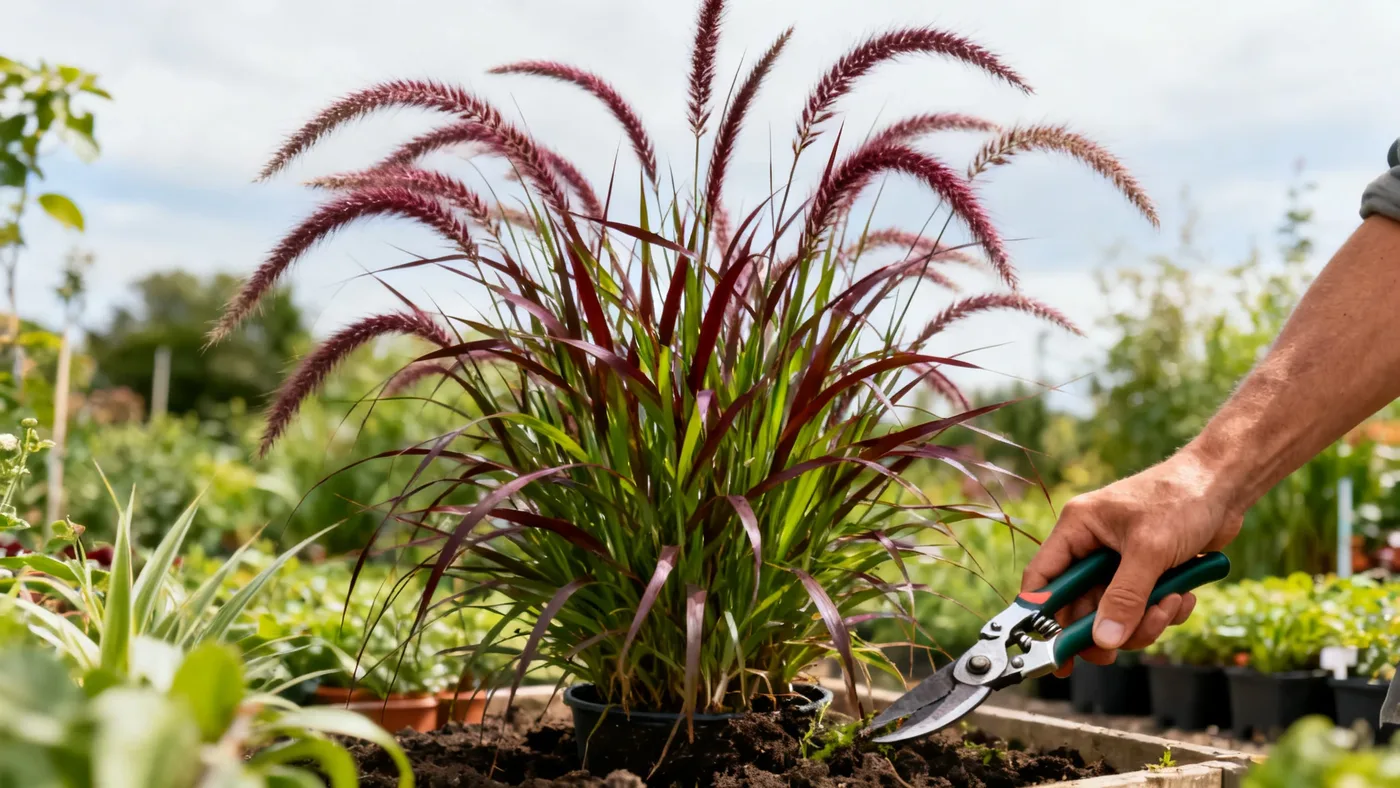
When and How to Cut Back Karley Rose Fountain Grass
Cutting back Karley Rose Fountain Grass is one of the simplest maintenance tasks you'll do in your garden. Unlike perennials that need shearing throughout the season, ornamental grasses thrive on a single, well-timed annual cutback. Done right, it takes an afternoon and sets your plant up for vigorous spring growth.
This guide walks you through the exact timing, tools, and technique to cut back your Karley Rose fountain grass so it emerges fresh and full each season.
Why and When to Cut Back Karley Rose Fountain Grass
Karley Rose fountain grass doesn't need pruning during the growing season. No deadheading, no midsummer trim. The work happens once a year, in late winter or early spring, before new shoots emerge from the base.
Here's why timing matters: the dried foliage and plumes persist into winter, adding texture and interest to a dormant garden. They also provide shelter for overwintering insects. Cutting too early, in fall, means you lose that winter structure and expose the crown to freeze damage in colder zones. Cutting too late, after new growth has started, can damage tender emerging shoots.
The goal is to cut back after the coldest weather has passed but before the plant starts pushing out new growth. In most of the plant's hardiness range (zones 6 to 9), that window opens in late February through March, depending on your local frost dates.
Materials and Tools You'll Need
You don't need specialized equipment. A few basic tools make the job faster and cleaner.
- Pruning saw or reciprocating saw: A folding pruning saw or a cordless reciprocating saw cuts through dense clumps faster than hand pruners. Hand pruners alone become tedious on mature plants.
- Heavy-duty work gloves: Karley Rose foliage is fine-textured but persistent. Gloves protect your hands from paper cuts and splinters as you work through the dried material.
- Safety glasses: Small leaf fragments fly during cutting. Protection is worth it.
- Sturdy hedge shears or loppers (optional): Useful for cleaning up straggler stems after the main cut.
- Garbage bags or a tarp: Dried foliage is light but voluminous. Having a collection method keeps cleanup simple.
Step-by-Step Cutting Back Process
The process is straightforward. Most gardeners complete it in one session.
Step 1: Wait for the right timing. Check your local frost date forecast. Once the risk of hard frost has passed (late February through March in most zones), you can begin. If you're in zone 5 or marginal zone 6, wait until early spring growth is clearly starting before cutting, to confirm the plant has survived winter. Don't rush it.
Step 2: Cut the clump to 3 to 6 inches above ground. This is the key measurement. Using a pruning saw or reciprocating saw, cut horizontally across the entire clump at a height of 3 to 6 inches above soil level. The goal is to remove all the dead foliage while leaving enough living base to protect the crown underneath.
If you have a large, mature clump (24 to 30 inches wide), make your cuts in sections, working around the perimeter toward the center. This approach is less strenuous than trying to cut through the entire mass in one pass. A reciprocating saw makes short work of it. A folding pruning saw takes longer but works well if you prefer hand tools.
Step 3: Clear away cut material. The dried foliage shreds into light, fluffy pieces. Rake or gather what you've cut and bag it or add it to a compost pile. Leaving debris mounded around the base can trap moisture and rot the crown during spring rains.
Step 4: Do a final cleanup. Once the main cutting is done, look for any straggler stems standing above your 3- to 6-inch line. Use hedge shears or hand pruners to even them out. This step takes minutes and gives a polished result.
Step 5: Step back and check your work. You should see a low, even stubble of tan or light brown stems, all roughly the same height. If you've cut into living green tissue at the base, that's normal and not a problem. The plant will hide any marks within weeks as new growth emerges.
Timing by USDA Zone
Your hardiness zone influences when to cut back. Karley Rose is hardy in zones 6 through 9. It can survive zone 5 with winter mulch protection, but hardiness there is marginal.
Zones 9 and 8: Late January through February. The growing season starts earlier in warmer climates, so don't wait. You may even see new green shoots emerging before you cut.
Zones 7 and 6: Late February through mid-March. This is the standard window for most gardeners. Watch your local weather. Aim to cut after the last hard freeze of winter.
Zone 5 (with winter protection): Wait until mid-March or later, even into early April. Winter hardiness is less reliable this far north, so you want to confirm the crown has survived. New growth starting is a green light to proceed.
If you live where winter dieback can be severe, delay cutting until you see any green shoots pushing up. That visible growth is proof the plant is alive and ready to re-emerge.
Common Mistakes to Avoid
Cutting too early. Fall cutback removes winter interest and leaves the crown exposed to cold damage. Resist the urge to tidy up in October or November. Let the dried foliage stand through winter.
Cutting too late. If new shoots are already 3 or 4 inches tall and leafing out, you can damage them with a saw. Wait if possible, or be very careful and cut only the old, dead foliage, leaving the green emerging stems intact.
Cutting too low. Going below 3 inches risks severing living tissue at the crown. Stay in the 3- to 6-inch range to be safe. The plant will look plenty short enough.
Leaving debris piled around the base. Matted, wet dead leaves trap moisture and can promote crown rot in spring. Clear it away completely.
Over-fertilizing before growth. Some gardeners add fertilizer at cutback time. Resist that temptation. Karley Rose has low fertilizer needs. A balanced slow-release fertilizer applied in mid-spring (once new growth is underway) is enough. Over-feeding can cause flopping and reduce flowering.
What to Expect After Cutting Back
The first few weeks after cutback, the clump looks stark. You've removed all the visual interest. That's normal and temporary.
Within 2 to 3 weeks of warm spring weather, new shoots will push up from the base. Growth accelerates as temperatures climb. By late spring, the clump will fill in with fine, arching foliage. Karley Rose grows at a moderate rate, roughly 6 to 12 inches per year, so it reaches its full mature size (24 to 36 inches tall) over 2 to 3 seasons.
Plumes typically appear in early summer and continue through fall, often with reblooming. The smoky rose-pink plumes fade to beige and tan as summer progresses. Foliage deepens to burgundy and bronze tones in fall, adding color even after blooms fade.
One cutback per year is all this plant needs. During the growing season, leave it alone. No pruning, no deadheading. This hands-off approach is one reason ornamental grasses are so rewarding for home gardeners.
Combining Cutback with Other Spring Tasks
Once you've cut back, the base is exposed and easy to work with. This is a good time to divide an overgrown clump if needed, though mature plants benefit from division only after 5 to 10 years. It's also an ideal moment to inspect the crown for any disease or pest issues before new growth begins. Karley Rose is generally pest-free, but occasional spider mites or mealybugs can appear in stressed plants. A healthy cutback and good drainage prevent most problems.
If your plant is in a container, cutback is also when you might refresh the soil, as long as you're careful not to disturb the root system more than necessary.
Extending the Life of Your Karley Rose
Regular cutback keeps plants vigorous and shapely for years. Most Karley Rose clumps thrive for 5 to 10+ years before benefiting from division or rejuvenation. If a clump begins to split or hollow out in the center after many years, spring is the time to divide it and replant the divisions to restore vigor.
For more detailed care information, see our complete growing guide for Karley Rose fountain grass, which covers planting, watering, soil needs, and seasonal care from spring through winter.
Quick Reference Cutback Checklist
| Task | Timing | Notes |
|---|---|---|
| Check frost date forecast | Early to mid-February | Wait until hard frost risk is past in your zone |
| Gather tools: saw, gloves, glasses, bags | Before cutting day | Pruning saw or reciprocating saw is fastest |
| Cut clump to 3-6 inches above ground | Late Feb.–mid-March (zones 6-8); late Jan.–Feb. (zone 9); mid-March+ (zone 5) | Cut in sections for large clumps; aim for even height |
| Clear cut foliage away | Same day | Don't leave debris piled around the crown |
| Final cleanup of stragglers | Same day | Use hedge shears for even appearance |
| Apply slow-release fertilizer | Mid-spring, once new growth is visible | Balanced formula; Karley Rose has low feeding needs |
| Monitor spring regrowth | Week 2-3 onward | New shoots visible within 2-3 weeks of warm weather |