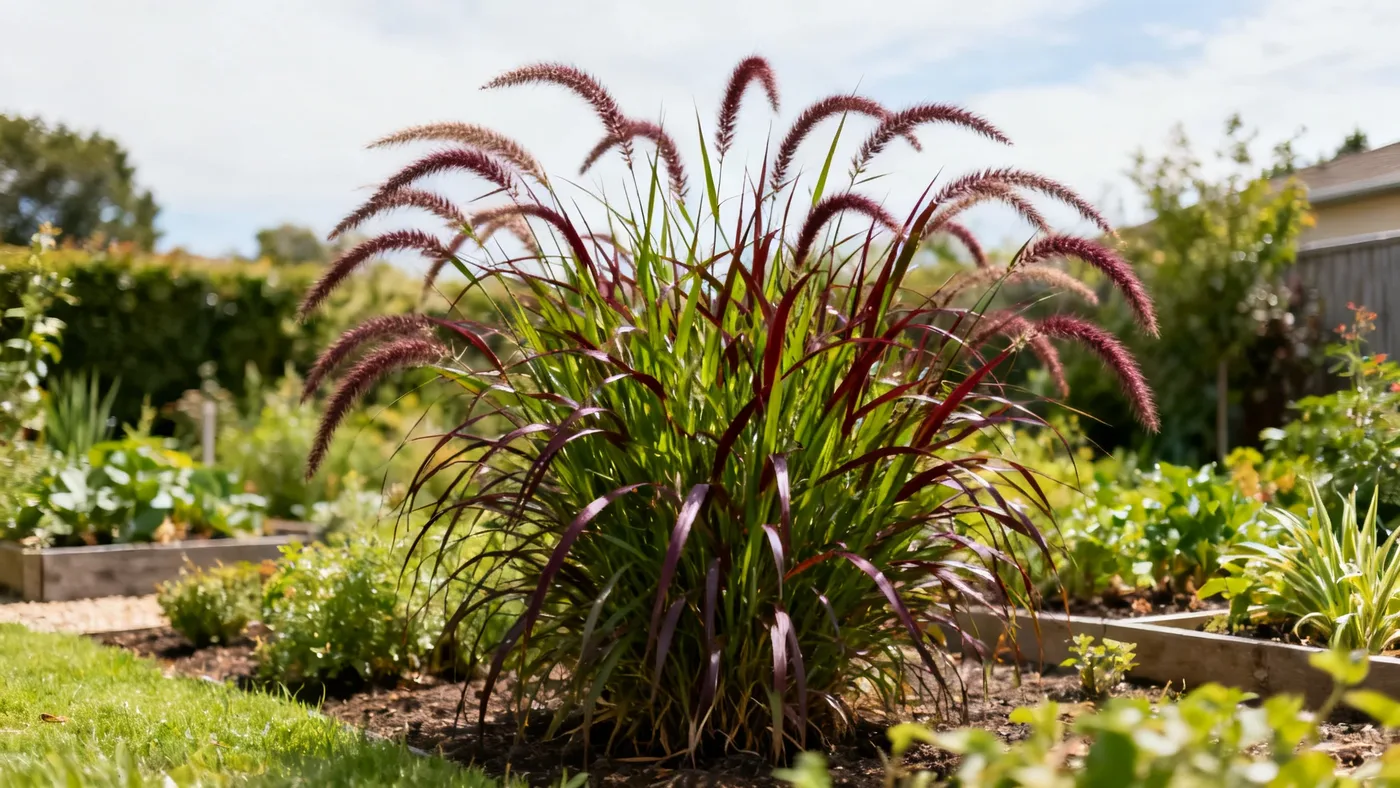
Do You Need to Fertilize Karley Rose Fountain Grass?
Most home gardeners overthink fertilizing ornamental grasses. Karley Rose Fountain Grass in particular rewards restraint. This grass grows well in average soil and actually performs better with light feeding than with heavy nutrient programs. The key is knowing when a little fertilizer helps and when it hurts.
Understanding Karley Rose Fountain Grass Fertilizer Needs
Karley Rose produces its best display, smoky rose-pink plumes, under conditions that keep it lean. Rich, heavily fertilized soil leads to soft, floppier growth and fewer flowers. A grass that should stand 24 to 36 inches tall becomes a floppy sprawl when fed too much nitrogen.
The species is native to Central Asia and the Middle East, regions where soil is neither dense nor nutrient-rich. Your ornamental grass performs closer to its natural character when you work with average, well-drained soil rather than against it.
A newly planted Karley Rose takes 2 to 3 seasons to reach full mature clump size (24 to 30 inches wide). During those early years, a modest feeding program supports establishment. Once established, your grass needs almost nothing. Over-fertilizing remains the most common mistake.
Materials You Will Need
- Balanced, slow-release fertilizer (such as 10-10-10 or similar NPK ratio)
- Measuring cup or scoop
- Work gloves
- Watering can or hose
- Small rake or cultivator (optional, for light soil disturbance)
Do not use high-nitrogen fertilizers designed for lawns. A balanced formulation, applied lightly, is all this grass needs.
Step-by-Step Fertilizing Instructions
Step 1: Prune Your Grass in Late Winter or Early Spring
Before feeding, cut back your Karley Rose to 3 to 6 inches above ground in late winter or early spring, before new growth emerges. This removes the tan, dried plumes from the prior season and opens the crown to sunlight and air. Fertilizer works most effectively on actively growing plants, so timing your feeding to coincide with fresh spring growth makes biological sense.
Step 2: Wait for New Growth to Emerge
Once you have pruned, wait for the burgundy-tinged green foliage to push up from the crown. This usually takes 2 to 4 weeks in spring. New growth indicates the plant is ready to use nutrients. Fertilizing bare-ground dormant grass wastes fertilizer and can leach away before the plant wakes up.
Step 3: Apply Fertilizer Once in Early Spring
Feed your Karley Rose one time in early spring, when new growth is 3 to 4 inches tall. Apply a balanced slow-release fertilizer (10-10-10 or similar) at the rate recommended on the package. Most slow-release formulas suggest sprinkling the granules lightly around the base of the plant, working them into the soil surface or top mulch layer.
A light hand is essential. You are not feeding a heavy feeder like a lawn grass. Imagine you are seasoning food: a pinch is often enough. If the package recommends 2 tablespoons per shrub, use 1 to 1.5 for your fountain grass.
Step 4: Water Thoroughly After Application
Water the plant well after applying fertilizer. This dissolves the slow-release granules and carries nutrients toward the root zone. If your region receives regular spring rain, this step may happen naturally. In drier climates, hand-water to ensure the fertilizer activates.
Step 5: Do Not Fertilize Again Until Next Spring
That one spring application is usually sufficient for the entire growing season. Karley Rose blooms from early summer through fall, reblooming across that window. It does not need feeding in summer or fall. In fact, fertilizing later in the season can trigger tender new growth that frost will damage in colder zones.
If your plant is already established and has been in the ground for 3 or more years, you may skip fertilizing altogether. A healthy clump in average soil produces flowers and foliage without supplemental nutrients.
Fertilizing New Plants vs. Established Plants
A bare-root or container-grown Karley Rose planted in spring benefits from that one light feeding in its first spring. The nutrients help the plant establish a strong root system during its first growing season.
In years 2 and 3, as the plant builds toward full size, one spring application continues to support growth without causing floppiness. By year 4 and beyond, many gardeners stop fertilizing altogether and simply enjoy the plant as is.
If you are uncertain whether your grass needs feeding, look at the foliage color and flower production. Burgundy-tinged green leaves and abundant plumes suggest your soil is already supplying what the plant needs. Pale leaves or very sparse flowering might indicate nutrient need, but this is rare in average garden soil.
Tips and Common Mistakes to Avoid
Mistake 1: Heavy Nitrogen Feeding
High-nitrogen fertilizers encourage lush leaf growth at the expense of flowers. Your Karley Rose exists for those smoky rose-pink plumes. Stick to balanced formulations.
Mistake 2: Fertilizing in Summer or Fall
Late-season feeding can trigger soft, frost-tender new growth in colder zones (especially zones 5 and 6, where hardiness is already marginal). Spring is the only sensible time to fertilize.
Mistake 3: Piling on Compost or Mulch Too Thick
Rich compost can act like slow fertilizer. A 1 to 2-inch mulch of bark or aged compost around the base is fine. A 4 to 6-inch pile buries the crown and can rot it, plus it steadily feeds the plant as it breaks down. Maintain light mulch, especially in climates with high humidity.
Mistake 4: Fertilizing Stressed or Newly Planted Grass
Give a freshly planted Karley Rose (planted less than 2 weeks prior) time to settle before feeding. Let it water in and establish contact with soil first. Once you see new growth emerging from the planting hole, then fertilize.
Tip 1: Lean Soil is Okay
Average, sandy, or loamy soil suits this grass. You do not need to amend heavily before planting. A well-draining site matters far more than fertile soil.
Tip 2: Slow-Release Over Synthetic Quick-Act
Slow-release fertilizers feed gradually over weeks or months, matching the plant's growth pattern. Quick-acting liquid fertilizers can shock the plant and wash through well-drained soil before roots use them. Stick with granular slow-release products.
Tip 3: Organic Options Work Too
Alfalfa meal, fish meal, bone meal, or balanced organic fertilizers (such as 4-4-4 formulations) all work well if you prefer them. Apply at package rates and follow the same one-spring-feeding schedule.
Expected Results
After one light spring feeding, you can expect continued steady growth through the growing season. Flower plume production should remain robust from early summer through fall. Foliage color should deepen to burgundy and bronze tones as fall arrives.
The plant will reach full mature size (24 to 36 inches tall, 24 to 30 inches wide) by year 2 or 3. You should see increased plume density year over year as the clump expands. None of these effects are guaranteed in all climates and soils, but light, timely feeding supports them.
If you skip fertilizing altogether on an established plant, you will likely see no visible difference. The grass will flower, grow, and look healthy. The main difference is in clump expansion speed during the first few years. Unfed newly planted grass simply takes longer to fill in.
Connecting Fertilizing to Overall Care
Fertilizing is one small piece of Karley Rose care. For a complete picture of how to support this grass through its full life cycle, see our complete growing guide to Karley Rose Fountain Grass care. You will find details on watering, pruning, pest management, and seasonal tasks.
If you are curious about how tall and wide your Karley Rose will become, our guide on how big Karley Rose Fountain Grass really gets breaks down mature dimensions and growth rates by year, which can help you decide spacing in your garden bed.
Quick Reference: Fertilizing Checklist
| Task | Timing | Frequency | Notes |
|---|---|---|---|
| Prune back to 3-6 inches | Late winter to early spring | Once per year | Before new growth emerges |
| Wait for new growth | 2-4 weeks after pruning | Annual | Plant should show 3-4 inches of foliage |
| Apply balanced slow-release fertilizer | Early spring | Once per year (first 3 years) | Use 10-10-10 or similar; light application |
| Water thoroughly | Immediately after fertilizer | Once per year | Activates granules and carries nutrients down |
| Fertilize again next spring | Following year, early spring | Years 2-3, optional year 4+ | Established plants (3+ years) may skip entirely |
| Monitor for floppiness or sparse flowers | June through fall | Ongoing | Signs of over-fertilizing or other issues |