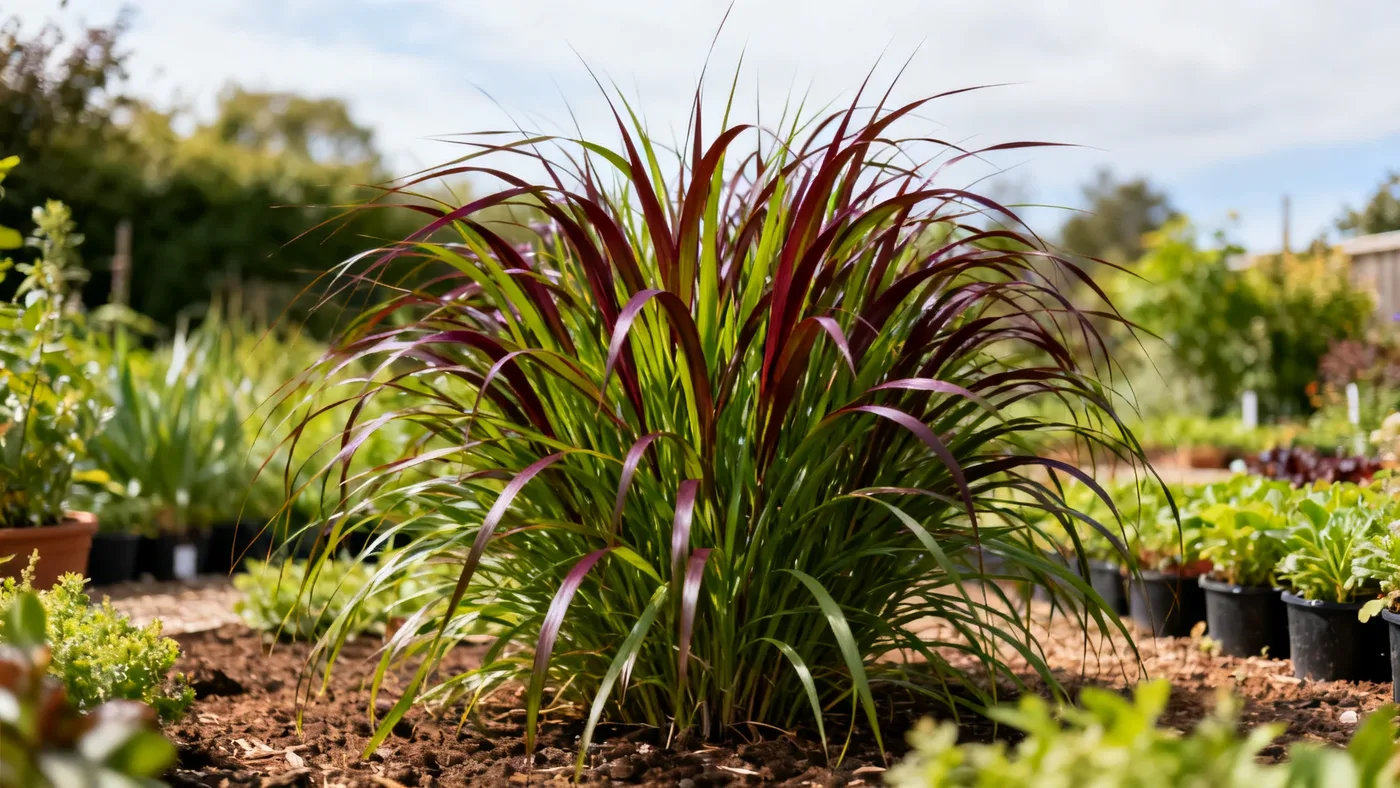
Best Soil for Karley Rose Fountain Grass and Drainage Tips
Your Karley Rose Fountain Grass succeeds or fails mostly underground. Most growers focus on the plumes, but soil chemistry and drainage are what determine whether your clump stays upright, flowers reliably, or quietly rots. This guide walks you through selecting, amending, and maintaining soil so your ornamental grass thrives for years.
Why Drainage Is Your First Priority
Karley Rose Fountain Grass is a warm-season perennial that starts life as a small clump and expands to 24-30 inches wide over 2-3 seasons. It originates from Central Asia and the Middle East, regions where soil drains quickly and moisture rarely lingers. Your garden soil needs to mimic those conditions.
Crown rot is the single largest killer of this grass. It happens when water pools around the base of the plant and the crown (the junction where foliage meets roots) stays wet for days. Fungal leaf spot also emerges in humid, poorly-drained soil. The fix is not watering less. The fix is soil that drains so fast that standing water is impossible.
Well-drained soil feels damp for a few hours after rain or watering, then releases moisture freely. Poor drainage means water sits in the root zone overnight or longer. If you dig a hole and it fills with water and stays wet, or if your garden is visibly soggy after rain, drainage is your barrier.
Assessing Your Current Soil
Before you buy amendments or dig, spend 15 minutes understanding what you have. Soil type (sand, clay, loam) and texture matter more than a single nutrient test.
Take a handful of moist soil from your planting site. Squeeze it in your fist. If it crumbles immediately and won't hold shape, you have sandy or loamy soil with good natural drainage. If it holds a tight ball and feels slippery, you have clay. If it holds shape loosely and crumbles with a poke, you have loam. Karley Rose adapts to all three, but clay needs amendment.
Next, do the drainage test. Dig a hole 12 inches deep and 6 inches wide. Fill it with water and watch. If water drains out within 2-4 hours, your drainage is adequate. If it pools for 24 hours or more, you have a problem.
Also note your soil pH if you have a test kit. Karley Rose prefers neutral soil in the 6.0 to 7.5 range. Very acidic (below 6.0) or very alkaline (above 7.5) soil may reduce vigor, though the plant adapts reasonably well to most pH levels. If you do not have a kit, contact your local extension service for affordable soil testing.
Materials and Amendments You Will Need
Gather these materials before you dig:
- Coarse sand or gritty sand (not beach sand, which compacts)
- Compost or aged bark chips
- Peat moss or coconut coir (optional, for water retention in very sandy soil)
- Gypsum or agricultural lime (if pH needs adjustment)
- A shovel or garden fork
- A garden hose for watering after planting
- Mulch (2-3 inches, coarse bark or gravel)
Step-by-Step Soil Preparation and Planting
Step 1: Prepare the Planting Hole
Dig a hole twice as wide as the root ball of your nursery-grown plant and just as deep. Karley Rose is commonly sold in quart or #1 containers. Do not make the hole deeper than the root ball height. Planting too deep invites crown rot. The top of the root ball should sit level with grade or slightly higher.
Step 2: Amend Clay Soil
If your drainage test showed slow drainage and your soil feels sticky and compact, work coarse sand and compost into the native soil at the bottom and sides of the hole. Mix one part coarse sand to one part compost into the soil you removed, then return it to the hole as backfill. The sand opens the structure. The compost adds organic matter without creating a bathtub effect.
Do not use potting soil or planting mix in the hole. These products hold moisture and create a false interface between your gritty backfill and the surrounding clay.
Step 3: Check and Adjust pH (Optional)
If your soil test shows pH below 6.0, sprinkle agricultural lime according to the package rate and work it into the amended soil. If pH is above 7.5, work in sulfur according to package directions. Most growers skip this unless pH is extreme, since Karley Rose adapts to a wide range. Neutral pH (6.5 to 7.0) is ideal but not mandatory.
Step 4: Plant at the Correct Depth
Remove the plant from its container and loosen the root ball gently with your fingers. Set it in the hole so the soil line on the stem matches the surrounding grade. Backfill with amended soil, press gently to eliminate air pockets, and water thoroughly to settle the soil. The crown should never sit lower than the soil line.
Step 5: Mulch to Regulate Moisture
Add 2 to 3 inches of coarse mulch (bark chips, gravel, or wood chips) around the plant, leaving 2 inches of space between the mulch and the stem. This insulates roots, slows evaporation, and keeps splashing soil off the foliage. Do not pile mulch against the base. Crown rot often starts where bark contact traps moisture against the stem.
Step 6: Water and Monitor Early Growth
Water the plant deeply after planting so soil is moist to 6 inches deep. For the first month while roots establish, keep soil consistently moist but never waterlogged. After that, moderate watering is fine. Karley Rose is moderately drought tolerant once established, though regular water promotes faster growth and fuller foliage.
Common Soil Mistakes and How to Fix Them
Mistake 1: Adding Too Much Organic Matter
Rich soil encourages lush foliage but causes flopping and open clumps. Ornamental grasses evolved in lean soils. Amend only as much as drainage requires, not as much as fertility tempts.
Mistake 2: Planting in a Low Spot
Do not plant Karley Rose in areas where water naturally collects after rain. Choose level ground or a slight slope so water runs away. Even with perfect soil prep, a low spot will eventually kill the plant.
Mistake 3: Over-Fertilizing
Light feeding in spring with a balanced slow-release fertilizer is all Karley Rose needs. Over-fertilizing reduces flowering and can cause the clump to split or flop. Once established, most plants thrive on no supplemental feeding at all.
Mistake 4: Ignoring Compaction
If your soil feels rock-hard or you have heavy foot traffic in the planting area, loosen it with a garden fork before amending. Compacted soil cancels out your drainage improvements.
Expected Results and Timeline
A well-planted Karley Rose in the right soil may show healthy new growth within 2 to 3 weeks. Blooms are possible in the first year from a nursery division, typically appearing June through fall. The clump continues to expand modestly each year, reaching mature size (24-36 inches in height, 24-30 inches wide) over 2 to 3 growing seasons. You should observe fewer problems with flopping or crown rot in well-drained soil compared to poor-drainage sites.
Soil and Drainage Quick Reference
| Criterion | Target Range | Why It Matters |
|---|---|---|
| Drainage speed | Water exits within 2-4 hours | Prevents crown rot and fungal disease |
| Soil type | Sandy, loamy, or clay with amendment | Adapts to most soils if drainage is correct |
| Soil pH | 6.0 to 7.5 (neutral preferred) | Extreme pH may reduce vigor |
| Planting depth | Crown level with surrounding grade | Deep planting traps moisture and invites rot |
| Mulch layer | 2-3 inches, 2 inches back from stem | Regulates moisture and prevents stem contact |
| Fertilizer | Light spring feeding only | Excess promotes flopping and weakens structure |
| Water after planting | Regular for first month, then moderate | Establishes roots without encouraging rot |
Moving Forward
Soil prep is a one-time effort that pays off for years. Once your Karley Rose is established in well-drained soil, maintenance is straightforward. For ongoing care and seasonal guidance, see our complete growing guide. To understand the full mature size and spacing for multiple plants, read how big Karley Rose Fountain Grass really gets.