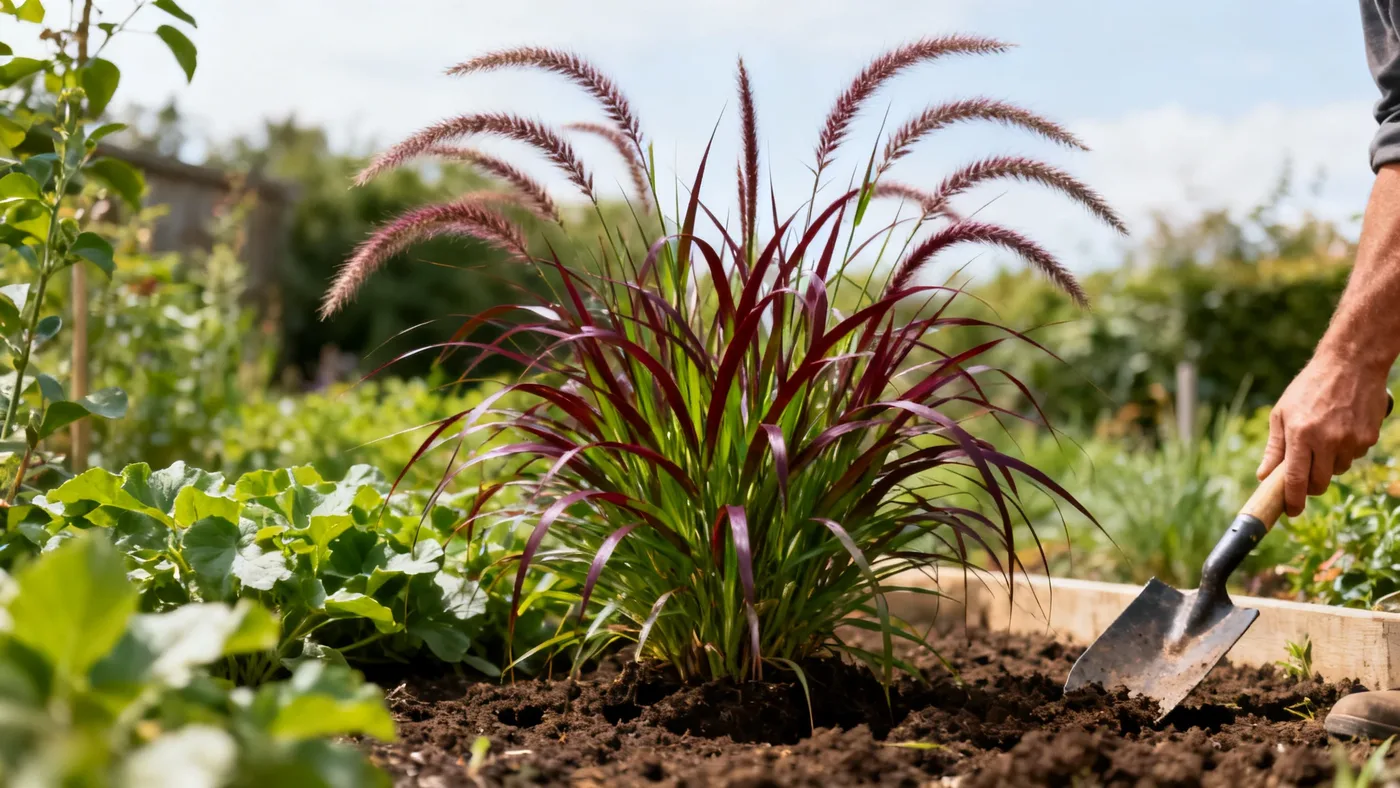
Spacing Karley Rose Fountain Grass for Borders and Mass Plantings
Getting the spacing right when you plant Karley Rose Fountain Grass is one of the most important decisions you'll make in your garden design. Space too close together, and the clumps compete for water and nutrients while promoting disease. Space too far apart, and you'll wait an extra season for your border or mass planting to look full. This guide walks you through the exact measurements and methods to achieve a professional-looking landscape right from the start.
Understanding Mature Plant Size
Before you dig a single hole, you need to know how large Karley Rose Fountain Grass actually gets. Most home gardeners underestimate the mature width and end up planting too densely. The reality is that each clump spreads to 24 to 30 inches wide at maturity. This width includes the arching foliage that gives the plant its fountain-like character. The total height reaches 24 to 36 inches when the flower plumes are fully extended, though the foliage mound itself sits a bit lower.
Karley Rose reaches its full mature clump size over 2 to 3 growing seasons. In the first year, especially from a nursery-grown plant, you'll see moderate growth of roughly 6 to 12 inches. This gradual development is why spacing matters so much. Plant too close, and you'll be fighting overcrowding for years. Space correctly, and the clumps will touch by year three, creating the full, cohesive look you want in a border or mass planting without ever becoming congested.
Materials You'll Need
- Measuring tape (at least 50 feet)
- String and garden stakes (for marking grid lines)
- Pencil and paper (to sketch your layout)
- Spade or transplanter for digging holes
- Nursery-grown Karley Rose Fountain Grass plants in 1-gallon to 3-gallon containers
- Well-drained soil or soil amendment
- Garden gloves and kneeling pad
- Watering can or hose
Step-by-Step Spacing Guide for Mass Plantings
Mass plantings create the strongest visual impact, but they demand precision to look intentional rather than random. Follow these steps to space Karley Rose Fountain Grass correctly in a mass planting.
Step 1: Measure and Mark Your Grid
Lay out your planting area and use string to create a grid. For a mass planting where you want the clumps to appear unified and dense by year three, use 24-inch spacing on center. Run one string line along the length of your planting area, then use garden stakes to mark 24-inch intervals along that line. Repeat perpendicular to create a checkerboard pattern. This grid becomes your planting map. If you're working with an irregular shape like a curved bed, adapt the grid to fit while maintaining the 24-inch intervals as closely as possible.
Step 2: Dig Holes to Match Plant Container Size
At each grid intersection, dig a hole slightly wider and just as deep as your nursery pot. If your plant is in a 1-gallon container, the hole should be roughly 8 to 10 inches across and 8 to 10 inches deep. A 3-gallon plant needs a hole about 12 to 14 inches wide. Do not plant deeper than the top of the root ball. Planting too deep is one of the fastest ways to cause root rot or crown rot, especially in less-than-ideal drainage conditions.
Step 3: Amend Soil If Needed
Karley Rose Fountain Grass adapts to average, sandy, or loamy soils as long as drainage is good. If your native soil is clay-heavy or compacts easily, mix in 25 to 30 percent compost or aged bark to improve drainage. Do this before planting, not after, so the amendment is already blended into the backfill soil.
Step 4: Plant on the Grid
Place each plant into its hole so the top of the root ball sits level with the surrounding soil surface. Backfill with your amended soil and firm gently by hand. Do not tamp hard or you'll compress the soil and reduce drainage. Water immediately after planting to settle the soil and eliminate air pockets.
Step 5: Water Thoroughly and Apply Mulch
Water each plant until the soil is moist 3 to 4 inches deep. Apply 1 to 2 inches of mulch around each plant, keeping mulch 2 to 3 inches away from the base of the clump to prevent crown rot. Regular water until established helps Karley Rose get its root system going before summer heat arrives.
Step-by-Step Spacing Guide for Borders
Borders call for a different approach than mass plantings. You're typically using Karley Rose as a mid-height accent among other perennials, so spacing follows the principle of avoiding overcrowding while leaving room for companion plants.
Step 1: Sketch Your Border Layout
Draw your border on paper and mark the locations of other perennials first. Rudbeckia (Black-eyed Susan), Echinacea (coneflower), Russian sage (Perovskia), and ornamental alliums are popular companions that work well beside Karley Rose. Once companion plants are placed, identify gaps where Karley Rose will add mid-height texture and vertical interest.
Step 2: Space Karley Rose 24 to 30 Inches Apart
In a border, place individual Karley Rose plants 24 to 30 inches from their nearest neighbor. This spacing prevents competition while allowing the clumps to form a visual sequence through the border by year two or three. If your border is narrow (under 3 feet deep), use one row of Karley Rose staggered slightly to create depth. Wider borders can support two offset rows.
Step 3: Plant at the Same Depth as Your Companions
Ensure Karley Rose sits at the same soil level as adjacent perennials. A plant that sits higher or lower will look out of place and may drain or retain water differently than intended. Level soil matters.
Step 4: Leave Room for Mature Width
Remember that Karley Rose spreads 24 to 30 inches wide. When spacing from nearby perennials, account for this mature width. If a coneflower matures to 18 inches wide, place your Karley Rose clump so the outer edges will be roughly 12 to 18 inches apart at maturity. This overlap creates a layered, garden-like appearance rather than isolated plants.
Tips for Success
- Plant in spring after the last frost in your zone to give roots time to establish before summer heat arrives.
- Choose a full-sun location. Karley Rose performs best with 6 or more hours of direct sun daily. Light afternoon shade in very hot climates is acceptable, but too much shade causes flopping and reduced flowering.
- Check drainage before planting. Dig a test hole 12 inches deep, fill it with water, and time how long the water drains. If it takes longer than 4 hours, amend the soil or consider raised beds.
- Use deer-resistant companions with confidence. Karley Rose has good deer resistance, and pairing it with equally resistant plants like Russian sage and ornamental alliums creates a low-pressure landscape.
- Avoid over-fertilizing. Nitrogen-rich fertilizers produce lush foliage but reduce flowering and can cause clumps to flop. A light application of balanced slow-release fertilizer in spring is sufficient.
- Plan for winter interest. The dried plumes and bronze fall foliage persist into winter in milder zones (8 to 9) and provide texture even after frost. In colder zones (6 to 7), the plant will die back to the ground and can be cut back to 3 to 6 inches in late winter before new growth emerges.
Common Mistakes to Avoid
- Planting too close. The most frequent error is underestimating mature width. Plants spaced only 12 to 18 inches apart will suffer from competition and poor air circulation by year two.
- Planting too deep. Burying the crown of the plant invites crown rot. Keep the top of the root ball level with the surrounding soil.
- Ignoring drainage. Karley Rose tolerates moderate drought once established but cannot tolerate waterlogged soil for extended periods. In wet clay, amend heavily or use raised beds.
- Over-watering established plants. Once roots are established, water only during extended dry spells. Frequent watering encourages shallow roots and fungal issues.
- Placing in too much shade. Insufficient light leads to weak clumps and minimal flowering, and the stems are more likely to flop outward.
Expected Results
With proper spacing and care, your Karley Rose Fountain Grass mass planting should appear full and cohesive by the end of the second growing season. Individual clumps may not completely touch until year three, but the visual impact improves noticeably by mid-year two. In a border setting, Karley Rose clumps typically begin showing their characteristic bronze-tinged foliage and early blooms within 8 to 10 weeks of spring planting in zones 6 to 9. Flower plumes emerge in early summer and often rebloom through fall, fading from smoky rose-pink to beige tones. Your landscape may look somewhat open in year one, but this is normal and expected with proper spacing. The payoff is a mature, professional-looking planting by year three that does not suffer from overcrowding or disease pressure.
For complete care after your plants are in the ground, refer to our guide on Karley Rose Fountain Grass care. If you are starting from scratch and want detailed planting instructions from site preparation through the first season, read our article on how to plant Karley Rose Fountain Grass for best results.
Quick Reference: Spacing Checklist
| Aspect | Measurement | Notes |
|---|---|---|
| Spacing on center (mass plantings) | 24 inches | For dense, full look by year 3 |
| Spacing on center (borders) | 24 to 30 inches | Adjust based on border width and companions |
| Mature width per clump | 24 to 30 inches | Do not underestimate; primary factor in spacing |
| Planting hole depth | Same as root ball height | Never plant deeper; crown-rot risk |
| Mulch depth | 1 to 2 inches | Keep 2 to 3 inches away from base |
| Time to reach mature size | 2 to 3 years | First year growth 6 to 12 inches |
| First bloom timing | Early summer (June in warm climates) | Reblooms through fall |
| Recommended planting season | Spring after last frost | Allows root establishment before summer heat |
| Hardiness zones | 6 to 9 | Dies back to ground in zones 6 to 7 |