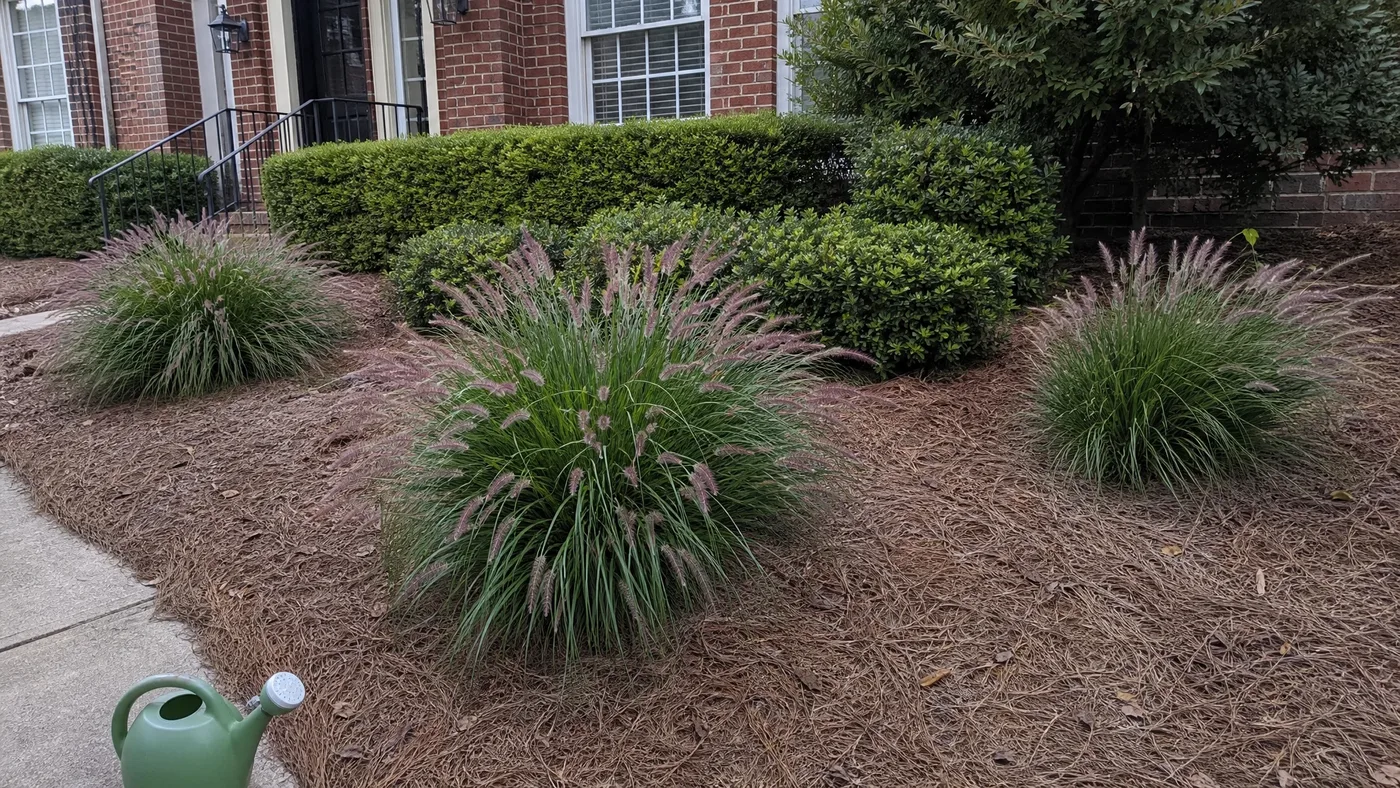
Is Karley Rose Fountain Grass Invasive?
"The garden center had a sign saying fountain grass is invasive, and my neighbor says it will take over my beds. Is Karley Rose the same thing?" Customers put that question to us more than almost any other, and our answer is no, not in the way that warning implies.
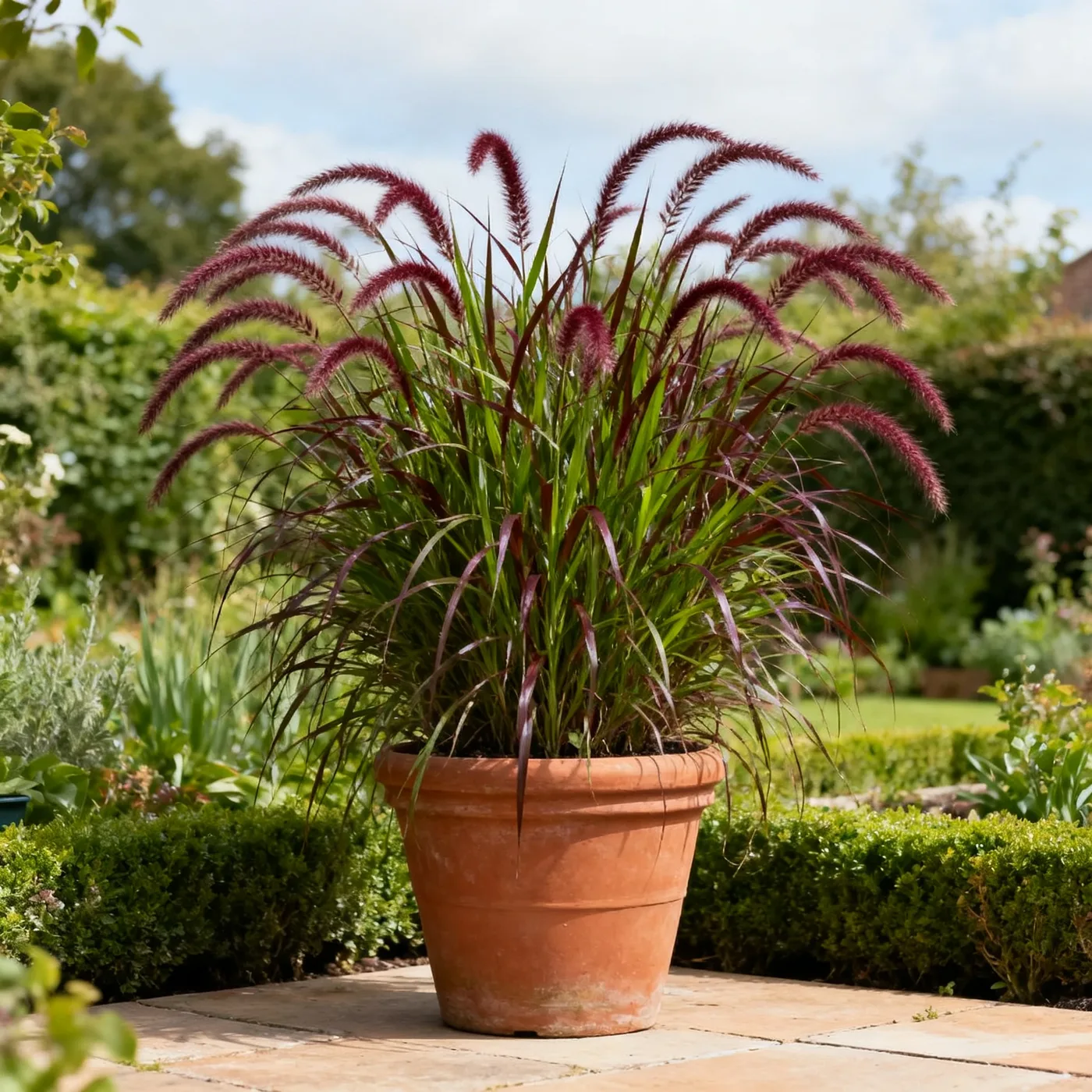
The evidence is more mixed than the reputation, though. Some of what people say about Karley Rose holds up, and some of it falls apart the moment you check which plant the claim was about.
This article talks about seeding, root spread, species mix-ups and spacing for Karley Rose Fountain Grass and answers the questions customers ask us most. Read on to learn which claims hold up, which fall, and what you should still watch for in your own beds.
The Belief That Every Fountain Grass Seeds Everywhere
The claim runs like this: fountain grass is a weed, Karley Rose is a fountain grass, so Karley Rose is a weed. The first half has real support.
The UC Riverside Center for Invasive Species Research describes African fountain grass, Pennisetum setaceum, as a state-listed noxious weed in Hawaii that the California Invasive Plant Council rates as a Moderate threat. Those are genuine flags on a genuine plant.
The weak point is the middle step. "Fountain grass" is a common name stretched over several species and many cultivars. Karley Rose is Pennisetum orientale 'Karley Rose', a different species from the one on those lists.
You may also see it sold under the newer name Cenchrus orientalis. A listing for one species does not carry over to a cultivar of another.
So we treat the blanket claim as a hypothesis and test it in pieces. Each piece gets a verdict.
- Does Karley Rose drop seed that sprouts in your beds?
- Does it creep outward by underground runners?
- Is the weedy reputation really about a different plant?
- Does low seed viability mean you can ignore seedlings entirely?
The last test matters because the opposite myth, that a tame cultivar can never produce a seedling, is just as unsupported as the scare. We will take them in that order and then look at how the clump itself behaves.
Does Karley Rose Fountain Grass Really Self-Seed in Beds?
The plumes are the reason people worry. They are rose-purple and appear from early summer until frost, and the blooms lasted from June onward in trials. That is months of flowering, which is months of opportunity to set seed. The concern is reasonable on its face.
What Gardeners and Trials Report
The trial write-ups we draw on record height, hardiness and bloom, and none of the lines we cite treats seedlings as a defining trait of this cultivar. That silence counts for something. A plant that colonized beds would have drawn comment in a trial planted for years.
Karley Rose sets notably little seed compared with species-type oriental fountain grass. The plumes are the soft, silvery rose-pink bottle-brush type, not the heavy seed-laden heads of a plant that sows itself freely.
In our rows, a stray seedling turns up now and then, and it is easy to pull while it is small. A seedling is a grass with a thin, pale-green blade and no crown yet, and it lifts out with one tug in moist soil.
Where the Claim Lands
Our verdict is mostly false. Karley Rose is not a plant that reseeds into carpets, and you can plant it without planning a weeding campaign.
We say "mostly" because a published seedling count for this cultivar is not something we can point you to, so we will not pretend to a precision the sources do not give. The honest statement is that seedlings are uncommon, not that they are impossible.
Rhizomes Are Not How Karley Rose Fountain Grass Spreads
Karley Rose is a clump-forming, perennial grass with a tufted habit and a maximum spread of 0.5–1 meter (roughly 1.5 to 3 feet). A rhizomatous grass behaves very differently. It sends runners under the soil and throws up new shoots a foot or more from the parent, which is how bamboo and many lawn grasses take over.
How Tufted Roots Behave
A tufted grass grows its new shoots from the crown, the dense base where the blades emerge. Roots go down and out from that crown, but they feed the same clump and do not produce shoots in the lawn or the next bed over.
Karley Rose is also propagated by division, which fits: you get a new plant by cutting the clump apart with a spade, not by cutting runners. We walk through that in our guide to dividing and propagating Karley Rose Fountain Grass.
Checking Your Own Clump
If you doubt it, you can test your own plant in a season. These are the signs of a clump that stays put.
- Every new shoot emerges from the edge of the existing crown, not from open soil beyond it.
- Nothing comes up in the mulch or the neighboring plants' root zones in a line away from the grass.
- A spade pushed in a few inches outside the clump cuts roots that belong to the clump, not long pale runners.
Our verdict is false. Karley Rose does not creep by rhizome, and you do not need a root barrier, edging trench or container to hold it. If a plant in your yard is marching across the bed by underground shoots, it is something else.
Pennisetum Setaceum Gets Blamed for Karley Rose's Reputation
The mix-up has a clear source. The aggressive plant on the weed lists is Pennisetum setaceum, and the UC Riverside page says its seeds may disperse readily from existing populations via wind, animals and automobiles.
That is a plant built to travel. Karley Rose is a tufted, low-seeding orientale cultivar, and the two are separate species with separate habits.
How the Mix-Up Spread
The shared common name does most of the damage. Signs, weed lists and neighborly warnings say "fountain grass" without saying which one.
The purple type most people picture is a setaceum selection, and the University of Florida notes of P. setaceum 'Rubrum' that the plant will re-seed itself into surrounding landscapes. People see that behavior, remember it, and apply it to every grass with a plume.
We compare the two plants in Karley Rose vs purple fountain grass.
The Two Species Compared
This table sets out what our sources say about each plant and where they stay silent.
| Trait | Pennisetum setaceum | Karley Rose |
|---|---|---|
| Species | Pennisetum setaceum | Pennisetum orientale |
| Weed listing | Noxious weed in Hawaii, Moderate in California | None in the sources we cite |
| Seed behavior | Disperses by wind, animals and vehicles | Low seed set, seedlings uncommon |
| Habit | Reseeds into surroundings | Tufted clump, 0.5–1 m spread |
The verdict: the blame is misplaced, though the confusion is understandable.
Low Seed Viability Does Not Mean Zero Seedlings
Now the opposite myth. Because Karley Rose seeds so little, some gardeners and some tags call it sterile and stop thinking about it. We do not. The UC Riverside page notes that cultivars of fountain grass "presumed sterile" are commonly used in landscape plantings, and the word that matters there is presumed.
What the Seed Data Does and Does Not Say
We have not found a published viability percentage for this cultivar that we trust enough to quote, so we do not quote one. What we can say is that low seed set and low viability reduce the odds of a seedling and do not set them to zero.
A plant that flowers from early summer until frost, with plumes that stay on the stems, can still drop the occasional viable seed. A bed that has grown the plant for many years has had many chances for that to happen.
The setaceum cultivar 'Rubrum' is the reminder. It is an ornamental selection, widely sold as a tame garden plant, and it still reseeds. Karley Rose belongs to a different species, so that behavior is not a prediction for it, but it does show that "ornamental cultivar" is not a guarantee of anything.
Habits That Close the Gap
The fix is cheap. Cut the plant back in early spring before new growth starts, which clears dead foliage and old flower stems, and our guide to cutting back Karley Rose Fountain Grass covers the how.
Glance at the gravel edges and mulch near the clump in late spring and pull anything that looks like a small grass seedling.
If you garden next to a natural area or open wildland, trim the plumes before they shatter. That one step removes nearly all the risk of seed leaving your property, and it costs a few minutes with pruners in late summer.
Why Karley Rose Fountain Grass Stays a Clump
Karley Rose reaches a height of up to 60 centimeters (about 2 feet) and a spread of 0.5–1 meter. Compare the species, which has a width of 3 to 5 feet in general. The cultivar is the more compact selection, and that is the reason it suits borders where its wilder relatives would crowd the neighbors.
How the Crown Widens
A tufted grass does not travel. It thickens. Each year the crown produces more shoots around its edge, so the clump grows wider in place, and the roots below extend only as far as that growth needs.
There is no front line, no runner and no new plant three feet away. What you see in year five is the same plant as in year one, just larger, and the same plant you divide if you want more. Our piece on how big Karley Rose gets covers the real numbers.
One thing to expect: an older clump can open or thin in the center. That is a sign it is ready to divide, not a sign it is about to wander.
What That Means for Spacing
Plan around the mature spread, not the size of the pot. We often see customers plant close, expecting the grass to fill in, then find the clumps pressing against each other a few seasons later.
Allowing the full mature width keeps each clump distinct, which also makes the plumes read better in a row. The details are in our guide to spacing Karley Rose for borders and mass plantings.
Where the Evidence Leaves Karley Rose Fountain Grass
Our plain verdict is that Karley Rose is not invasive in the way African fountain grass is. It stays a tufted clump, it does not run by rhizome, and it sets little seed. An occasional seedling is possible, so keep an eye on the edges of the bed and clear anything that appears.
Invasive status is decided state by state and sometimes county by county, so ask your local extension office whether any fountain grass species or cultivar is restricted where you garden before you plant.
Karley Rose Fountain Grass
Nursery-grown Karley Rose Fountain Grass in sizes from Quart, shipped to your door.
From $29.99
Shop Now →Karley Rose grows in open, sunny rows on our farms, in light soil that drains fast and with space between each clump. As a small business with farms of our own, we grow and sell top-quality plants of many kinds. If you have weighed the evidence here and feel good about adding it, we invite you to look over what we have when you are ready to plant.