Karley Rose Fountain Grass vs Hameln: Size, Color, and Hardiness
On a plant tag, "dwarf" names a size class, not a plant. It says a grass stays shorter than the biggest fountain grasses, and nothing more exact than that. Karley Rose and Hameln both carry the label, and shoppers weigh them against each other all the time. Treating them as twins costs you later, and the plant pays for it. A Karley Rose set in a zone 4 bed can fail to come back, and a Hameln bought for rose-purple plumes stays a quiet tan.
We'll walk you through the choice the way you will live it, from the shopping cart to the established clump, then pin down size, plume color and hardiness for each grass. By the end you will know which one suits your winters.
Why Shoppers Call Both Grasses Dwarf
Think of "dwarf" the way a car lot uses "compact." It describes a class of vehicle, and a dozen different models fit inside it. On a grass tag it works the same way. It names a loose range, roughly "stays well under the tall fountain grasses," and both of these plants fall inside it. Karley Rose is a mounding clump that stands up to about 2 feet. Hameln is a similar size, around 18–24 inches.
Where the Two Overlap
That overlap in size is why the two get lumped together. Both are neat green mounds, both throw bottlebrush plumes, and both fit the front of a border or the edge of a path. On a shelf in spring, with no plumes yet, you could not tell them apart without the tag.
What the Word Does Not Promise
One of the most common questions we get is whether they are simply two names for the same grass. They are not. The word "dwarf" tells you nothing about plume color, bloom timing or how cold a winter the plant can take, and those are the three things that decide whether you are happy with it in year three.
Size is closer than people expect, but not identical. Our own notes put Karley Rose at 24–36 inches, so it usually stands a few inches above Hameln. Our guide on how big Karley Rose really gets goes deeper on that range and on the wider spread that comes with it.
Reading Tags for Karley Rose Fountain Grass and Hameln
A pot label packs the whole comparison into a few lines, if you know the vocabulary. Most of the confusion comes from a handful of terms that look alike. Learn these and you can read any grass tag in any store.
- Species name. The italic Latin pair, such as Pennisetum orientale or Pennisetum alopecuroides. It tells you the broad family of habits and cold tolerance a plant starts from.
- Cultivar name. The word in single quotes, such as 'Karley Rose' or 'Hameln'. It names one selected plant that growers propagate so it stays the same from pot to pot. Where cultivar and species disagree, trust the cultivar.
- Mature height. How tall the clump grows once its roots fill out, usually in its second or third year. It is not the height of the plant in the pot.
- Hardiness zone. The coldest zone where the plant reliably returns. A tag that says "zone 6" means zone 6 and warmer, never colder.
The most common slip is reading the pot's height as the plant's height. A grass sold in spring is a small green fountain, and it will not look like the plume-topped clump in the photo. Our guide to container sizes explains what to expect from each pot.
Also watch for tags that say only "ornamental fountain grass" with no cultivar. That could be a dozen different plants with different winters ahead of them. We would not buy one, because you cannot look up a zone for a plant that has no name.
Finally, read the height as a range and the zone as a floor. A tag that gives one tidy number is simplifying, and the real clump in your yard will land somewhere inside the range depending on sun, soil and age.
Two Species Names Behind Karley Rose Fountain Grass
Karley Rose is a selection of Pennisetum orientale, and Hameln is a selection of Pennisetum alopecuroides. These two species look like cousins but behave differently, and almost every contrast in this guide starts here.
The Orientale Side
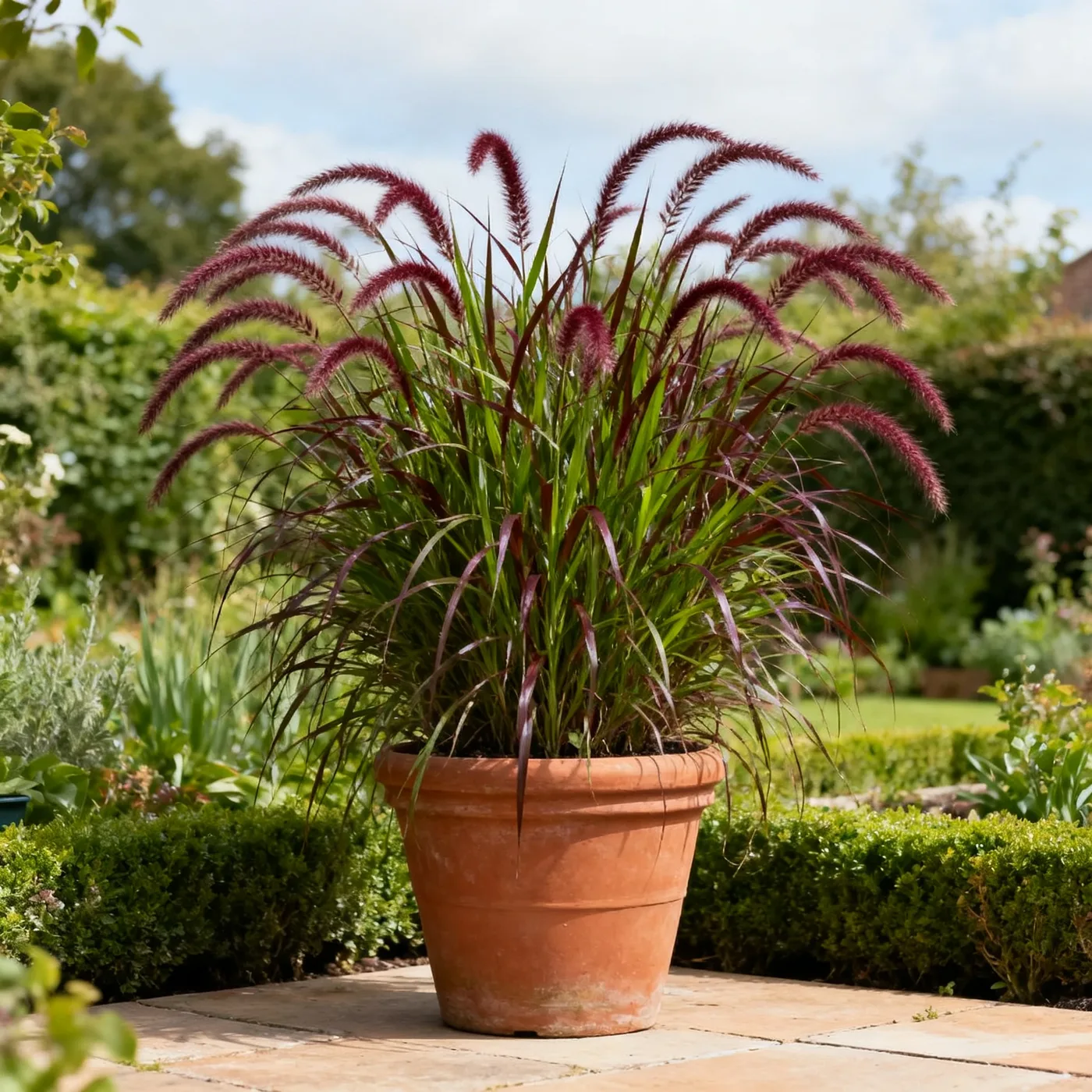
The species goes by a newer botanical name, Cenchrus orientalis, and it suits zones 6a–9b, at 2–3 feet tall and 3–5 feet wide. That width matters. This species spreads into a loose, wide clump, so even a "dwarf" orientale can take more ground than its height suggests. Its flowers open pinkish white and darken to mauve in fall, and 'Karley Rose' is the selection with deeper rose-purple plumes.
The species is also deer and rabbit resistant and happy in full sun, and it does well in acid, alkaline or neutral soil as long as drainage is good. Those traits carry down to the cultivar, so the care side is easy for both grasses.
The Alopecuroides Side
Alopecuroides is the species known as Chinese fountain grass, and Hameln is the compact selection people buy most. Its habit is more of a tidy mound than the wide, loose orientale clump, which is a big part of why it stays shorter. It also gives Hameln the cold tolerance that makes it the safer choice in colder gardens.
So the pattern is simple. Orientale gives you the early rose-purple plumes and the extra width. Alopecuroides gives you the smaller footprint and the colder zones. Each cultivar is a better version of its own parent, not a blend of the two.
Planting Day and the First Weeks of Karley Rose Fountain Grass
On planting day the two grasses look almost identical. Each is a small clump of green blades with no plumes yet. Karley Rose has deep green foliage, with no burgundy cast, so do not expect color in the leaves. The color comes later, from the plumes.
Setting the Crown
Both want full sun and drainage. Karley Rose tolerates acid, alkaline or neutral soil as long as the water moves through, so pH is rarely the problem. Wet soil is. Plant with the top of the root ball level with the surrounding soil, and give the clump room to widen. Karley Rose needs more room than Hameln because of that 3–5 foot species spread, so do not crowd it against a path.
Our planting guide has the step-by-step version, including how to loosen a root-bound pot.
The Rooting-in Period
For the first weeks, water often enough that the root ball never dries out, then ease off as new blades push up. That fresh growth tells you the roots have taken hold. Until then the plant is living off the potting mix, which dries faster than the surrounding soil, so check the root ball by hand rather than the soil around it.
What we tell customers is to plant Karley Rose in spring, so it has a full season to root before its first winter. It sits near the edge of its range in zone 6, and a late-fall planting has little time to settle. Hameln has more cold margin, so a later planting is less risky.
After the rooting-in weeks, leave both alone. This is a plant-it-and-walk-away grass, and extra feeding at this stage only encourages floppy growth.
What Year One Reveals About Plume Color and Timing
The first season is where the two grasses part ways in a way you can see from across the yard. The timing is the first thing you notice, and the color follows.
Bloom Timing in the First Summer
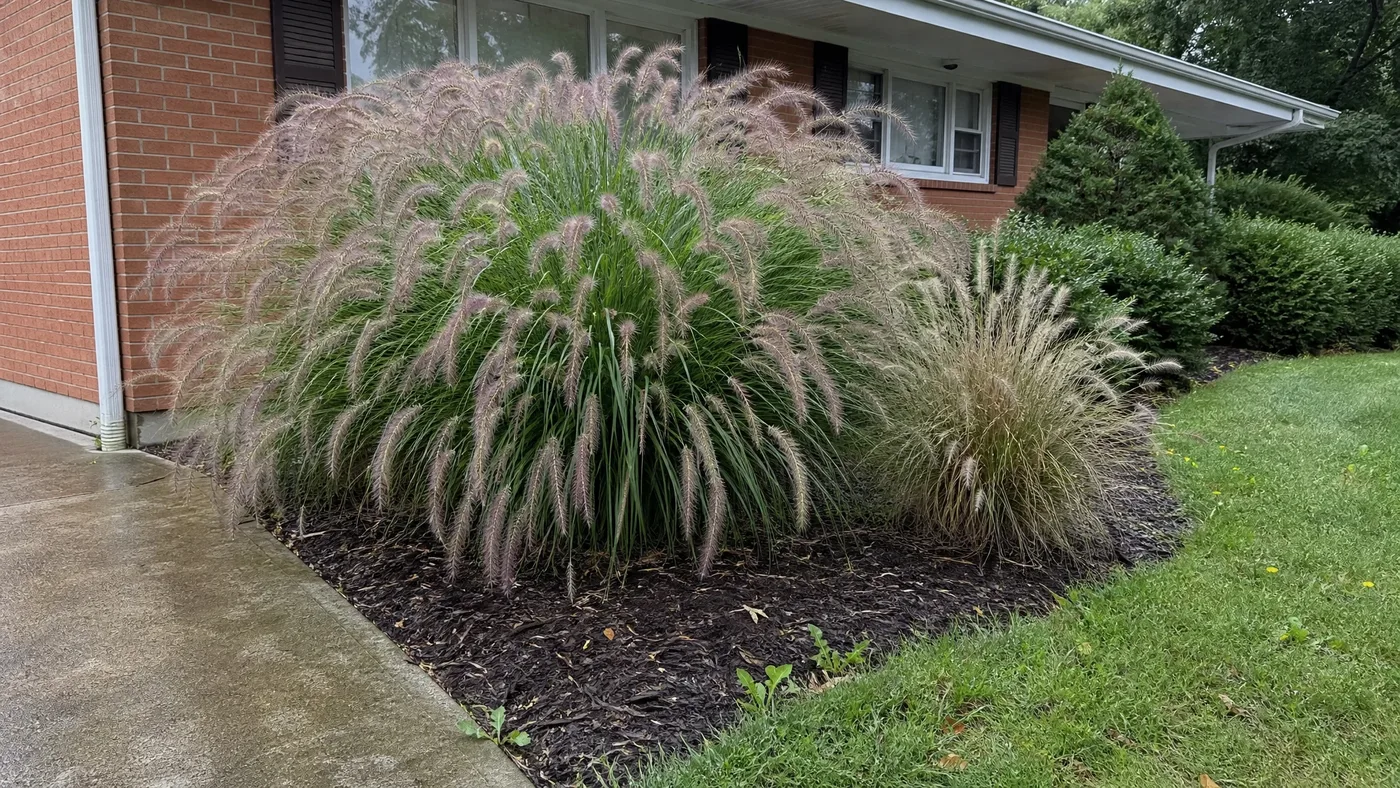
Karley Rose flowers early. It carries rose-purple plumes from early summer until frost, and in the K-State trial the blooms lasted from June onward. Hameln waits. Its purple-tinged bristly spikes come in late summer. That gap means many extra weeks of color from Karley Rose, and a border that looks finished long before Hameln has started.
The table below sets the two side by side as they look in the first season and beyond.
| Trait | Karley Rose | Hameln |
|---|---|---|
| First plumes | Early summer | Late summer |
| Plume color | Rose-purple | Tan, with a purple tinge |
| Foliage | Deep green | Green |
| Mature height | About 24–36 inches | About 18–24 inches |
| Hardiness | Zone 6 | Zones 4–5 |
Height by Fall
A caution on heights. A first-year plant will not reach those numbers. The trial figures we have are from the second year: cut-flower stems averaged about 36.7 inches, and K-State measured about 42 inches. By the end of year one, expect Karley Rose to stand a little taller than Hameln, but still filling in. Judge size after the second summer, not the first.
Choosing on Color
Color is the plainest reason to choose Karley Rose. If you want plumes that read as rose-purple in July rather than tan in September, it is the one. Hameln is the quieter grass, and some gardens want exactly that next to loud perennials. Our bloom guide covers how the color shifts through the season.
Hardiness Once the Plants Are Established
A hardiness zone is a number on the USDA map that sorts the country by its average coldest winter temperature. Lower numbers are colder. A plant rated for a zone should survive that zone's typical winter low, not an unusual one, and the rating assumes a plant that has had time to establish.
How Each Grass Holds Up
Karley Rose is reliably hardy to zone 6. In a cut-flower trial it proved very tough and cold hardy in Zone 6, and the species is listed for zones 6–9. Hameln is generally rated hardy to zone 4 or 5, so it holds a full zone or two beyond that. In zone 5 we would call Karley Rose a gamble, and in zone 4 we would treat it as an annual.
Both grasses are deciduous in cold winters. The blades turn straw-colored and the plant rests as a crown at ground level, so a brown clump in February is normal, not dead.
Why Crown Age Matters
Established plants handle winter better than new ones. A mature crown has more roots and more stored energy, so a clump in its third winter shrugs off a cold snap that would have hurt it in its first. That is why we say to protect Karley Rose in year one with a spring planting and a dry site, and then leave it to its job.
Winter Wet and Drainage
In practice, winter wet kills more of these grasses than cold does. A crown sitting in cold, soggy soil rots long before the air gets dangerous. Drainage matters more than mulch, so a raised spot or a gritty, free-draining bed does more for you than any covering. If you sit on the zone 6 line, our winter care guide shows how to carry a clump through.
Matching Karley Rose Fountain Grass to Your Winters
Our choice follows your winter. In zone 6 and warmer, we would plant Karley Rose: it flowers months earlier, its plumes are rose-purple instead of tan, and it stands a few inches taller. In zone 4 or 5, we would plant Hameln and not gamble, because a grass that dies in January never gets to show its color.
You can now read the three terms that sort these grasses: mature size, plume color and hardiness zone. Check your own zone before you buy, and the rest of the choice makes itself.
Karley Rose Fountain Grass
Nursery-grown Karley Rose Fountain Grass in sizes from Quart, shipped to your door.
From $29.99
Shop Now →Our growers watch for the same things in Karley Rose all year: early plume set in summer, clean drainage in fall and a firm green crown in spring. We raise it in full sun and well-drained soil on our own farms, as a small team of growers, and we would be glad to send one to your garden.