Karley Rose Fountain Grass vs Feather Reed Grass: Bloom and Plumes
Three to five feet is how tall Karl Foerster feather reed grass stands, and Karley Rose Fountain Grass is listed at about 2 feet. Put them side by side in a mixed border in late August and the difference is obvious. Even so, a neighbor still leans over and asks why one is called by the other's name. It isn't. The two names sound alike, and the confusion is real enough that people search for it.
Mixing them up costs you a season. You plant a tall tan stripe where you wanted a soft rose mound, or the reverse, and the bed never does what you planned. Read on for how to sort the names by genus, how the two compare in habit, bloom season and plume shape, and which one suits your bed.
Two Grasses in One Border, Two Different Jobs
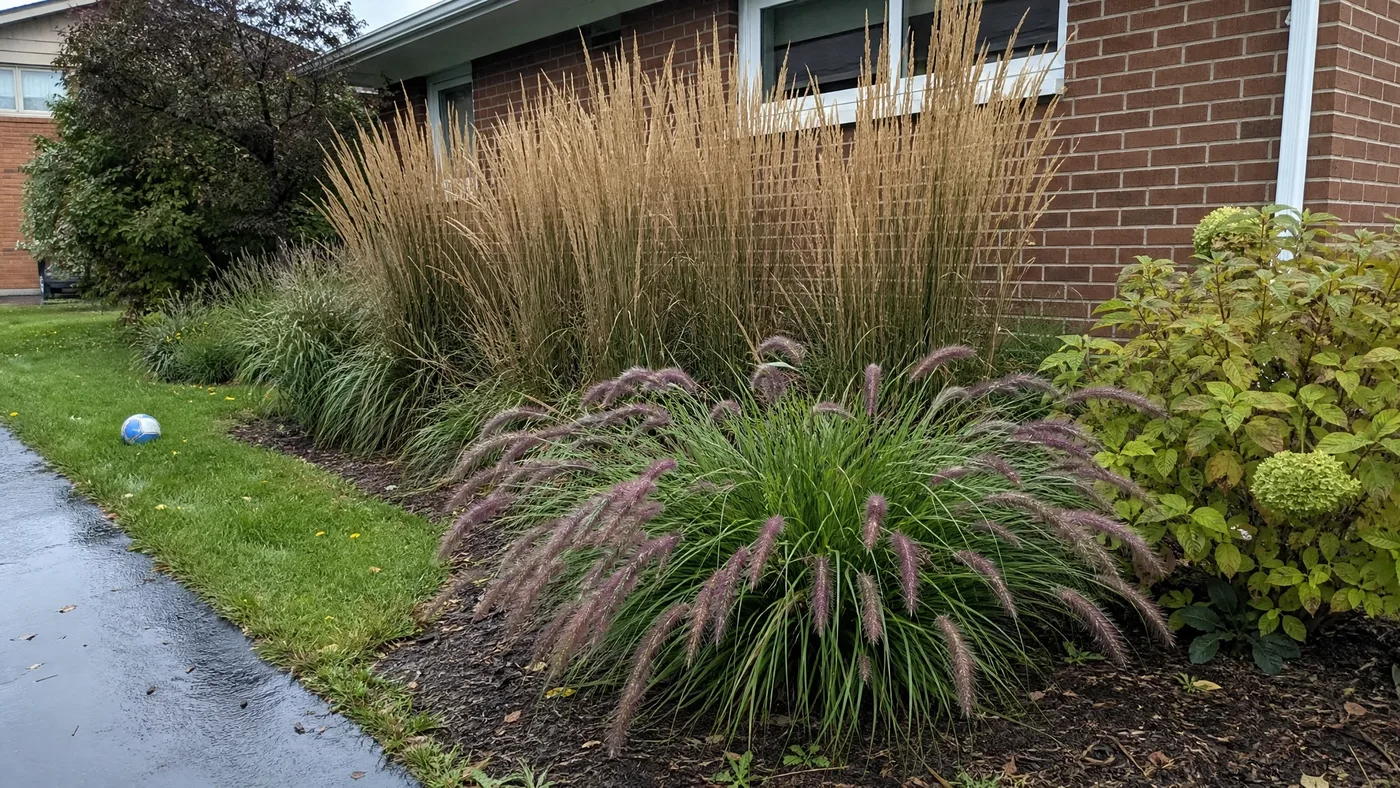
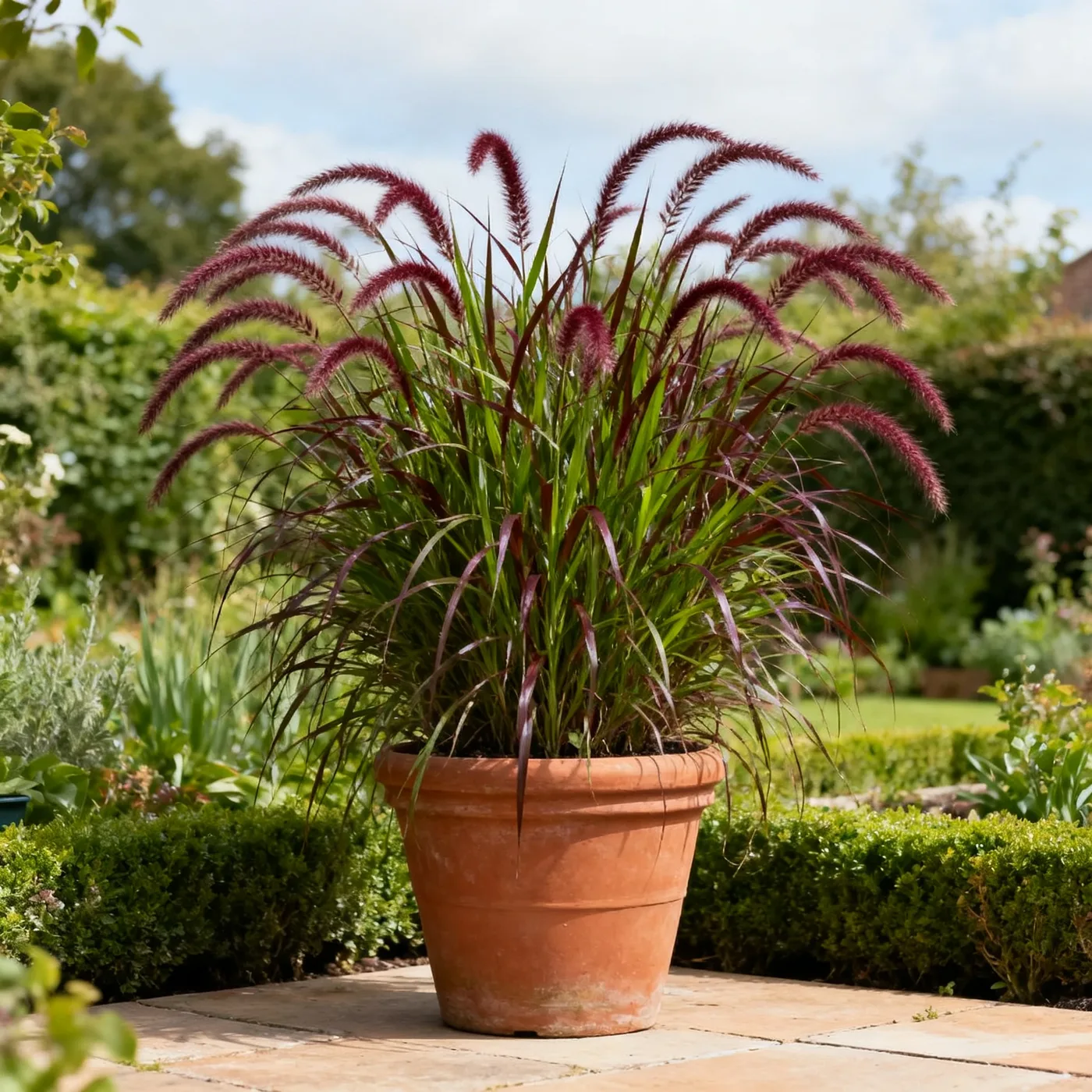
Picture that border in late summer. Karl Foerster stands near the back as a narrow column of upright stems. A few feet forward, Karley Rose Fountain Grass makes a rounded mound of deep green leaves topped with rose-purple plumes. They get planted in the same kinds of beds, and they do opposite work.
Karl Foerster is the structural plant. It stands 3 to 5 feet tall and only 1 to 1.5 feet wide, so it behaves like a vertical stripe. Use it as a screen along a fence, a backbone behind softer perennials, or a repeating accent down a long bed. It was awarded Perennial Plant of the Year in 2001, and that upright line is what it does best.
Karley Rose is the filler and the edger. It grows as a clump, stays lower, and carries color from early summer until frost, well after many perennials around it have finished. It wants full sun and good drainage, and it isn't fussy about pH, since it does well in acid, alkaline or neutral soil. Set it in front of taller plants and it hides their bare lower stems.
Think of one as a stripe and the other as a cushion. Everything below follows from that.
Tag Says Karley Rose Fountain Grass? Check the Genus
One of the most common questions we get is whether Karley Rose and Karl Foerster are the same plant, or at least close relatives. They are neither. "Karley" and "Karl" sound alike, and both are sold as ornamental grasses with plumes, but the botanical names separate them at the genus level, which is the part of the name that tells you the most about how the plant will behave.
Karley Rose is Pennisetum orientale 'Karley Rose', a warm-season fountain grass. The species is now filed under Cenchrus orientalis, so you may see either genus on a tag, and both mean the same plant. Karl Foerster is Calamagrostis x acutiflora 'Karl Foerster', a feather reed grass and a cool-season grass. Use this check at the nursery or in an online listing:
- If the tag says Pennisetum or Cenchrus, you are holding a fountain grass, which means a mound with fuzzy plumes. Karley Rose belongs here.
- If the tag says Calamagrostis, you are holding a feather reed grass, which means a narrow upright clump. Karl Foerster belongs here.
- If the tag gives only a common name, or only "Karl" or "Karley," ask for the botanical name before you pay, or hold the plant up against the habit described in the next section.
- If the tag says fountain grass with no cultivar name, do not assume it is Karley Rose. Purple fountain grass is another common look-alike, and our purple fountain grass comparison covers that mix-up.
Genus first, cultivar second. If the genus is right, the cultivar name is a detail. If the genus is wrong, nothing else on the tag matters.
Mounding Karley Rose Fountain Grass Against Upright Columns
Plant-scale shape is where the two grasses part ways most clearly, so settle this before you think about color. Karley Rose is clump-forming, and its leaves arch out from the crown into a dome. Karl Foerster keeps a tight crown and sends its stems straight up, so it reads as a column even when you plant three together.
Size and Footprint
Karl Foerster runs 3 to 5 feet tall on a footprint of 1 to 1.5 feet, a ratio of at least three to one. Karley Rose goes the other way. Its height is up to about 2 feet. Trials run taller than that: K-State measured about 42 inches in the second year, and the species typically grows 2 to 3 feet tall and 3 to 5 feet wide. Plan for a mound at least as wide as it is tall, and see how big Karley Rose really gets before you mark the bed.
What the Silhouette Does in a Bed
If your planting strip is a foot or so of soil beside a fence or a path, choose Karl Foerster, because a mound will lean over the path and crowd its neighbors. If the bed has room to spread along a sunny edge, choose Karley Rose, because a row of columns at the front leaves hard vertical gaps that a mound fills in. Karl Foerster is also sterile and does not self-seed, so the column stays exactly where you set it.
Common advice says any plume-bearing grass can stand in for another. In a design that is wrong, because shape does more work than plume color, and swapping a mound for a column changes the whole sight line. Choose by the space you have, not by the plume.
When Each Bloom Season Starts and Ends
The two calendars overlap, but they do not match. Karl Foerster flowers in early to mid-summer, around early June, and as a cool-season grass it puts on its show early. Karley Rose starts at nearly the same point. It carries rose-purple plumes from early summer until frost, and a K-State trial noted that the blooms lasted from June onward. The table lines the two up.
| Trait | Karl Foerster | Karley Rose |
|---|---|---|
| Season type | Cool-season | Warm-season |
| First plumes | Early to mid-summer (early June) | Early summer (June onward) |
| Plume color | Narrow, golden tan | Rose-purple |
| Last show | Tan color lasts through fall, stalks stay upright all winter | Until frost |
| USDA zones | 5–9 | Hardy in zone 6 (species 6–9) |
The practical result shows up in late summer. By August, Karl Foerster has already turned tan and is holding its shape, while Karley Rose is still adding fresh pink plumes. That is why the two look so different in the same border at the same moment. If you want one grass that is in color from June to the first frost, it is Karley Rose. If you want a grass that still stands in the snow, it is Karl Foerster.
Our guide to Karley Rose blooms covers the color shifts month by month.
Plume Shape Up Close on Karley Rose Fountain Grass
Lean in to a single plume and the confusion disappears. We often see customers surprised that Karley Rose is fuzzy rather than feathery, and the fuzz is the whole point. The two grasses carry their flowers in completely different ways.
The Fuzzy Rose Bottle-Brush
Karley Rose plumes are hairy, narrow, silvery rose-pink panicles, about 4 to 5.5 inches long, like soft bottle-brushes. The color is rose-purple, which is a fair reading of the same plume as it deepens. The species is different: it opens pinkish white and darkens to mauve in fall, so the rose-purple is a cultivar trait. The hairs make the plume soft to the touch and catch light, which is why the mound seems to glow against a dark backdrop.
The Narrow Golden Plume
Karl Foerster plumes are slimmer and held on upright stalks. They become narrower and golden tan as they age, and the color lasts through the fall. There is no fuzz and no rose. The visual effect is a vertical line of straw color, which pairs well with the round pink heads of Karley Rose rather than competing with them.
Because the plumes are so different, Karley Rose is the better pick if you cut flowers for arrangements. Growers have trialed it as a cut flower, which tells you something about the stems.
Karley Rose Fountain Grass or Karl Foerster for Your Bed
We would choose Karley Rose for most mixed borders, because the long bloom and the rounded shape fit more spots than a column does. We would choose Karl Foerster only when the bed needs height, a screen or a winter silhouette. Match your situation to the grass below.
You Need Height or a Screen
Choose Karl Foerster. A mound cannot do this job, and a 1 to 1.5 foot footprint fits where a fountain grass will not.
You Need Soft Color at the Front
Choose Karley Rose. It fills the front of the border, blooms until frost, and takes full sun in acid, alkaline or neutral soil. It is also deer and rabbit resistant.
You Garden in a Cold Zone
Check your zone first. Karl Foerster is listed for zones 5 to 9. Karley Rose is rated for zone 6, and a NC State cut-flower trial found it very tough and cold hardy in Zone 6. In zone 5, ask your local extension service before you commit, and see which hardiness zones suit Karley Rose.
You Want Winter Structure
Karl Foerster's flower stalks stay upright through winter, so leave them. Karley Rose gets cut back, and when and how to cut back Karley Rose explains the timing.
Pick the Stripe or Pick the Mound
The two grasses share a sound and a sunny bed, nothing more. Karley Rose is a fountain grass with fuzzy rose-purple plumes from early summer until frost. Karl Foerster is a feather reed grass with narrow tan plumes that start early in summer and stand through winter. Check the genus on the tag, then choose by shape.
If the bed needs an upright stripe, pick feather reed grass. If it needs a soft rounded mound, pick Karley Rose.
Karley Rose Fountain Grass
Nursery-grown Karley Rose Fountain Grass in sizes from Quart, shipped to your door.
From $29.99
Shop Now →Karley Rose gets its start in open rows on our farms, with full sun overhead and soil that drains fast. That is the setting that keeps those rose-purple plumes coming, and the one we recommend for your bed. Our small business grows its grasses from start to finish, so once you have decided between the mound and the stripe, come see what we have for your planting.