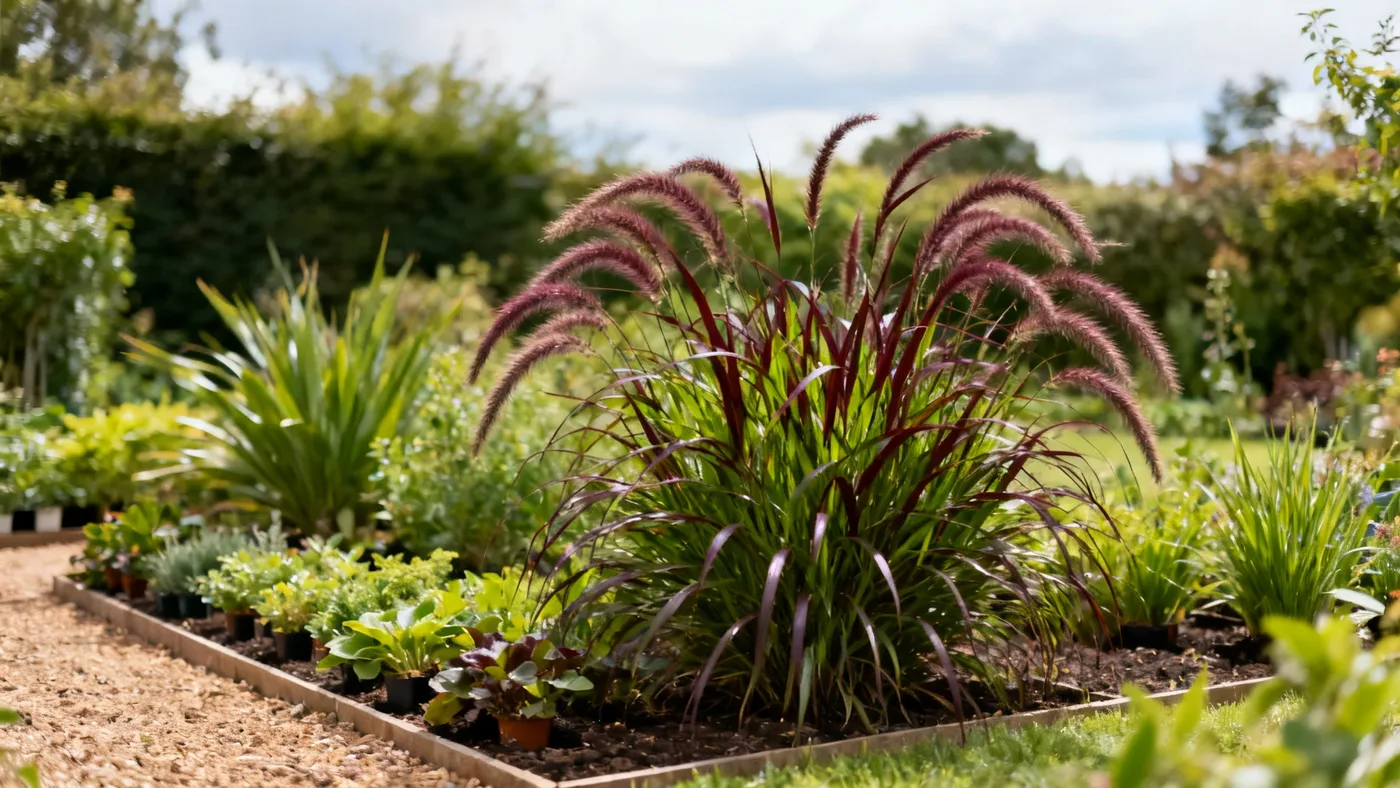
12 Landscape Design Ideas for Karley Rose Fountain Grass
Karley Rose Fountain Grass stands out in the garden from early summer through fall, its smoky rose-pink plumes catching light while burgundy-tinged foliage creates texture and movement. This warm-season perennial thrives in zones 6-9, offering versatility for mixed borders, containers, and focal points. Whether you're designing a cohesive perennial bed or planning a drought-tolerant garden, Karley Rose delivers both softness and architectural structure. Below are twelve proven landscape design ideas to maximize its impact in your garden.
1. Mixed Perennial Border Anchor
Karley Rose reaches 24-36 inches tall at maturity, making it an ideal mid-height anchor in a mixed perennial border. Plant it where it can rise above lower-growing companions without overshadowing taller specimens. The fine-textured, arching foliage provides contrast against broad-leaved perennials like Rudbeckia (Black-eyed Susan) or dense mounding forms like Sedum.
Space plants 24-30 inches apart to allow room for the mature clump width of 24-30 inches. In the second and third seasons, as your Karley Rose reaches full size, the plume display will anchor the bed visually without requiring staking, even in moderate winds. The burgundy-tinged green foliage persists throughout the growing season, creating a consistent color backdrop for companions.
Practical takeaway: Position Karley Rose where morning sun hits the plumes (east or northeast facing beds work well) to showcase the rose-pink color at peak intensity.
2. Front-of-Border Edging Along Walkways
The 24-36 inch height makes Karley Rose ideal for edging along pathways and garden borders without blocking views or creating a wall. Its arching, fountain-shaped growth habit naturally softens hardscape edges while its deer-resistant foliage means it tolerates foot traffic stress better than many ornamental grasses. Plant at the recommended 24-30 inch spacing to create a repeating rhythm that guides the eye along the path.
The fine-textured blades won't shed excessive debris onto walkways, and the moderate growth rate (6-12 inches per year) keeps plants at a manageable height for three to four seasons before needing division. As the plumes emerge in early summer, they'll frame the pathway with vertical interest at eye level.
Practical takeaway: Avoid placing Karley Rose directly adjacent to high-traffic corners where foot traffic might damage the crown; set it back 12-18 inches for better longevity.
3. Xeriscaping and Drought-Tolerant Gardens
Once established, Karley Rose shows moderate to good drought tolerance, making it a reliable performer in water-wise landscapes. While regular water is needed during the establishment year, once roots develop, the plant requires only moderate watering. This quality pairs it perfectly with other drought-adapted perennials like Russian sage (Perovskia) and ornamental alliums, creating a low-maintenance fountain grass garden design.
Plant Karley Rose in well-drained soil and ensure the site receives full sun for optimal drought resilience. In hot climates, very light afternoon shade is tolerated, though flowering may be reduced. Mulch lightly after planting to conserve soil moisture during the establishment phase, but avoid heavy mulching once the plant matures, as excessive moisture retention can contribute to crown rot in poorly drained sites.
Practical takeaway: In zones 6 and 7, plant in spring (after last frost) to give roots the full growing season to establish before winter dormancy; established plants are far more drought-tolerant than first-year divisions.
4. Large Container Plantings for Patios and Entries
Karley Rose is well-suited to large containers, thriving in pots with good drainage. A mature plant needs a container at least 18-24 inches in diameter; use a high-quality potting mix and ensure drainage holes are clear. Container growing offers flexibility: you can move the plant to catch the best light, showcase the plumes near seating areas, or bring it into a sheltered location if your zone is marginal (zones 5-6 with winter mulch).
Containers dry faster than in-ground beds, so check soil moisture regularly during the growing season. Begin with moderate fertilizing in spring, but avoid overfeeding; excess nitrogen reduces flowering and promotes a floppy habit. In zones 6-9, the plant will establish and bloom in its first year from a nursery-grown division, providing immediate impact on a patio or entryway.
Practical takeaway: Group several containers of Karley Rose with complementary annuals or tender perennials to create a show-stopping summer display that lasts until frost.
5. Cut and Dried Flower Arrangements
The plumes of Karley Rose are prized for fresh and dried arrangements, offering a sustainable alternative to florist-grade cuts. Harvest plumes in late summer when they've fully emerged and begun their color transition from rose-pink to beige/tan, typically starting in late August or early September in zones 6-7. Cut stems at the base with sharp pruners, leaving the foliage intact on the plant to support the clump.
For dried arrangements, hang bundles upside down in a cool, dry location for 2-3 weeks. The plumes retain their form and subtle color transition beautifully, creating arrangements that last for months. Because 'Karley Rose' produces little to no viable seed (sterile or low-seed-viability cultivar), there's no concern about scattering seed around your arrangement workspace or home.
Practical takeaway: Harvest plumes regularly to encourage reblooming; the plant often produces a second flush of flowers in fall if the first crop is harvested in mid-summer.
6. Mass Planting for Bold Visual Impact
A group of five to seven Karley Rose plants spaced 24-30 inches apart creates stunning mass plantings in large beds or mixed borders. The repetition of burgundy-tinged foliage and rose-pink plumes builds visual rhythm and drama, especially in mid-to-late summer when plumes are at peak color. Mass plantings also establish faster visually; because each plant reaches mature size in 2-3 years, a group planting looks established by year two.
Use mass plantings to define garden rooms, frame focal points like seating areas, or create transitional zones between different landscape areas. The dense foliage and repeated forms reduce maintenance questions (fewer isolated plants means less fussing) while the unified color scheme reads clearly from a distance. For areas of 100+ square feet, alternating drifts of Karley Rose with complementary companions like Sedum creates a naturalistic, layered appearance.
Practical takeaway: Stagger mass plantings in an offset, triangular pattern rather than a grid for a more organic, naturalistic effect.
7. Companion Planting with Black-eyed Susan (Rudbeckia)
Rudbeckia (Black-eyed Susan) is a natural companion for Karley Rose Fountain Grass, offering complementary height, bloom time, and cultural needs. Rudbeckia typically reaches 24-36 inches (depending on variety), similar to Karley Rose, creating a layered effect when the two are interplanted. Both prefer full sun and well-drained soil, and both bloom from early summer into fall, with overlapping color displays that shift as the season progresses.
The yellow disk flowers of Rudbeckia contrast beautifully with the rose-pink plumes of Karley Rose, especially as the plumes fade to tan and the Rudbeckia centers deepen to bronze. Plant them roughly 24-30 inches apart in a checkerboard or offset pattern to allow both plants room to develop their full mounding habit. This pairing works especially well in mixed borders where you want a full color range without adding more plant varieties.
Practical takeaway: Deadhead Rudbeckia selectively in mid-summer to extend bloom time into fall; leave some seed heads for bird interest and to self-seed if desired.
8. Pairing with Russian Sage (Perovskia) for Cottage Garden Vibes
Russian sage (Perovskia) is listed as a companion plant for Karley Rose and they share remarkable cultural compatibility. Both reach similar mature heights (24-36 inches for Karley Rose, 24-48 inches for tall Perovskia varieties), both bloom June to frost in most climates, and both thrive in full sun with moderate water once established. The fine, airy texture of Perovskia's soft purple-blue flowers softens the structural quality of Karley Rose's plumes, creating a hazy, romantic fountain grass garden design.
Space the plants 24-30 inches apart in well-drained soil and provide minimal feeding; both plants perform better in average to lean soils than in rich beds. This pairing is especially striking in regions with warm, dry summers where the combination thrives with minimal supplemental water after establishment. The color combination of rose-pink and purple-blue reads sophisticated and unified despite the contrasting hues.
Practical takeaway: This pairing is ideal for erosion control on slopes; the combined root systems stabilize soil while the visible effect is soft, garden-like rather than utilitarian.
9. Late-Season Structure and Winter Interest
Karley Rose extends the garden season well into fall and winter through its dual contribution of foliage color and persistent plumes. The fine-textured foliage deepens from burgundy-tinged green to burgundy and bronze tones as temperatures drop, creating a warm-colored focal point after other perennials have faded. In zones 6-9, the dried plumes and tan foliage can persist into winter, providing texture and interest long after the landscape has mostly gone dormant.
In milder climates (zones 8-9), the winter interest is most pronounced; the plumes often stand through January, catching frost and morning light dramatically. In colder zones (6-7), expect more breakdown after heavy snow or ice, but the persistent structure still reads as architectural through December. This seasonal transition adds depth to the garden narrative, proving that even dormant landscapes needn't feel barren.
Practical takeaway: Don't rush to cut back Karley Rose in fall; wait until late winter or early spring, just before new growth emerges, to allow maximum season extension.
10. Sedum and Succulent Combinations for Textural Contrast
Sedum is specifically listed as a companion plant for Karley Rose, and the pairing leverages their textural differences beautifully. Sedums offer dense, fleshy foliage in mounding or trailing forms, creating a solid visual counterpoint to Karley Rose's airy, fountain-shaped habit. Tall Sedum varieties (like 'Autumn Joy' or 'Autumn Fire' at 24-30 inches) can be interplanted directly with Karley Rose, while smaller sedums edge the composition.
Both plants share drought tolerance and prefer full sun with well-drained soil, making them ideal bedfellows in xeriscaping and fountain grass garden design. Sedums bloom in late summer and fall (July through November in most zones), extending the color show as Karley Rose plumes fade to tan and Sedum flowers shift from pink to rust to bronze. The combination performs exceptionally well in containers too, with Karley Rose providing vertical movement and Sedums anchoring the base.
Practical takeaway: Plant low-growing Sedums in front of Karley Rose to frame the lower clump and draw the eye up through the plumes.
11. Pollinator and Bird-Friendly Garden Integration
While Karley Rose is wind-pollinated and doesn't produce significant nectar, its seed heads attract birds, especially finches, who feed on grass seed throughout fall and early winter. The sterile or low-seed-viability nature of the cultivar means minimal volunteer seedlings, but the persistent plumes still serve as bird perches and food sources long after bloom time. Pairing Karley Rose with proven pollinator plants like Echinacea (coneflower), Rudbeckia, and Salvia creates a mixed perennial border that serves pollinators while maintaining interest through autumn.
The structural plumes also provide shelter for beneficial insects and overwintering sites for native bees. In a design focused on wildlife, position Karley Rose near native flowering plants that bloom at different times, extending the food source from spring through fall. The moderate spread (24-30 inches wide) allows spacing for enough plants to create real ecological value without overcrowding.
Practical takeaway: Leave plumes standing through winter to maximize bird feeding habitat; the dried heads persist well and collapse naturally in spring cleanup.
12. Ornamental Allium Layering for Seasonal Depth
Ornamental alliums are listed as companion plants for Karley Rose, offering a layering strategy that extends color and form through the seasons. Spring-blooming alliums (like 'Purple Sensation') provide early-season interest, while Karley Rose remains dormant. As the grass emerges and grows through late spring and summer, the allium foliage fades and the ornamental seed heads persist, creating a delicate vertical element that plays against Karley Rose's emerging plumes.
Both plants thrive in full sun with well-drained soil and require minimal feeding once established. Summer-blooming alliums (like Allium christophii or Allium sphaerocephalon) bloom alongside or just after Karley Rose plumes emerge, creating overlapping textures and colors. Plant alliums at the same 24-30 inch spacing as your Karley Rose to maintain a cohesive design rhythm. The spherical allium blooms add a geometric counterpoint to the arching, fountain-shaped grass plumes.
Practical takeaway: Allium seed heads are long-lasting; leave them standing in your border for several months of additional texture, then harvest for dried arrangements alongside Karley Rose plumes.
Quick Reference: Karley Rose Landscape Design Checklist
| Design Element | Best Practice | Spacing | Zones |
|---|---|---|---|
| Mixed borders | Mid-height anchor, morning sun exposure | 24-30 in. apart | 6-9 |
| Edging/pathways | Avoid high-traffic corners, set back 12-18 in. | 24-30 in. apart | 6-9 |
| Xeriscaping | Well-drained soil, full sun, light afternoon shade OK in hot climates | 24-30 in. apart | 6-9 |
| Containers | 18-24 in. diameter minimum, good drainage | One per container | 5-9 (mulch zone 5-6) |
| Cut/dried arrangements | Harvest late summer when color emerges, hang dry 2-3 weeks | Regular harvest encourages rebloom | All |
| Mass plantings | Offset/triangular pattern, 5-7 plants minimum | 24-30 in. apart | 6-9 |
| With Rudbeckia | Similar height, overlapping bloom June-frost | 24-30 in. apart | 6-9 |
| With Russian sage | Lean soil preferred, both drought-tolerant once established | 24-30 in. apart | 6-9 |
| Winter interest | Cut back in late winter before new growth, not fall | N/A | Zones 8-9 for longest persistence |
| With Sedum | Pair tall Sedum (24-30 in.) directly, edge with shorter types | 24-30 in. apart | 6-9 |
| Bird/pollinator habitat | Leave plumes standing through winter, pair with Echinacea/Rudbeckia | 24-30 in. apart | 6-9 |
| With alliums | Offset planting for texture layering, both full-sun perennials | 24-30 in. apart | 6-9 |
For detailed care instructions and hardiness guidance specific to your zone, refer to the complete growing guide for Karley Rose Fountain Grass. Each of these design ideas comes to life once your plants are established; allow 2-3 seasons for Karley Rose to reach full mature clump size and deliver the full landscape impact these pairings promise.