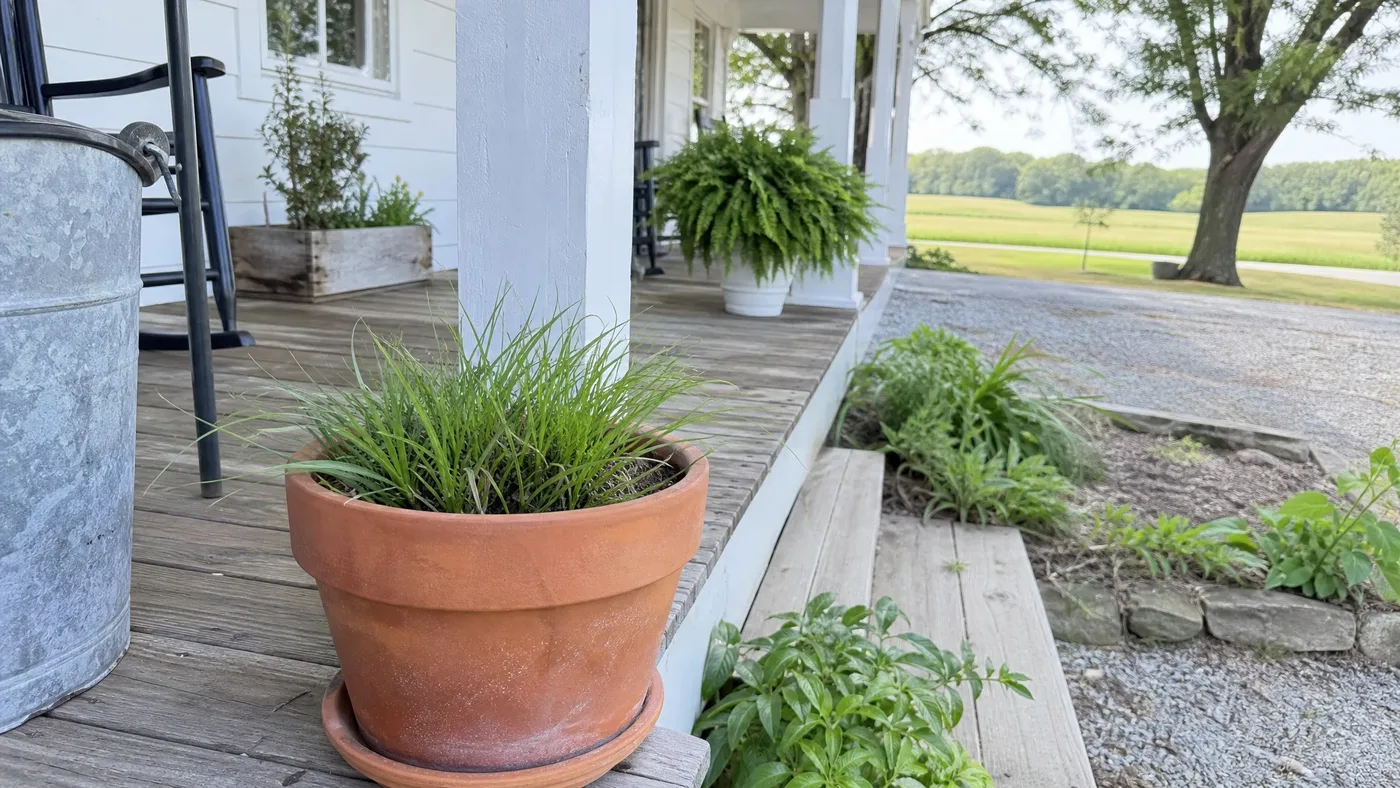
Where Is Karley Rose Fountain Grass Native?
Here is a line from a made-up three-year plant budget: Year 1, grass for the sunny bed, one plant. Year 2, replacement if it dies. Year 3, rescue watering. Question for the notes: why does this grass keep surviving August dry spells? It is a good question, and the answer sits in where the plant comes from.
Karley Rose is a selection of a fountain grass that grew wild in dry country far from most American borders. That history explains its low water needs and its limit in cold winters. Ignore it and you pay twice, once for extra watering and again for replacements. Respect it and one plant can carry a bed for years.
In this article, we'll go through the species' home range, how the cultivar came about, why dry summers matter, where zone 6 fits, and what to budget across three years.
Mediterranean and Asian Roots of the Parent Species
Read the tag on a Karley Rose and you will see Pennisetum orientale 'Karley Rose'. The species name points east, and it is accurate. The plant's range runs from northwest Africa to southwest Asia, a band that runs along the Mediterranean and into western Asia. That is country where summer rain cannot be counted on.
You may also meet the species under another name. It also goes by Cenchrus orientalis, and pages differ on which name they use for the same plant. If you are hunting for native-range information, search both names. Treat the range as a clue about conditions rather than a promise about any one hillside, because the sources give a region, not a habitat survey.
Now compare it with a grass that often sits beside it at the garden center. 'Hameln' is a Pennisetum alopecuroides cultivar, and that species grows in Japan and much of eastern Asia, in sunny open lowlands, and in zones 4–9. Karley Rose does not come from those East Asian grasslands, and its cold tolerance does not follow Hameln's. Our Karley Rose versus Hameln comparison covers size and color. The origin is what explains the hardiness gap.
How Karley Rose Fountain Grass Became a Garden Cultivar
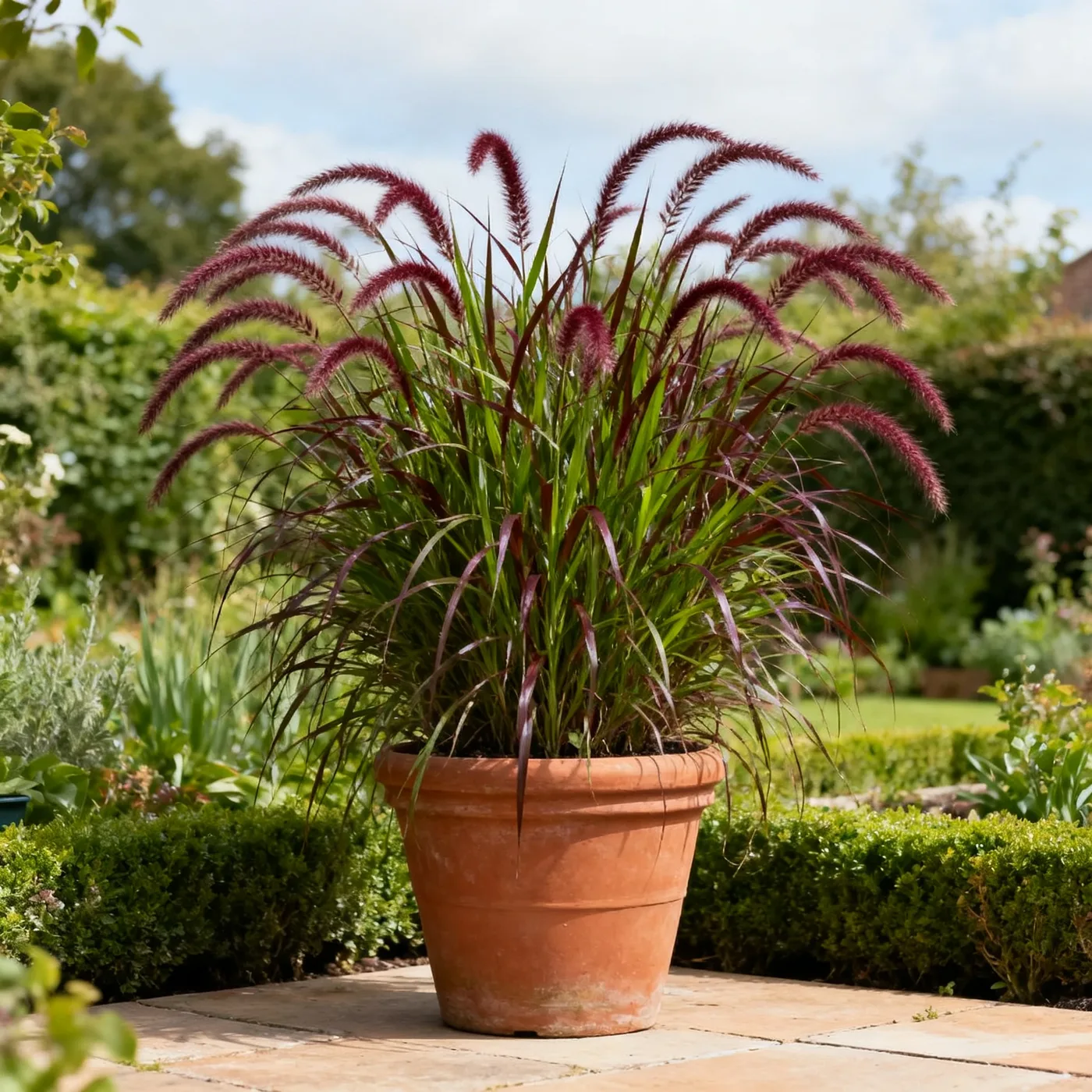
The species carries pinkish white flowers that darken to mauve in fall. Karley Rose narrows that to one dependable look: clumps of deep green foliage that become rose-purple plumes from early summer until frost. That consistent color is what a cultivar name promises, and it is why the name appears on the tag instead of the species alone.
A cultivar name means every plant sold under it is meant to match the one originally chosen. We could not find a breeder or a release year in sources we trust, so we will not guess at them here. What the sources do show is the trade. You gain predictable color and a size on the compact side, and you keep the parent's wild adaptations, because those come with the plant.
Size shows the selection at work. The cultivar reaches up to about 2 feet, while the species reaches 2–3 feet. Selection shaped what you see above ground. It could not change where the roots expect to live, which is dry, sunny and well drained. That is why this cultivar behaves like its parent in the soil even though it looks different above it.
Dry Summers Behind the Drought Tolerance
One of the most common questions we get is why a grass bought for a sunny bed looks fine in August while the plants around it sulk. The reason is that Karley Rose descends from plants that evolved where summers are dry. It holds a green clump through weeks that would stress a lawn-edge perennial.
Oriental fountain grass is drought-tolerant once mature. The words that matter are "once mature." A first-season plant has not built the roots to wait out a dry spell, so it needs deep watering while it settles. The species also asks for moist, well-drained soil, and the cultivar wants a light, moderately fertile, well-drained soil. Drainage is the real requirement. Extra water is the optional part.
Soil chemistry matters far less. The species does well in acid, alkaline and neutral soil as long as drainage is good, and the cultivar takes acid, alkaline or neutral soil as well. Skip the pH test and fix the drainage instead.
Drought tolerance is not the same as needing no water. Plenty of advice says to water ornamental grasses on a weekly schedule all summer. For a plant from dry summers, that calendar is the habit most likely to hurt it, because steady moisture around the crown is the opposite of its home conditions. Our guide on whether Karley Rose is drought tolerant covers the details.
Zone 6 Is the Edge for Karley Rose Fountain Grass
Picture two fountain grasses in a zone 5 bed. Hameln, listed for zones 4–9, is inside its range. Karley Rose is outside it. Both carry the same common name, but they come from different places, and the place sets the cold limit.
The numbers line up with the origin. The species grows in zones 6a through 9b, and a cut-flower trial notes that Karley Rose seems to be very tough and cold hardy in Zone 6. Read that as a result at the cold limit, not a comfortable margin.
The species is also a warm-season grass that does not tolerate frost well and belongs in a sheltered position. The cultivar rates H3 on the British scale and wants a sheltered, well-drained site. Our guide to which hardiness zones suit Karley Rose goes deeper. If you garden in zone 6, do this:
- Plant on the warmest, most sheltered side of the yard, out of the winter wind.
- Choose ground that sheds water, because cold, soggy soil is where an edge-of-range plant is lost first.
- Do not judge the clump dead in early spring. A warm-season grass is slow to show new growth, so give it time before you dig.
- If you garden colder than zone 6, check with your local extension service before you buy, and plan to treat it as a seasonal plant.
Our notes on winter care in cold climates cover the cold months in more detail.
What a Three-Year Budget Should Allow
Return to the ledger from the top of this guide. A fair three-year line for one Karley Rose has four parts: the plant, any site work for drainage, a hose for the first season, and a small contingency for a lost winter. The table spreads them across the years.
| Year | What to budget | What to expect |
|---|---|---|
| Year 1 | The plant, drainage work if the spot is heavy, deep watering while roots build | A green clump that is still settling in |
| Year 2 | Almost no water outside long dry spells, plus a spring cutback | Close to full size, with trial stems around 37–42 inches |
| Year 3 | A contingency only if a winter took the plant | A full clump in a bed that costs little to run |
Notice what the table leaves out: routine fertilizer, constant watering and yearly replacement. Those lines belong to plants from wetter, richer homes.
Budget space for height beyond the label, too. The cultivar reaches up to about 2 feet on paper, but a cut-flower trial measured stems around 36.7 inches in year 2, and 42 inches was recorded as well. The blooms lasted from June onward. Plan around 3 feet, not 2. We sell Karley Rose, and we would rather you buy one and site it well than buy three to replace the first.
Spending Less on Karley Rose Fountain Grass Through Site Choice
A bed at the foot of a downspout looks like a bargain because the water is free. For this grass it is the most expensive spot in the yard. Every dollar you save on watering comes back as a rotted crown, because the plant was built for dry summers and quick drainage.
Pick the Driest Sunny Spot
Give it full sun, which means 6 or more hours of direct sunlight a day, as the cultivar prefers. Use light, well-drained soil, and build a raised mound or choose a slope if your ground is heavy. Leave generous room too, since the species reaches a width of 3–5 feet.
Water Like a Visitor
Think of watering as a short stay that ends once the roots have settled. Follow this order:
- Water deeply right after planting so the soil settles around the roots.
- Through the first season, water deeply and let the soil dry between visits.
- From the second summer, stop routine watering and water only through long dry spells.
- Skip routine fertilizer, since the plant asks only for moderately fertile soil.
Our seasonal watering guide turns these steps into a calendar. Copying the native conditions costs less than fighting them, and it is easier work.
Karley Rose Fountain Grass After Three Winters
By the third winter the plant tells you whether your site matches its origin. In our rows, the clumps that struggle are nearly always the ones with wet feet, not the ones that went dry. A clump that has come through three winters in a sheltered, drained spot is one you can mostly leave alone.
What you should see is a deep green clump that carries rose-purple plumes from early summer until frost, at roughly 3 feet. The species is also listed as deer and rabbit resistant, a small bonus. Your yearly work shrinks to a cutback and a look at the drainage. There is no rescue watering, no feeding schedule and no spare plant waiting in the garage.
If you lost a plant in zone 6, ask what it sat in before you replace it. Wet soil or open wind means the site failed, not the plant, and a second plant in the same hole repeats the cost. This is exactly what the origin predicts for a grass at its cold edge. Move to higher, drier, more sheltered ground, or accept it as a seasonal plant.
Add a line to your ledger each spring: when new growth appeared and how tall the plumes reached. After three seasons you hold better local data than any range map.
Spend Once on a Dry, Sunny Site
Karley Rose is a Pennisetum orientale selection whose parent comes from northwest Africa to southwest Asia, not the East Asian grasslands behind Hameln. That origin gives you low water needs once the plant is mature, and it puts zone 6 at the cold edge. Match those two facts and the three-year budget stays small.
The rule is simple: spend on a dry, sunny site once instead of on rescue watering and replacements later.
Karley Rose Fountain Grass
Nursery-grown Karley Rose Fountain Grass in sizes from Quart, shipped to your door.
From $29.99
Shop Now →Out on our farms, Karley Rose sits in full sun with well-drained soil under its roots, which is the dry, bright setting its northwest African and southwest Asian roots call for. We are a small business that raises its own stock, so every grass we offer is top-quality. If this look at its origins has you picturing it in your own sunny bed, browse what is in stock now.