Karley Rose Fountain Grass vs Pennisetum Orientale: Key Differences
Picture a bench of pots in midsummer. You run your hand over a plume and it feels like a soft bottle-brush, warm rose-purple and almost furry. Then you glance at the next row, where a tag reads only "Pennisetum orientale," and you wonder whether that is truly the same plant.
It is a fair question. Karley Rose is a named selection of oriental fountain grass, and the plain species is sold alongside it under nearly identical names. They are related, but they do not look or behave quite the same, and buying the wrong one means a different color show in your border.
We'll walk you through the tag, the quoted name, the plume, the foliage and the seed-grown species plants, then give you a short kit to carry when you shop.
The Nursery Tag as Your First Tool
Start with the tag, because it is the cheapest evidence you have. Read it slowly and look for the full botanical name, not just the common one. "Fountain grass" alone covers several different plants, including the annual purple types that die at the first hard freeze.
What we tell customers is to hunt for three things on the tag: the genus and species, a name in single quotes, and a hardiness zone. A tag reading Pennisetum orientale 'Karley Rose' has all three. A tag reading only Pennisetum orientale or "oriental fountain grass" has stopped after the species.
Then look at the picture printed on the tag. If the name says Karley Rose but the photo shows pale cream plumes, trust neither until you see the plant itself. Tags get mixed between pots more often than anyone likes to admit.
Old Names Still on Tags
You may also see Cenchrus orientalis. That is the newer botanical name for the same species. Neither spelling means a plant is lesser. It only means the grower's label was written before or after the name change, so treat both as the same species and keep reading for the quoted name.
Online Listings Follow the Same Rule
Websites that list both a plain species and 'Karley Rose' as "related products" are not telling you they are the same plant. They are two products. Check the product title for the quotes and compare the photos, since a listing with only a generic stock image gives you nothing to hold the plant against.
Reading the Cultivar Name in Quotes
Single quotes around a name mean someone selected that plant and gave it a name so buyers could get the same thing again. 'Karley Rose' is a promise of a particular look. A bare species name makes a much looser promise, and the descriptions of the two show it.
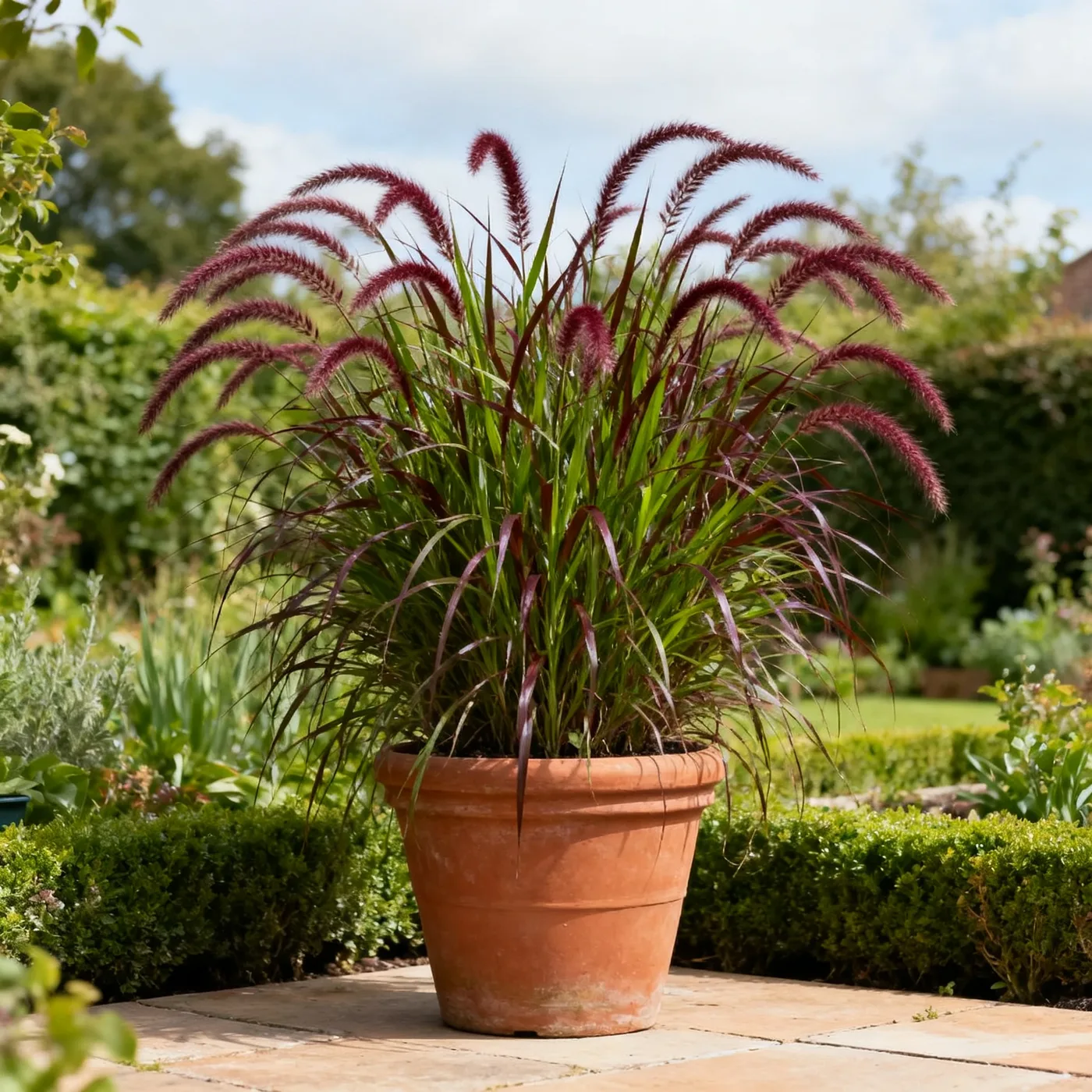
The cultivar forms clumps of deep green foliage that turn into rose-purple plumes from early summer until frost. The species stands 2–3 feet tall and 3–5 feet wide for zones 6–9. Oriental fountain grass itself has green to gray-green leaves and pinkish white flowers that darken to mauve in the fall.
| Trait | 'Karley Rose' | Plain species |
|---|---|---|
| Leaf color | Deep green | Green to gray-green |
| Plume color | Rose-purple | Pinkish white, darkening to mauve in fall |
| Plume timing | Early summer until frost | Described as fall-darkening |
| Height | Up to about 2 feet | 2–3 feet |
| Hardiness | Hardy in zone 6 | Zones 6–9 |
Notice the hardiness row. The cultivar is called very tough and cold hardy in Zone 6, and the species is listed for zone 6 as well. So we would not pay extra for a cultivar on cold tolerance alone, whatever a product page implies. If you garden at the cold edge, our zone guide goes into it.
The reliable gains are in color and in a name you can check. A quoted name is also only as honest as the person who typed it, which is why the next two checks, the plume and the leaf, matter so much.
Plumes Worth Touching on Karley Rose Fountain Grass
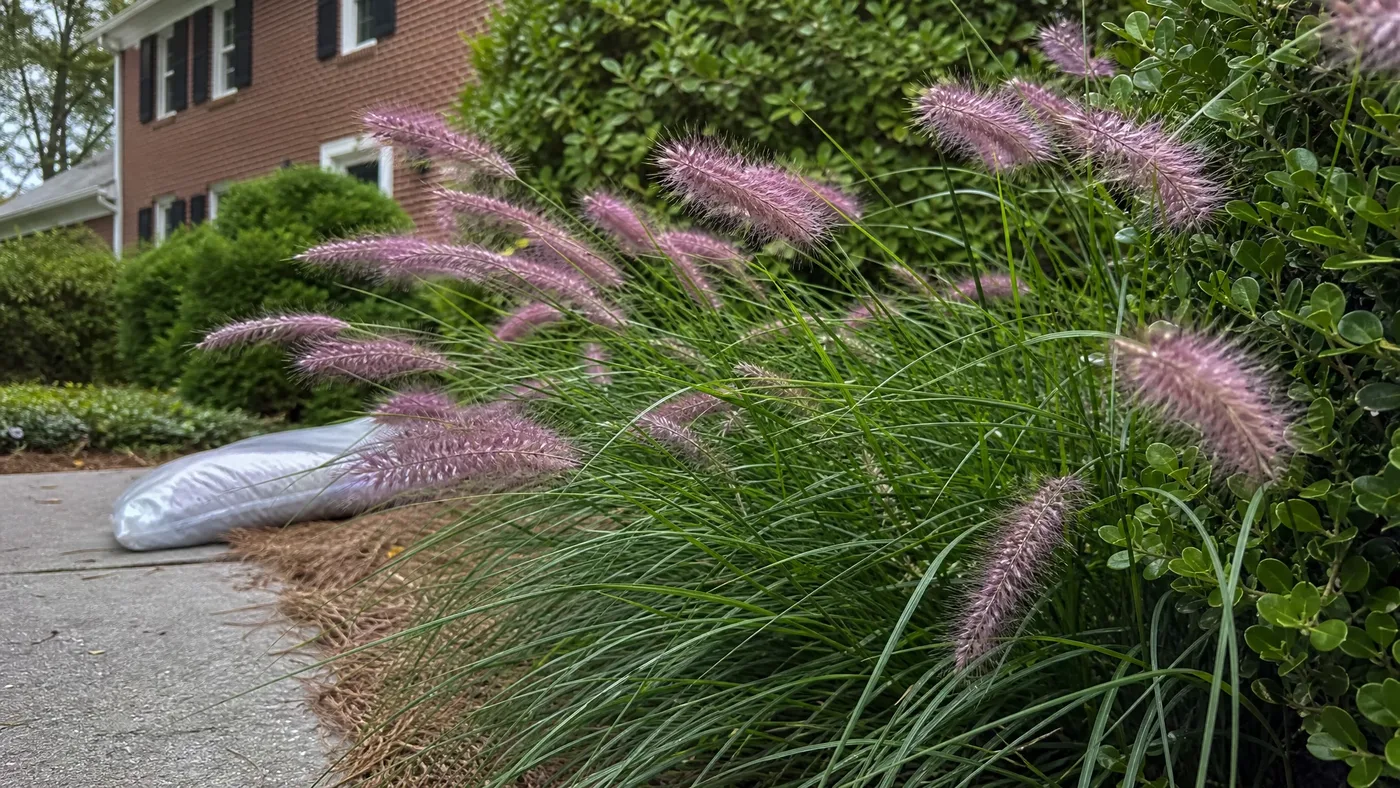
The plume is the quickest check you can make from three feet away, and it is the part we enjoy most. Karley Rose carries narrow, hairy, silvery rose-pink panicles that run 4–5 inches long, like soft bottle-brushes.
Run your hand along one. It should feel dense and silky, and the color should lean rose, with a smoky purple in it as the plumes age. That deeper tone is the point of the cultivar.
A plain species plant tends the other way. Its flowers read pinkish white and only darken to mauve late in the year, so a bench of them in midsummer looks paler and more cream than pink.
Timing Changes What You See
Do not judge a pot in spring, because there may be no plumes at all yet. Blooms for the cultivar have been recorded from June onward and last until frost. If the pots are unflowered, lean harder on the tag and the leaves.
One of the most common questions we get is whether a pale plume means a sick plant. Usually it just means the plume is young or the plant is the plain species. For more on color through the season, see our bloom guide.
How to Handle a Plume Fairly
Touch gently and never tug. A good plume holds together under your palm and springs back, while a tired one sheds fuzz on your fingers. Compare two or three plants of the same label in the same light, since one sunny corner of a bench can make any plume look pinker than it is. If every pot under one tag shows the same color, that is a good sign. If they vary, ask why.
Your Karley Rose Fountain Grass Buying Kit
You need very little to shop well for this plant. Pack a phone and a habit of looking closely, and use each item below the way we describe.
- Phone photos of the tag. Snap the full botanical name, the quotes and the zone, so you can compare plants across stores without trusting memory.
- A reference photo of the plume. Save a picture of rose-purple plumes and hold it up to the pots. Silvery cream is the plain species look.
- A tape measure or your hand. Karley Rose is a compact grass, reaching up to about 2 feet. A pot of ornamental grass much taller than that is worth questioning. Our size guide covers how big it grows with age.
- Your zone number. Both plants are listed for zone 6 and warmer, so hold the tag against your own winters.
- A question for the seller. Ask whether the plants were divided from named stock. A clear answer is a good sign, and a shrug tells you something too.
The container itself is the last tool. Check that it is rooted but not choked, with new shoots at the base. If you want to understand what a pot size means for the plant you take home, our container size guide explains it.
Take the kit as a set, not a menu. One match proves little, since a tag can be swapped and a plume can be young. Three matches in a row, tag with plume with leaf, is what we would call a safe buy.
Karley Rose Fountain Grass Foliage in the Pot
When there are no plumes, the leaves do the talking. Karley Rose has clumps of deep green foliage, and we stress that because older descriptions of the plant sometimes claim burgundy tinges. The leaves should read as plain, rich green.
The plain species leans toward green to gray-green. Put the two side by side and the species can look a bit dusty or blue-toned next to the cultivar's saturated green. It is a subtle difference, so look in even light and not under a store canopy.
Clump Shape and Size Cues
Karley Rose is a clump-forming perennial grass, and it should look like a tidy, arching fountain rising from one center. A cut-flower trial recorded stems around 37 inches in the second year, and a separate second-year measurement came to 42 inches. The species is listed at 2–3 feet tall but 3–5 feet wide, so a species plant sprawls wider than you may expect.
The heights disagree a little, with up to about 2 feet listed and the trials taller in year two. So use the pot as a cue for shape, not a ruler. What you want is a balanced, upright-then-arching form, not a lopsided tuft leaning to one side.
What Is Under the Leaves
Pull the pot gently out of its sleeve if the seller allows. Look for a crown with many fine shoots and white, healthy roots. Dead brown leaves are normal on grasses in late winter, but a bench of them in summer is not. Roots circling hard around the outside are a sign the plant has waited too long for a bigger pot.
Seed-Grown Species Plants and What They Do
This is where the two plants really part ways. The species is best propagated by division, and a division is a piece of the parent, so a divided plant matches its parent. Anything sold only as the species, without a quoted name, gives you no assurance of which parent it came from.
That is why we expect more plant-to-plant variation among plain species plants than among a named cultivar. Plume color, height and leaf tone can differ pot to pot. In our rows, that is the main reason we like a cultivar name: it takes the guesswork out.
The Weedy Question
The species also has the potential to be weedy. That is a point in favor of knowing exactly what you buy, since a plant that sets and drops seed freely can pop up where you did not plant it. How much that matters depends on your region, so check with your local extension service. We cover how the cultivar behaves in our guide on whether Karley Rose is invasive.
If You Buy the Species Anyway
Nothing about the species is bad. It is drought-tolerant once mature, and both plants like full sun and good drainage. If you do choose it, buy it in bloom so you can see the color you are getting, and give it room for that 3–5 foot spread. Do not plan a precise color scheme around it, because the pinkish white to mauve shift happens late and varies.
For a bed where color matters, we would pick the named plant every time. For a meadow-style planting where a little variety is welcome and you are happy to watch for stray seedlings, the species can earn its place.
Right Label, Right Karley Rose Fountain Grass
The labels worth trusting have the full botanical name, the quoted 'Karley Rose,' and a zone. The plant behind the label should match: deep green leaves, a compact fountain-shaped clump, and rose-purple plumes with a silky feel. When all of those line up, you have the cultivar. When the tag stops at the species, the plume looks pale and the leaves look gray-green, you probably have the plain plant.
Buy only when the tag, the plume and the clump agree, and then plant it in sun and leave it alone. Few grasses give so much pink glow for so little fuss.
Karley Rose Fountain Grass
Nursery-grown Karley Rose Fountain Grass in sizes from Quart, shipped to your door.
From $29.99
Shop Now →Karley Rose finishes its growing on our farms in full sun, planted in well-drained soil, and that setting is what keeps the plume color and clump shape true to the name on the tag. Raising our own stock keeps us small and keeps the quality high. If you are ready to put the right Karley Rose in your garden, take a look at our Karley Rose plants.