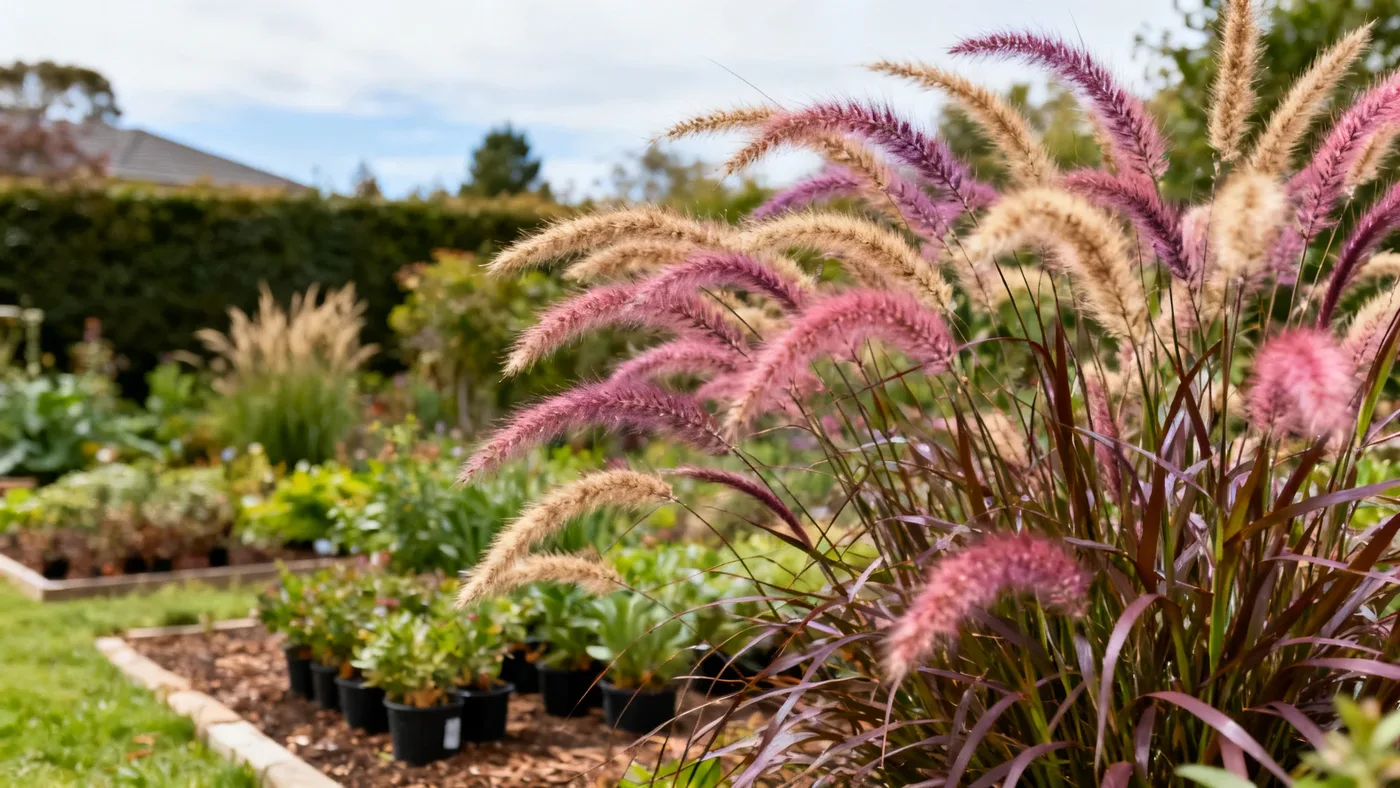
Karley Rose Fountain Grass Fall Color: What to Expect
If you planted Karley Rose Fountain Grass this spring or summer, late September brings a shift. The fine-textured green blades that arched gracefully through warm months are beginning their autumn transformation. This is when the real show begins. The foliage deepens to burgundy and bronze tones while the flower plumes shift from smoky rose-pink to soft beige and tan. For gardeners in zones 6 through 9, fall interest in ornamental grasses is one of the season's quieter pleasures, and Karley Rose delivers it reliably year after year.
What makes fall color in fountain grasses special is that it does not happen overnight. There is a gradual, weeks-long transition that extends the plant's season well into November in most climates. If you know what to watch for, you can plan around it, combine it with other fall bloomers, and decide early whether you want to keep the dried plumes through winter or cut the plant back once frost arrives.
The Karley Rose Color Shift: Timing and What You'll See
Karley Rose Fountain Grass foliage begins the growing season as a fine-textured mound with burgundy-tinged green blades. By mid-summer, the foliage is fully established, soft to the eye, and providing a neutral backdrop for the plant's blooming period, which typically runs from June all the way through to frost in warm climates.
As temperatures cool in late August and September, the foliage begins its color change. The burgundy tint that was always present in the green blades becomes more pronounced. By October, the entire clump deepens to rich burgundy and bronze tones. This transition usually takes 4 to 6 weeks depending on your zone and how cool nights become. Growers in zone 9 may see the shift more gradually, while zone 6 gardeners often witness a faster, more dramatic change as the first frost approaches.
Simultaneously, the flower plumes are also changing. During peak bloom in late summer, the plumes display their signature smoky rose-pink to purplish-pink color. As fall progresses, these plumes fade to soft beige and tan. By November, most of the rose tones have faded entirely. You are left with a dried plume that blends into the burgundy and bronze foliage, creating a unified, warm-toned autumn display that lasts well into winter in milder zones.
Fall Color Variations by Zone
The intensity and longevity of Karley Rose fall color depends significantly on where you garden. Understanding your zone helps set realistic expectations.
Zone 9: Gardeners in zone 9 often see the most extended fall color window. Temperatures stay mild well into November, which means the burgundy and bronze tones deepen slowly and the dried plumes persist with minimal frost damage. Your display may hold strong through mid-November or even into early December.
Zones 7 and 8: The color shift accelerates as temperatures drop. You will see a noticeable darkening to burgundy and bronze by late October. Hard frosts may arrive by mid-November, but the foliage and plumes often survive intact and add winter interest through December in zone 8, and into January in milder zone 7 areas.
Zone 6: This is the cool-climate threshold for reliable Karley Rose hardiness. Fall colors develop quickly once nighttime temperatures dip below 50 degrees Fahrenheit, which often happens by September. The burgundy and bronze tones are vivid and concentrated. The first hard frost, typically in October or early November, will blacken the foliage and make the plumes more brittle. Many zone 6 gardeners choose to cut the plant back after the first frost rather than overwinter it, though it is possible to let it stand for winter interest if you are willing to lose the dried texture to frost damage.
Zone 5 and Colder: Karley Rose is marginal in zone 5 even with winter mulch protection. If you are in zone 5, focus on enjoying the rapid fall color development (usually dramatic by late September) and plan to cut the plant back to 3 to 6 inches above ground after the first hard frost. Grow it as you would an annual with the knowledge that the foliage and plumes will not persist through a cold winter.
Caring for Fall Interest Without Summer Pruning
One reason Karley Rose delivers such reliable fall color is that it does not need deadheading or mid-season pruning. Unlike many perennials, fountain grasses look their best when left to mature naturally through the growing season. You should not cut back the plumes or foliage in summer or early fall, even if they begin to fade. Let them stay intact.
The only maintenance during the growing season is ensuring regular water in hot, dry spells until the plant is well established. A newly planted Karley Rose in its first year needs consistent moisture to develop a strong root system. Established clumps (typically by year two) are moderately drought tolerant and prefer soil that is well-drained. Over-watering or heavy clay soil can reduce fall color intensity and increase the risk of crown rot.
If your plant received a balanced slow-release fertilizer in spring, no additional feeding is needed. Over-fertilizing actually reduces flowering and can promote soft growth that does not color as deeply in fall. Let the plant mature on its own.
Winter Interest and When to Cut Back
Once the foliage turns burgundy and bronze and the plumes fade to tan, you face a choice: keep the plant standing for winter interest or cut it back.
In zones 8 and 9, many gardeners leave the dried plumes and tan foliage standing through winter. The texture and subtle color persist and provide architectural interest even after frost. In zone 7, this works well in mild winters but less reliably in harsh years. In zones 5 and 6, the foliage and plumes usually blacken completely after hard frost, so there is little visual benefit to leaving them standing.
If you decide to cut back, wait until late winter or early spring before new growth emerges, typically February through March depending on your zone. Use sharp pruners or a mower set high and cut the entire clump back to 3 to 6 inches above the ground. This prevents old dead foliage from smothering new growth and keeps the clump tidy.
Do not cut back in fall or early winter. Leaving the plant intact through winter provides some insulation to the crown and dormant roots, which helps with overwintering success in marginal zones.
Pairing Karley Rose with Other Fall-Interest Plants
The burgundy and bronze tones of Karley Rose fountain grass fall color complement other autumn bloomers and evergreen perennials beautifully. Consider planting it with:
- Russian sage for late-season purple flowers and silvery stems against the deep burgundy foliage
- Sedum for contrasting succulent structure and russet fall color
- Black-eyed Susan for lasting gold blooms that echo the dried plume tones
- Coneflower for late-season pink and purple petals paired with burgundy grass
- Ornamental alliums for repeated spiky forms and textural variety
These combinations create layered autumn interest from late August through November and into December in milder zones.
Fall Planting Considerations
If you have not yet planted Karley Rose, fall can be a good planting window in zones 7 and 8 if you get plants in the ground by mid-October, giving them time to establish roots before winter dormancy. In zones 6 and colder, spring planting (after the last frost) is more reliable because the plants have a full growing season to build root strength before their first winter. Space plants 24 to 30 inches apart to allow room for mature clumps to reach their full size of 24 to 36 inches tall over 2 to 3 seasons.
For more detailed planting guidance, see our complete growing guide and information about mature size expectations.
Quick Reference: Fall Color Timeline
| Month / Zone | Foliage Color | Plume Color | Care Notes |
|---|---|---|---|
| September | Green to burgundy-tinged | Rose-pink to light tan | Maintain regular watering. Do not cut or deadhead. |
| October (Z7-9) | Burgundy and bronze developing | Tan and beige | Color deepens. Monitor for first frost date in your zone. |
| October (Z6) | Deep burgundy and bronze | Mostly tan | Color shift usually complete by late October. Frost may arrive early. |
| November (Z8-9) | Rich burgundy and bronze | Tan plumes persist | First hard frost likely. Plumes may remain through early December. |
| November (Z7) | Burgundy and bronze | Frosted, tan | Hard frosts common. Consider cutting back after first frost in zone 6. |
| Late Winter (February-March) | Tan and dead | Dried and brittle | Cut back to 3-6 inches above ground before new growth begins. |